
Quick Answer
Tomatoes like coffee grounds only in small, composted amounts. Used grounds add organic matter and about 1 to 2 percent nitrogen, but fresh grounds piled around tomato plants can tie up nitrogen and the caffeine can slow growth. Compost the grounds first, or work no more than a half inch into the top 4 inches of soil, and keep feeding tomatoes a balanced fertilizer.
Key Takeaways
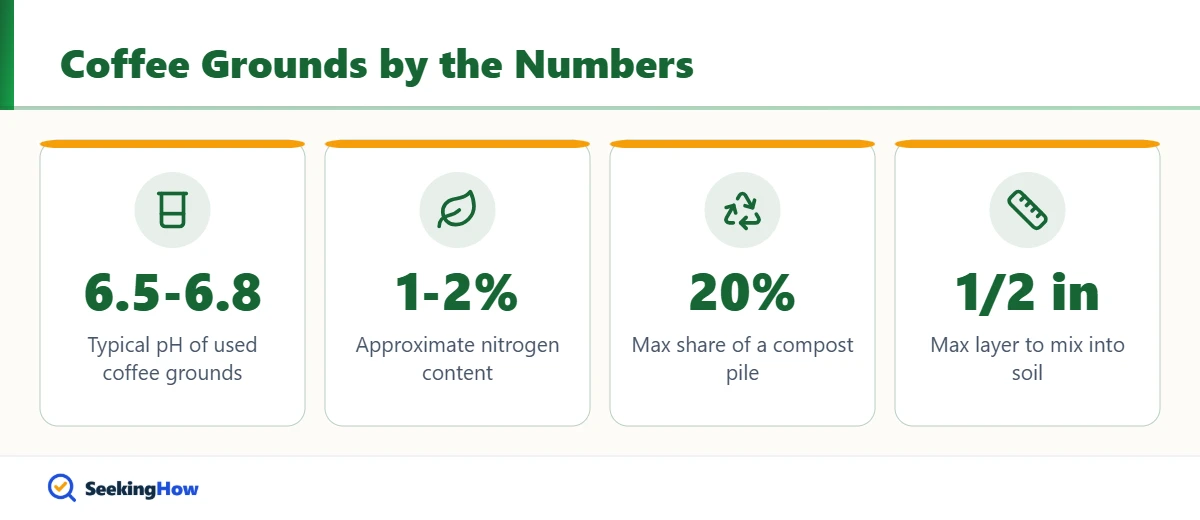
- Used coffee grounds are close to neutral, around pH 6.5 to 6.8, so they do not acidify tomato soil.
- Grounds contain roughly 1 to 2 percent nitrogen, too little to replace tomato fertilizer.
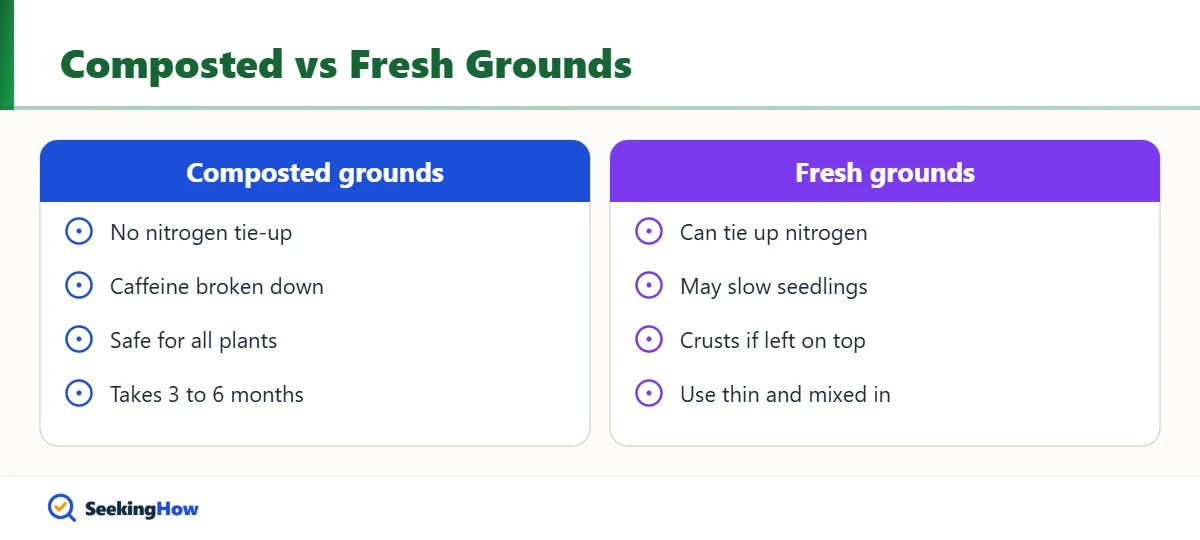
- Composting grounds first avoids nitrogen tie-up and caffeine effects on young plants.
- Keep coffee grounds under 20 percent of a compost pile by volume.
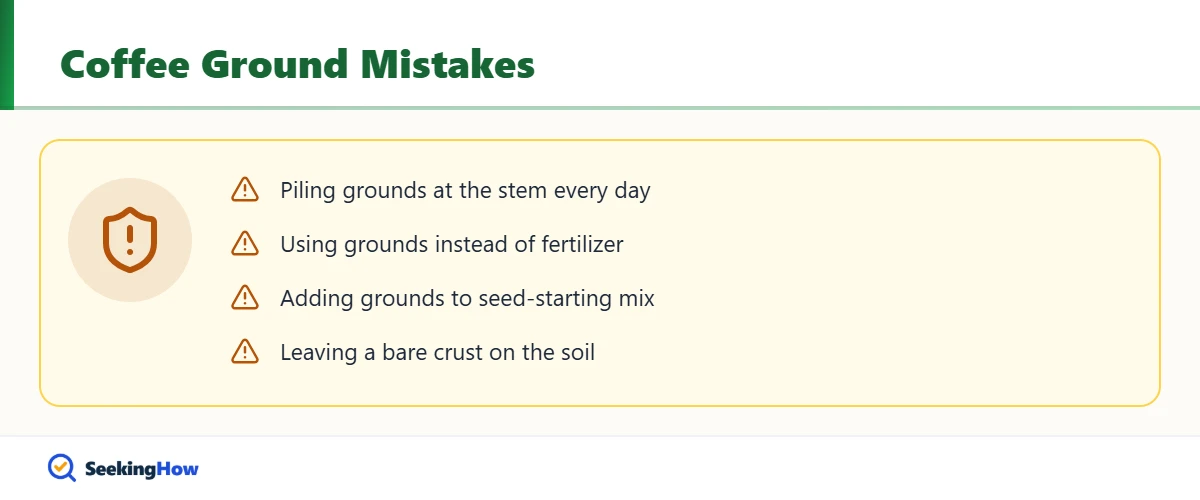
- A thick layer of grounds on the surface can crust over and shed water.
Coffee grounds are a free, steady source of organic matter, so it is natural to wonder: do tomatoes like coffee grounds? The answer depends on how you use them. Tomatoes benefit from the improved soil structure that composted grounds bring, but not from a thick fresh layer around the stem.
What You’ll Need
- Used (brewed) coffee grounds, dried on a tray if storing
- Compost bin or pile with leaves and grass clippings
- Garden fork or trowel
- Balanced or tomato-specific fertilizer
- Shredded leaf or straw mulch
- Soil pH test kit (optional)
How To Use Coffee Grounds for Tomatoes: Step-by-Step
Step 1: Compost the Grounds First
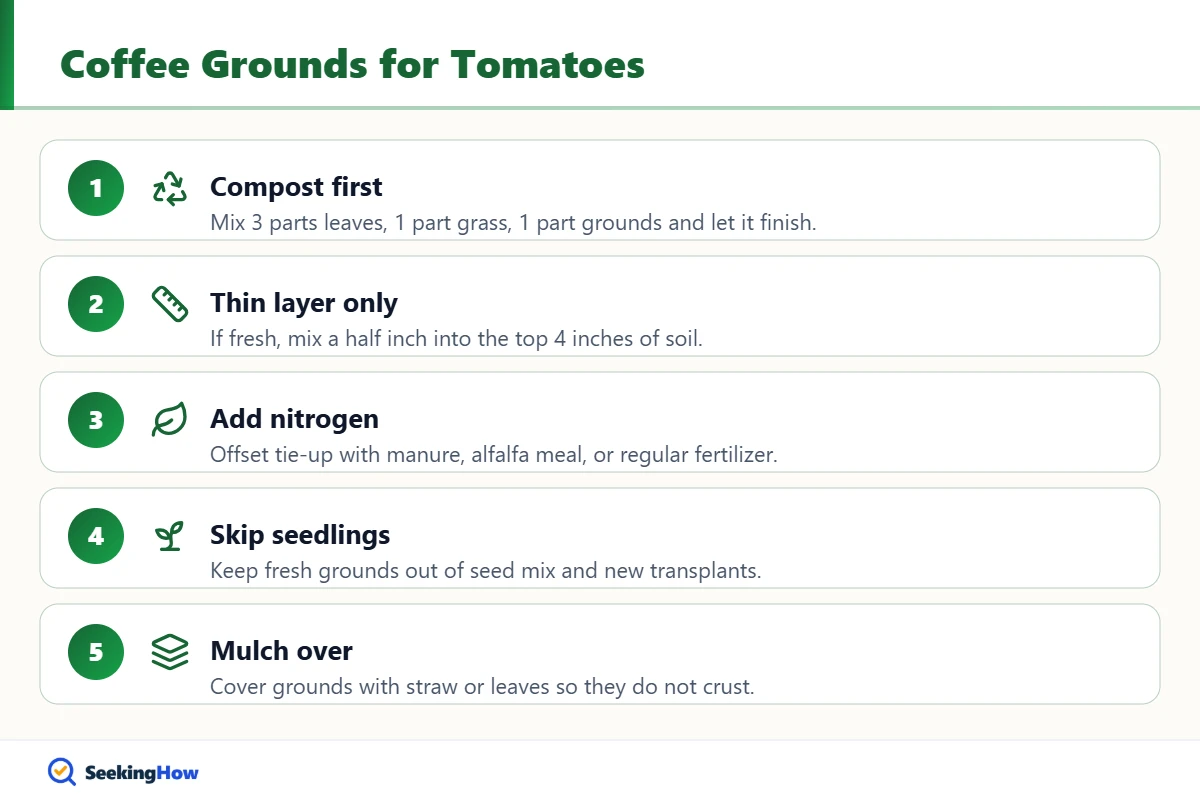
Add grounds to compost in a mix of about 3 parts leaves, 1 part fresh grass clippings, and 1 part coffee grounds, as Oregon State University Extension suggests. Keep grounds under 20 percent of the total pile. Finished compost, ready in about 3 to 6 months, feeds tomatoes without the risks of fresh grounds.
Step 2: Work in a Thin Layer If Using Fresh
If you skip composting, spread no more than a half inch of grounds and mix them into the top 4 inches of soil before planting. Mixing prevents the crust that forms when grounds sit on the surface. The most common mistake is dumping a daily pot of grounds at the base of the same plant.
Step 3: Add Extra Nitrogen
Microbes borrow nitrogen from the soil while they break down fresh grounds. Offset that with a nitrogen source such as composted manure, alfalfa meal, or grass clippings, and keep using your regular tomato fertilizer on schedule.
Step 4: Keep Grounds Away From Seedlings
Do not use fresh grounds in seed-starting mix or around transplants in their first few weeks. Extension researchers note that caffeine residue can reduce seed germination and slow young plant growth.
Step 5: Mulch Over the Top
If you use grounds as part of a mulch, cover them with an inch or two of shredded leaves or straw. Bare grounds dry into a water-repellent mat, while a top mulch keeps moisture even, which also helps prevent blossom end rot linked to uneven watering.
Bottom line: Compost your coffee grounds and feed the compost to tomatoes; never rely on grounds as the plant’s main fertilizer.
If That Didn’t Work
Problem: Leaves yellow after adding grounds. Cause: Nitrogen tie-up from fresh grounds. Fix: Stop adding grounds and side-dress with a nitrogen fertilizer.
Problem: Water beads up on the soil. Cause: A crusted layer of grounds. Fix: Rake the grounds into the soil and add mulch over the top.
Problem: White or green mold on stored grounds. Cause: Wet grounds kept in a closed container. Fix: Mold is harmless in compost; dry grounds on a tray if storing.
Problem: Seedlings stall. Cause: Caffeine residue near young roots. Fix: Move grounds to the compost pile and transplant into plain soil.
| Use | Good for tomatoes? | Why |
|---|---|---|
| Composted grounds | Yes | Adds organic matter with no nitrogen tie-up |
| Thin layer mixed into soil | Yes, in moderation | Improves structure and drainage |
| Thick layer on surface | No | Crusts and repels water |
| In seed-starting mix | No | Caffeine can slow germination |
| Brewed coffee as a drink for plants | Rarely | Little nutrition, risk of salt and sugar from additives |
When To Get Expert Help
Contact your county Cooperative Extension office or a master gardener program if tomato leaves keep yellowing from the bottom up, develop brown spots with rings, or wilt even with moist soil. Those signs point to nutrient deficiency, early blight, or a wilt disease rather than anything coffee grounds will fix. A soil test from your extension office tells you pH and nutrient levels for a modest fee.
Prevention Tips
- Test soil every few years; tomatoes generally do best around pH 6.2 to 6.8.
- Rotate tomato beds to reduce soil-borne disease.
- Water deeply and evenly to prevent blossom end rot.
Related Guides
Sources
- Oregon State University Extension: coffee grounds and composting
- Washington State University: horticultural myth on coffee grounds
- University of Arizona Cooperative Extension: using coffee grounds in the garden
Frequently Asked Questions
Do coffee grounds make tomatoes grow bigger?
No, not on their own. Used grounds supply only about 1 to 2 percent nitrogen and small amounts of other nutrients. Their real benefit is better soil structure. Bigger tomatoes come from full sun, even watering, and a balanced fertilizer, with composted grounds as a minor helper.
Can I put coffee grounds directly on my tomato plants?
Only in a thin layer mixed into the soil. A pile of fresh grounds at the stem can tie up nitrogen, crust over, and hold caffeine near the roots. Work no more than a half inch into the top 4 inches, or compost the grounds first.
Do coffee grounds make soil acidic for tomatoes?
No. Brewed coffee grounds are close to neutral, around pH 6.5 to 6.8, according to Oregon State University Extension. Unused grounds are more acidic, but even then the change is small and temporary. Use a soil test, not grounds, to manage pH.
Do coffee grounds keep pests off tomatoes?
Not reliably. Research has shown strong caffeine solutions can repel or kill slugs and snails, but a sprinkle of used grounds is far weaker. Hand-picking, traps, and good spacing remain the dependable controls for tomato pests.
Can I water tomatoes with leftover coffee?
Occasionally, if it is plain black coffee diluted with water. It adds little nutrition, and milk or sugar can attract pests and feed mold. Plain water and a regular tomato fertilizer do more for the plant.
How often can I add coffee grounds to the tomato bed?
Add grounds to the compost pile as often as you like, staying under about 20 percent of the pile volume. For direct use, a thin half-inch layer once or twice a season is plenty. More frequent applications raise the risk of crusting and nitrogen tie-up.