
Quick Answer
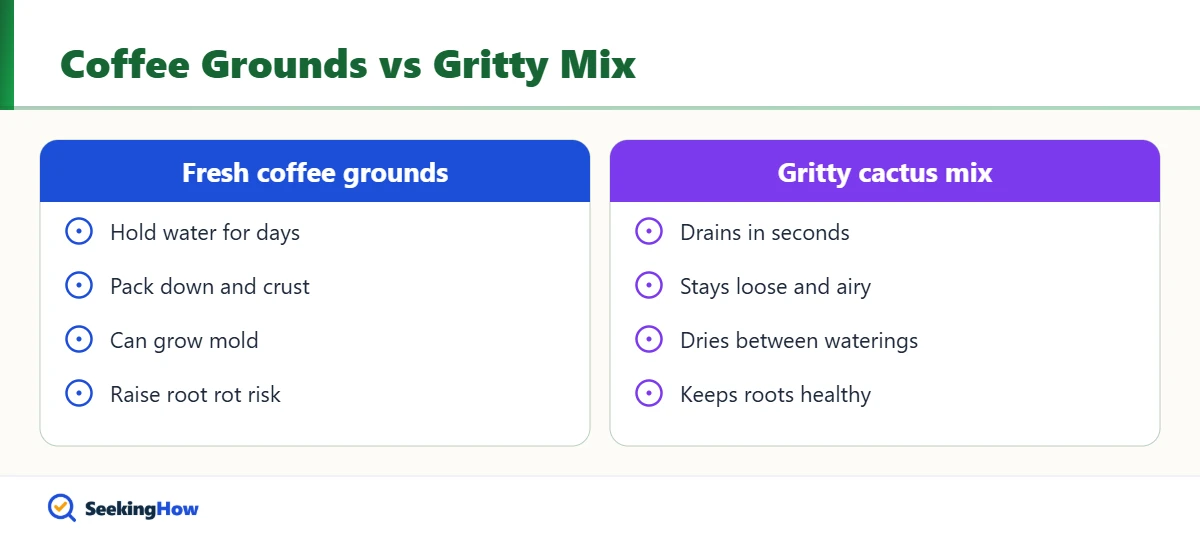
Succulents generally do not like coffee grounds. Fresh grounds hold moisture, pack down, and can grow mold, which raises the risk of root rot in plants built for dry, fast-draining soil. If you want to use coffee grounds for succulents, compost them first and keep the finished compost to a small share of a gritty cactus mix, never a top layer.
Key Takeaways
- Succulents need fast-draining soil, and fresh coffee grounds retain water and compact.
- Used coffee grounds are near neutral, around pH 6.5 to 6.8, so they add no acidity benefit.
- A layer of grounds on top of a pot can mold and keep the crown of the plant damp.
- Composted grounds in small amounts are the only safe way to use them with succulents.
- Most succulents need little fertilizer; a diluted balanced feed in the growing season is enough.
Coffee grounds are a popular kitchen-scrap amendment, so it is fair to ask whether succulents like coffee grounds as much as other garden plants. The short version is no, at least not straight from the coffee maker. Below is how to use grounds safely if you still want to, and what succulents actually need instead.
What You’ll Need
- Cactus and succulent potting mix
- Coarse grit such as pumice, perlite, or coarse sand
- Finished compost that includes coffee grounds (optional)
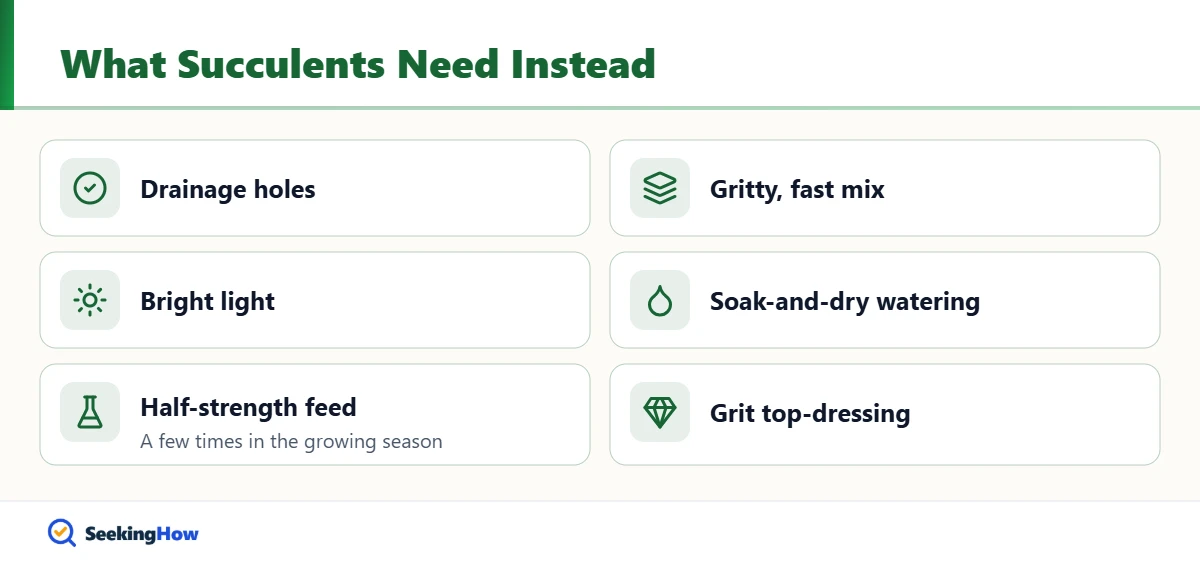
- Pots with drainage holes
- Balanced liquid fertilizer, diluted (optional)
How To Use Coffee Grounds for Succulents: Step-by-Step
Step 1: Skip Fresh Grounds Entirely
Do not sprinkle fresh or recently brewed grounds on succulent pots. Wet grounds stay damp for days and can grow mold against the stem. Most people find this is the fastest way to get soft, rotting lower leaves.
Step 2: Compost the Grounds First
Add grounds to a compost pile instead, keeping them under about 20 percent of the pile by volume, as Oregon State University Extension recommends. Composting breaks down caffeine residue and avoids nitrogen tie-up.
Step 3: Build a Gritty Base Mix
Start with a commercial cactus mix and add coarse pumice or perlite until the blend is roughly half mineral grit. This drainage is what keeps succulent roots healthy. Water should run out of the pot within seconds.
Step 4: Blend In a Small Amount of Compost
If you want extra organic matter, mix no more than about one part finished compost to ten parts gritty mix for outdoor beds or heavy feeders. For indoor pots, skip it; the cactus mix already has enough organic content.
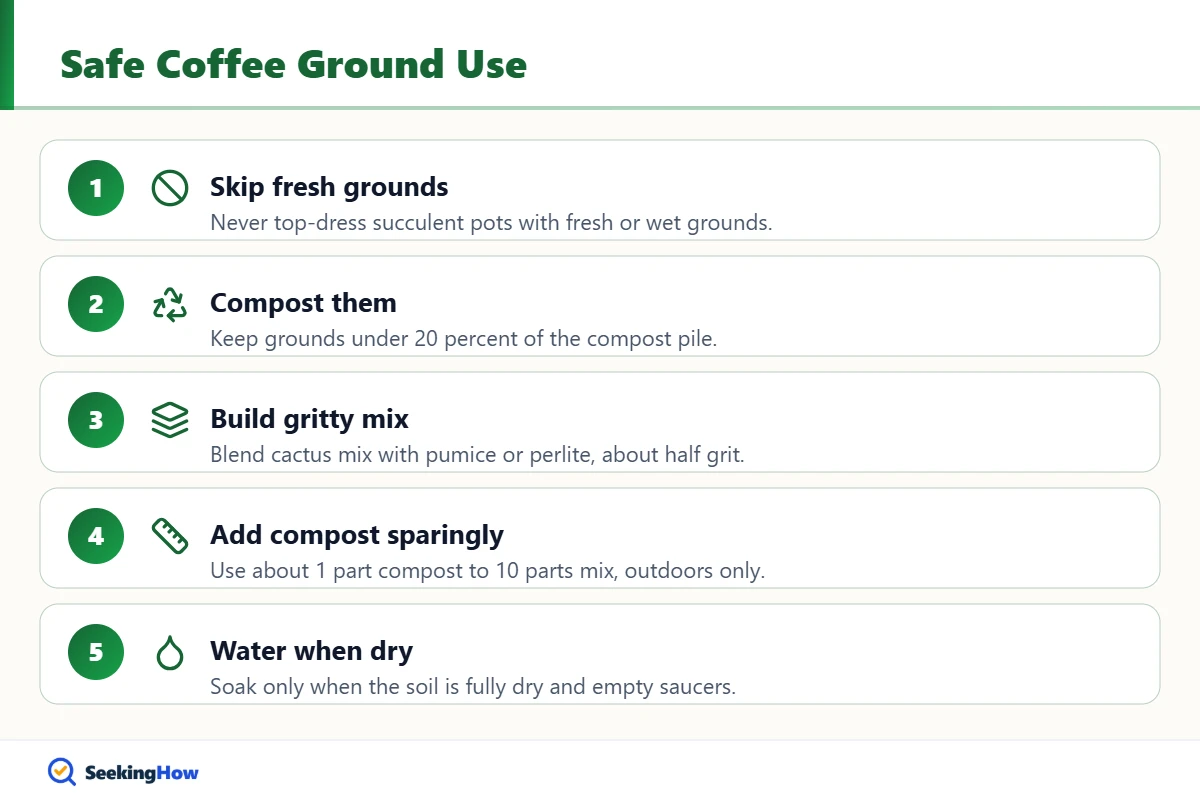
Step 5: Water and Feed Correctly
Water deeply only when the soil is completely dry, and empty saucers so pots never sit in water. Feed with a balanced liquid fertilizer diluted to half strength a few times during the growing season. In practice, overwatering kills far more succulents than lack of nutrients.
Bottom line: Keep fresh coffee grounds out of succulent pots and give succulents gritty, fast-draining soil instead.
If That Didn’t Work
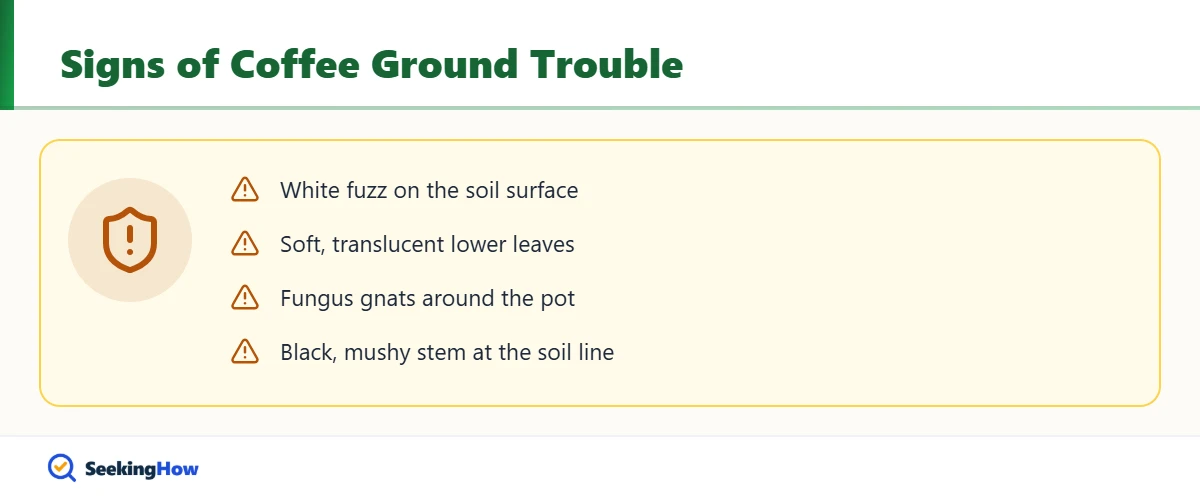
Problem: White fuzz on the soil surface. Cause: Mold growing on coffee grounds. Fix: Scrape off the grounds and top layer of soil and let the pot dry.
Problem: Lower leaves turn soft and translucent. Cause: Overwatering or soil that stays wet. Fix: Unpot, trim rotten roots, let it dry for a few days, and repot in gritty mix.
Problem: Fungus gnats around the pot. Cause: Damp organic material on top. Fix: Remove grounds, let the soil dry out fully, and top-dress with grit.
Problem: Soil pulls away from the pot and repels water. Cause: Dried grounds forming a crust. Fix: Remove the crust and bottom-water once to rewet the mix.
| Option | Safe for succulents? | Notes |
|---|---|---|
| Fresh grounds on top | No | Mold, damp crown, crusting |
| Fresh grounds mixed in soil | No | Holds water, compacts |
| Composted grounds, small share | Yes, sparingly | Best for outdoor beds |
| Diluted balanced fertilizer | Yes | Growing season only |
When To Get Expert Help
Take a sample to a local nursery or your county extension master gardener program if a succulent has black, mushy stems, a foul smell at the soil line, or spreading spots after you remove wet material. Those signs point to advanced rot or a fungal disease; healthy cuttings taken above the rot are often the best way to save the plant.
Prevention Tips
- Always use pots with drainage holes.
- Top-dress with pebbles or grit instead of organic mulch.
- Water less in winter when most succulents rest.
Related Guides
Sources
- Oregon State University Extension: coffee grounds and composting
- Washington State University: horticultural myth on coffee grounds
- University of Arizona Cooperative Extension: using coffee grounds in the garden
Frequently Asked Questions
Can I put coffee grounds on top of my succulent soil?
No. A top layer of grounds stays damp, can mold, and keeps moisture against the plant crown, which is where rot often starts. Use pebbles, pumice, or coarse sand as a top-dressing instead. They dry quickly and keep the base of the plant clean.
Are coffee grounds good for cactus?
Not as a direct amendment. Cacti need even sharper drainage than most succulents, and fresh grounds hold water and compact. If you want to use grounds, compost them first and keep the compost to a very small share of a gritty cactus mix.
Do coffee grounds make succulent soil acidic?
No. Used coffee grounds are close to neutral, around pH 6.5 to 6.8, according to Oregon State University Extension. Most succulents grow well in slightly acidic to neutral soil anyway, so pH is rarely the reason to add or avoid grounds.
Can I water succulents with leftover coffee?
It is not worth it. Diluted black coffee adds very little nutrition, and any milk or sugar can feed mold and attract gnats. Plain water and a half-strength balanced fertilizer a few times in the growing season are better choices.
What is the best fertilizer for succulents?
A balanced liquid fertilizer diluted to half strength, or a product labeled for cacti and succulents, works well. Feed only during active growth, typically spring and summer, and skip feeding in winter. Too much fertilizer causes weak, stretched growth.
Will coffee grounds keep pests away from succulents?
Not reliably. Damp grounds can actually attract fungus gnats. For mealybugs and aphids on succulents, dab them with rubbing alcohol on a cotton swab or use insecticidal soap labeled for the plant, and improve airflow and drainage.