
Quick Answer
Hydrangeas tolerate coffee grounds as a light soil amendment, but coffee grounds will not turn hydrangeas blue. Used grounds are close to neutral pH and add only a little organic matter and nitrogen. For blue flowers on bigleaf hydrangeas, test the soil and use aluminum sulfate to reach a pH below 5.5. Mix in no more than a half inch of grounds or compost them first.
Key Takeaways
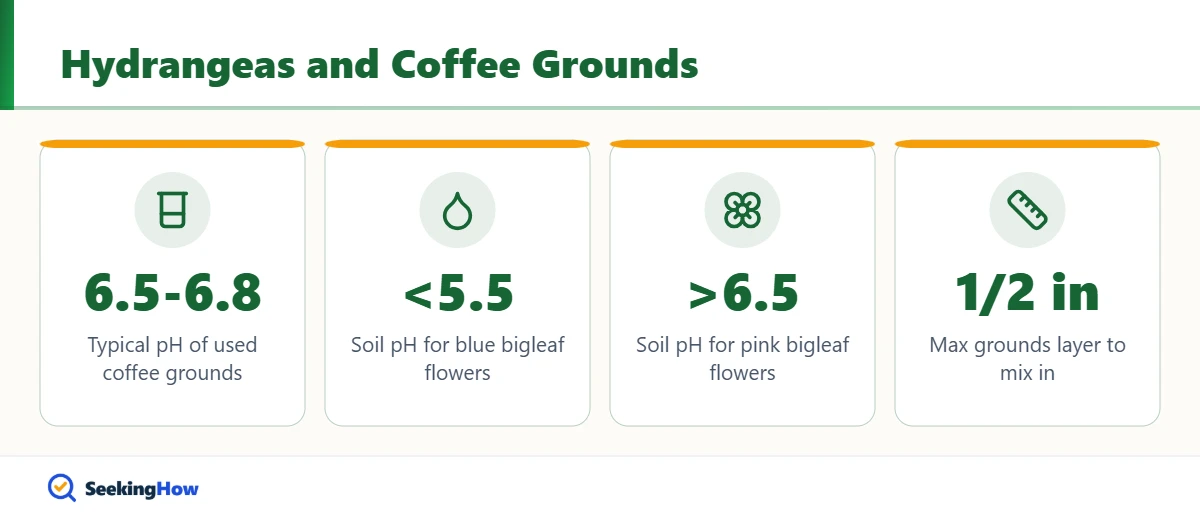
- Brewed coffee grounds measure around pH 6.5 to 6.8, too close to neutral to acidify hydrangea soil.
- Only bigleaf and mountain hydrangeas change flower color with soil pH.
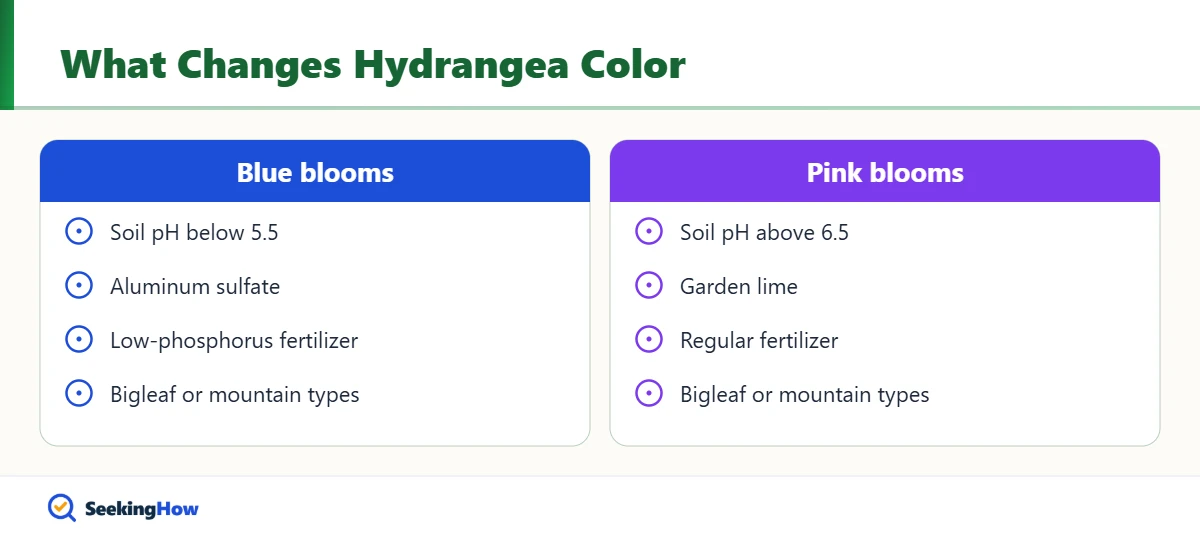
- Blue flowers need acidic soil below pH 5.5 plus available aluminum.
- Soil above pH 6.5 usually produces pink flowers on color-changing hydrangeas.
- Composted grounds improve soil structure without tying up nitrogen.
Coffee grounds have a reputation as a hydrangea bluing trick, which is why so many gardeners ask: do hydrangeas like coffee grounds? Extension research says the grounds are a fine amendment in small amounts but a poor color tool. Here is how to use them without harming the shrub and what actually changes bloom color.
What You’ll Need
- Used coffee grounds, dried if stored
- Soil pH test kit or a lab test from your county extension office
- Aluminum sulfate (only for bluing bigleaf hydrangeas)
- Garden lime (only for pinking bigleaf hydrangeas)
- Low-phosphorus fertilizer for acid-loving plants (for blue types)
- Shredded bark or leaf mulch
How To Use Coffee Grounds on Hydrangeas: Step-by-Step
Step 1: Identify Your Hydrangea Type
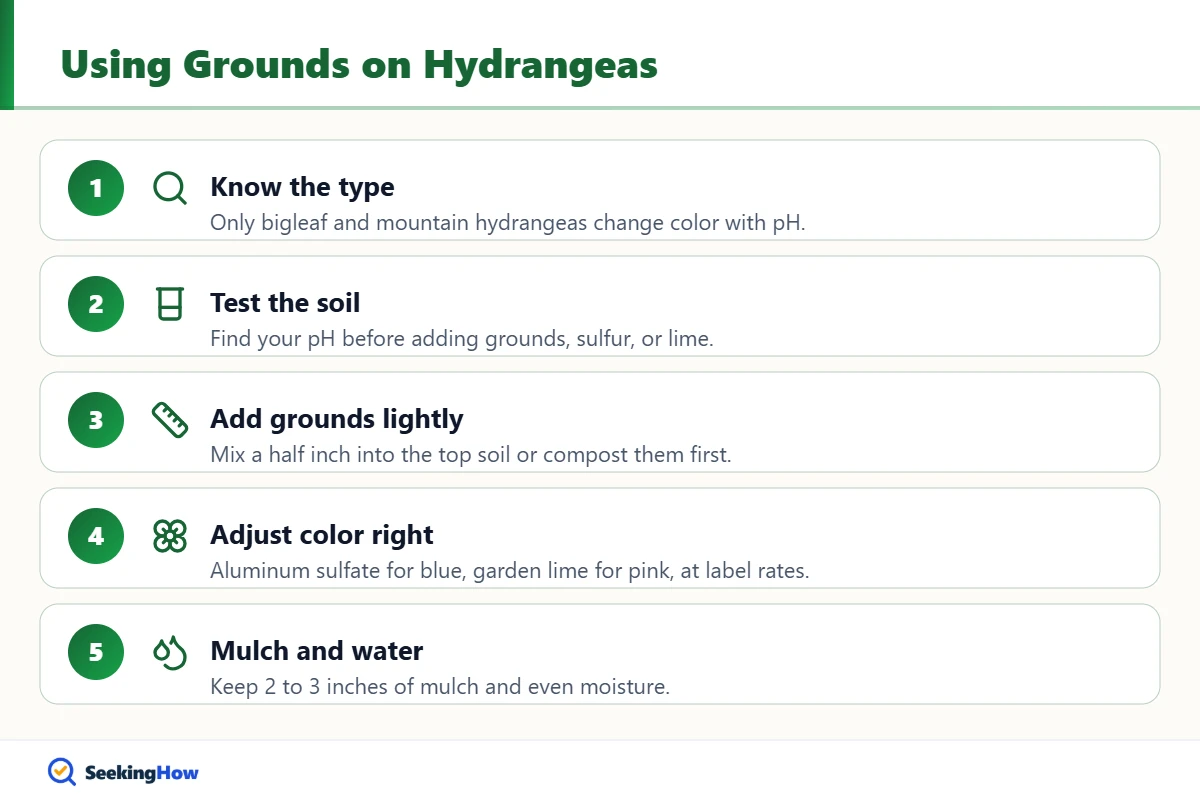
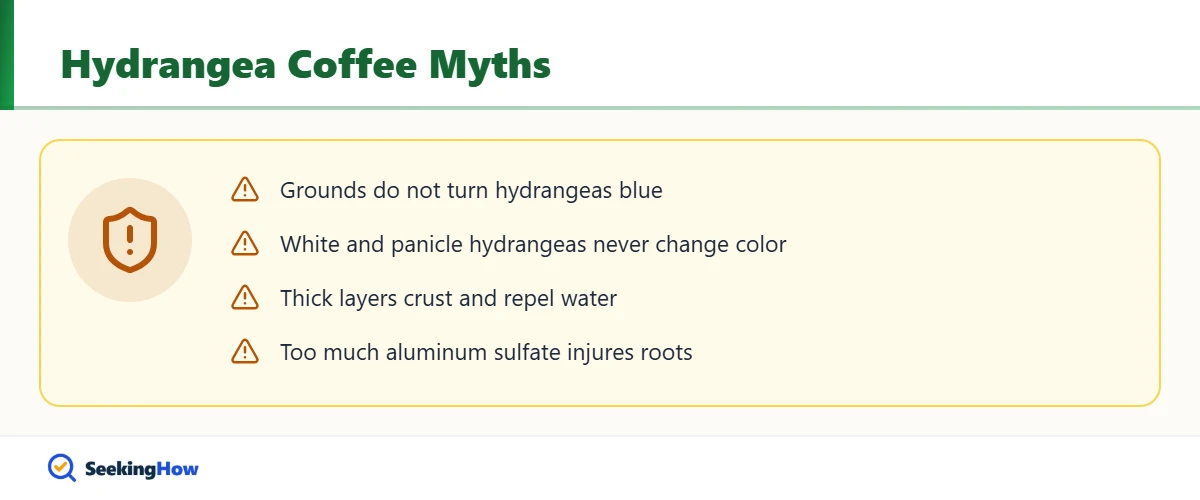
Check whether your shrub is a bigleaf hydrangea (Hydrangea macrophylla) or mountain hydrangea (H. serrata); only those change color with pH. Panicle, smooth (such as Annabelle), and oakleaf hydrangeas stay the same color no matter what you add. White cultivars stay white.
Step 2: Test the Soil pH
Test before adding anything. Below pH 5.5, color-changing hydrangeas bloom blue; above 6.5 they usually bloom pink; in between you get purple or mixed blooms, according to UMass Extension. A test also shows whether coffee grounds are even worth adding.
Step 3: Add Grounds Lightly or Compost Them
Spread no more than a half inch of used grounds over the root zone and scratch them into the top few inches, or add them to compost first. Do not pile grounds against the stems. Thick layers crust over, repel water, and can temporarily tie up nitrogen.
Step 4: Use Aluminum Sulfate for Blue Flowers
If you want blue blooms and the soil is above 5.5, apply aluminum sulfate at the rate on the package, watered in well, and retest after a few months. Too much aluminum sulfate injures roots, so go slowly. Choose a low-phosphorus fertilizer, because phosphorus binds aluminum in the soil.
Step 5: Use Garden Lime for Pink Flowers
For pink blooms, raise the pH above 6.5 with garden lime at the label rate. Color shifts take a season or more, so most people find patience works better than repeated heavy doses.
Step 6: Mulch and Water
Cover the root zone with 2 to 3 inches of shredded bark or leaves, keeping mulch a few inches from the stems. Hydrangeas wilt fast in dry soil, and mulch keeps moisture even.
Bottom line: Treat coffee grounds as a light organic amendment for hydrangeas and use a soil test plus aluminum sulfate or lime to control bloom color.
If That Didn’t Work
Problem: Flowers stayed pink after adding grounds. Cause: Used grounds are nearly neutral. Fix: Test pH and use aluminum sulfate to reach below 5.5.
Problem: Flowers turned purple, not blue. Cause: Soil pH sits between 5.5 and 6.5. Fix: Continue gradual acidifying and use low-phosphorus fertilizer.
Problem: Leaves yellowed after heavy grounds. Cause: Nitrogen tie-up or a waterlogged crust. Fix: Rake out excess grounds and feed lightly.
Problem: White hydrangea did not change. Cause: White types and panicle hydrangeas do not respond to pH. Fix: Choose a bigleaf cultivar for color changes.
| Goal | What works | Coffee grounds help? |
|---|---|---|
| Blue flowers | pH below 5.5 plus aluminum sulfate | No, too close to neutral |
| Pink flowers | pH above 6.5 with garden lime | No |
| Better soil structure | Compost, mulch | Yes, in small amounts |
| More nitrogen | Balanced fertilizer | Very slightly |
When To Get Expert Help
Ask your county Cooperative Extension office for a soil test or diagnosis if hydrangea leaves turn yellow between green veins, develop purple-brown spots, or the shrub wilts even in moist soil. Those signs can mean iron or other nutrient problems, leaf spot disease, or root rot from poor drainage, none of which coffee grounds fix.
Prevention Tips
- Plant bigleaf hydrangeas where they get morning sun and afternoon shade.
- Retest soil pH every year or two if you are managing bloom color.
- Prune bigleaf types right after flowering to avoid cutting next year’s buds.
Related Guides
Sources
- UMass Extension: hydrangea color and fertilizing
- Oregon State University Extension: coffee grounds and composting
- Washington State University: horticultural myth on coffee grounds
Frequently Asked Questions
Will coffee grounds turn my hydrangeas blue?
No. Brewed coffee grounds are close to neutral, around pH 6.5 to 6.8, so they cannot lower soil pH enough. Blue flowers on bigleaf hydrangeas need soil below pH 5.5 and available aluminum, which usually means aluminum sulfate applied at the package rate.
How much coffee grounds should I put on hydrangeas?
Use no more than a half-inch layer scratched into the soil once or twice a season, or add grounds to compost instead. Keep them away from the stems. Heavier use can crust over, block water, and temporarily tie up nitrogen.
Are coffee grounds bad for hydrangeas?
Not in small amounts. They add organic matter and a little nitrogen. Problems come from overuse: thick mats that shed water, nitrogen tie-up from fresh grounds, and mold in wet piles. Composting the grounds first avoids nearly all of these issues.
Which hydrangeas change color?
Only bigleaf hydrangeas, including mophead and lacecap types, and mountain hydrangeas change color with soil pH. Panicle, smooth, and oakleaf hydrangeas keep their color. White cultivars of any type stay white regardless of soil chemistry.
What is the fastest way to make hydrangeas blue?
Test the soil, then apply aluminum sulfate at the label rate and water it in. Use a low-phosphorus fertilizer, since phosphorus locks up aluminum. Even then, expect the color to shift over a season or more rather than immediately.
Do hydrangeas like used tea leaves or eggshells instead?
Neither changes bloom color much. Tea leaves act like coffee grounds as a mild organic amendment. Eggshells add calcium slowly and, if anything, nudge soil toward alkaline, which favors pink rather than blue blooms on bigleaf types.