
Quick Answer
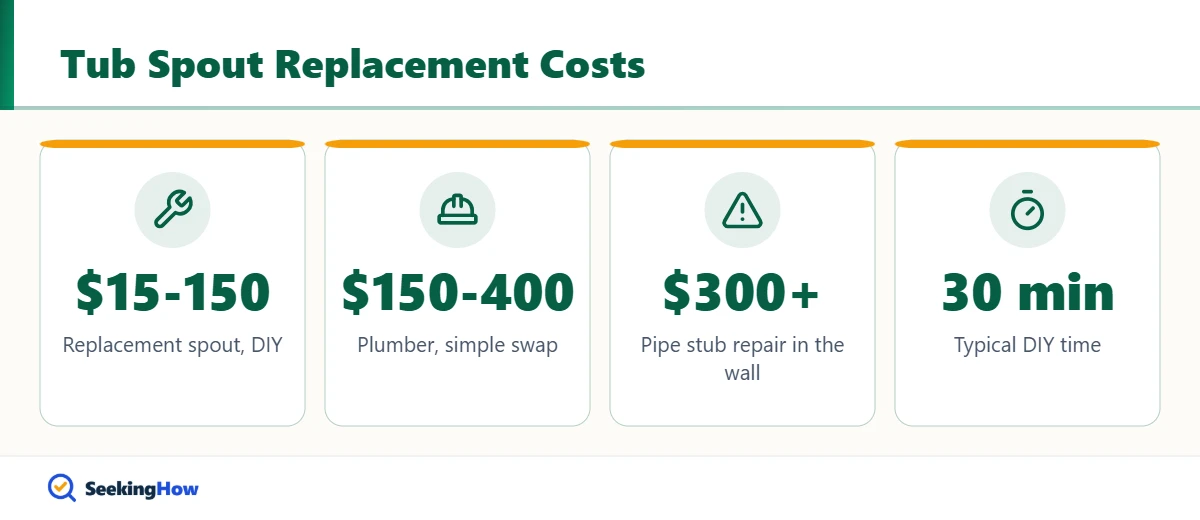
Replacing a tub spout costs about $15 to $150 for the part if you do it yourself, or roughly $150 to $400 with a plumber, as of 2026. A basic slip-on or threaded spout swap takes 15 to 30 minutes. Costs climb to several hundred dollars or more if the pipe stub behind the wall is corroded, too short, or leaking and the wall must be opened.
Key Takeaways
- A replacement tub spout typically costs $15 to $150, depending on brand, finish and whether it has a diverter.
- Plumbers commonly charge a flat $100 to $400 for simple service calls, which covers most spout swaps.
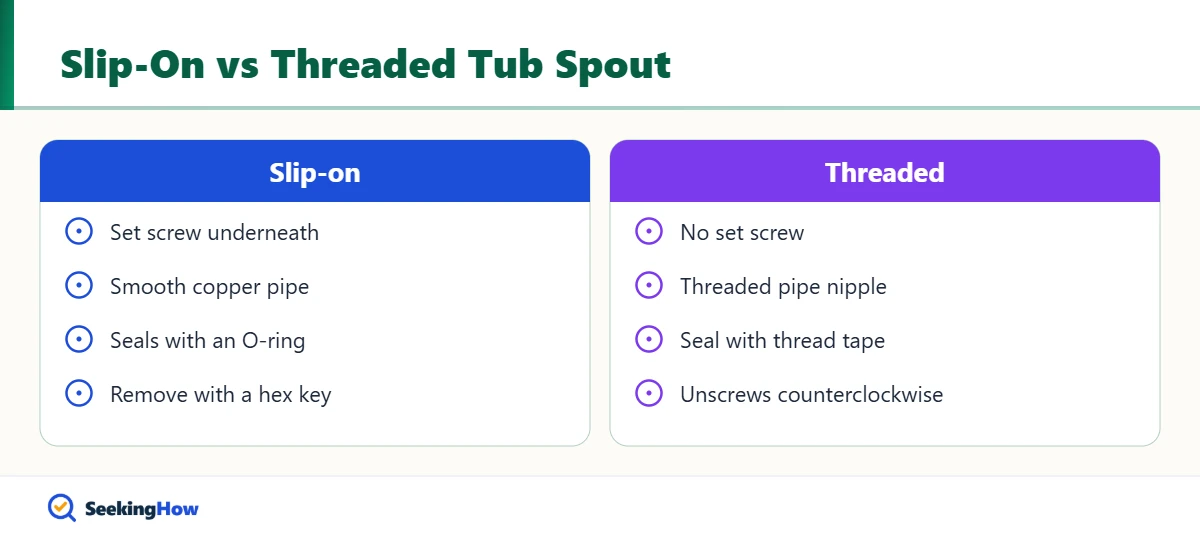
- Tub spouts attach in two main ways: slip-on with a set screw, or threaded onto a pipe nipple.
- Buying the wrong connection type is the most common DIY mistake and the main cause of leaks.
- Opening the wall to repair the pipe behind the spout can add hundreds of dollars plus tile repair.
A dripping, loose or cracked tub spout is one of the cheapest bathroom plumbing fixes, as long as the pipe behind it is in good shape. This guide explains how much it costs to replace a tub spout yourself or with a plumber, what raises the price, and how to tell which spout you need before you buy. Prices are national estimates and vary by region and year.
What You’ll Need
- Replacement tub spout matching your connection type (slip-on or threaded) and diverter style
- Allen (hex) key set, typically 3/32 in. to 1/8 in., for slip-on set screws
- Adjustable wrench or strap wrench, for threaded spouts
- Thread seal tape (PTFE), for threaded connections
- 100 percent silicone caulk rated for kitchen and bath
- Tape measure and a rag
- Emery cloth, for cleaning copper pipe (optional)
Tub Spout Replacement Cost Breakdown
| Scenario | Typical cost | Time | Difficulty | Best for |
|---|---|---|---|---|
| DIY, basic spout | $15 to $50 | 15 to 30 minutes | Easy | Standard chrome, no diverter or simple diverter |
| DIY, brand-matched spout | $40 to $150 | 15 to 30 minutes | Easy | Matching existing faucet finish |
| Plumber, simple swap | $150 to $400 total | Under 1 hour | None for you | No tools or unsure of fit |
| Plumber, pipe stub repair | $300 to $800+ | Hours, plus tile work | Professional | Corroded, short or leaking pipe in wall |
Plumber labor figures reflect HomeAdvisor’s 2026 guidance: most plumbers charge about $70 to $120 per hour, service calls run $100 to $250 and often include the first hour, and after-hours work costs more.
What Changes the Price
- Diverter vs non-diverter: spouts with a pull-up diverter for the shower cost more than plain spouts.
- Finish and brand: matching a Moen, Delta or Kohler finish such as brushed nickel or matte black costs more than generic chrome.
- Connection type: universal spouts with adapters cost more but fit more pipes.
- Pipe condition: a corroded threaded nipple is cheap to replace if it unscrews cleanly, but expensive if the wall must be opened.
- Timing: weekend or emergency calls can cost time and a half or more.
How To Replace a Tub Spout Yourself: Step-by-Step
Step 1: Identify the Connection Type
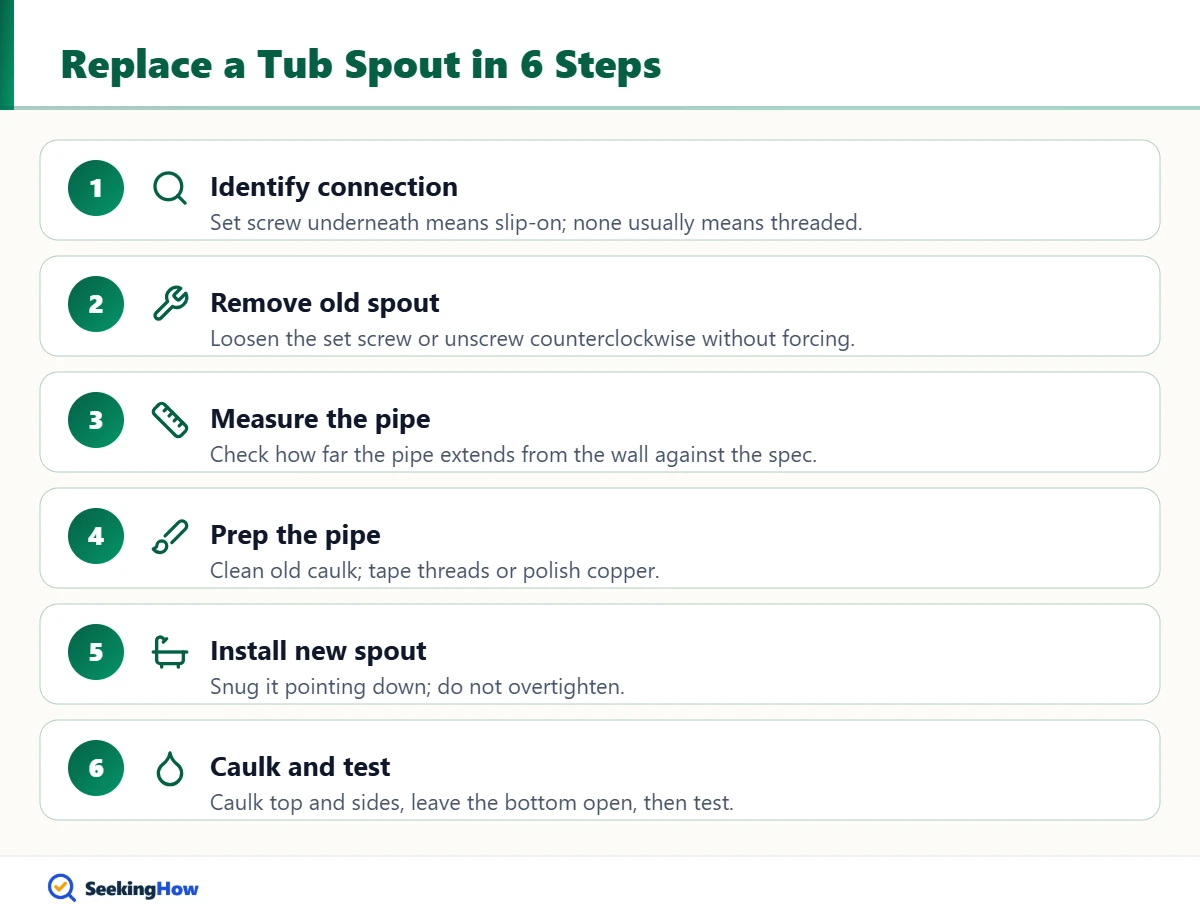
Look under the spout for a small set screw. If you see one, it’s a slip-on spout on a smooth copper pipe; if not, it’s most likely threaded and unscrews counterclockwise. Buying the wrong type is the top cause of a second trip to the store.
Step 2: Remove the Old Spout
For slip-on, loosen the set screw with a hex key and pull the spout straight off. For threaded, turn it counterclockwise by hand or with a cloth-wrapped strap wrench. Don’t twist hard on a stuck slip-on spout, because you can bend or crack the pipe joint inside the wall.
Step 3: Measure the Pipe
Measure how far the pipe sticks out from the finished wall and note its type. Most spout instructions list an acceptable pipe length range, often only a fraction of an inch, so check it before buying.
Step 4: Clean and Prepare the Pipe
Scrape off old caulk and clean the pipe. Wrap threaded pipe with 3 to 4 turns of thread seal tape clockwise; polish copper lightly with emery cloth so a slip-on O-ring seals properly.
Step 5: Install the New Spout
Thread the new spout on until it is snug and points straight down, or slide a slip-on spout fully onto the pipe and tighten the set screw. Overtightening a threaded spout can crack its housing or loosen the fitting behind the wall.
Step 6: Caulk and Test
Run a thin bead of silicone along the top and sides where the spout meets the wall, leaving the bottom open so any water can drain out. Let it cure as the label directs, then run the tub and test the diverter.
Bottom line: If the spout comes off cleanly and the pipe looks sound, replace it yourself; if the pipe is corroded, loose or leaking inside the wall, call a plumber.
If That Didn’t Work
Problem: Water leaks from behind the spout. Cause: Wrong pipe length, a bad seal or a leaking joint inside the wall. Fix: Re-check the fit and seal; for diagnosis steps see tub spout leaking from the back.
Problem: The shower diverter won’t hold. Cause: Worn diverter gate or low water pressure. Fix: Replace the spout with a new diverter spout; if pressure is the issue, see how to increase shower water pressure.
Problem: The new spout won’t reach the wall or sticks out at an angle. Cause: Pipe nipple too long or too short. Fix: Replace a threaded nipple with the correct length, or use an adjustable universal spout.
Problem: Water drips from the spout with the tub off. Cause: A worn faucet cartridge or valve, not the spout. Fix: Replace the cartridge; a new spout won’t stop it.
Safety and When To Call a Pro
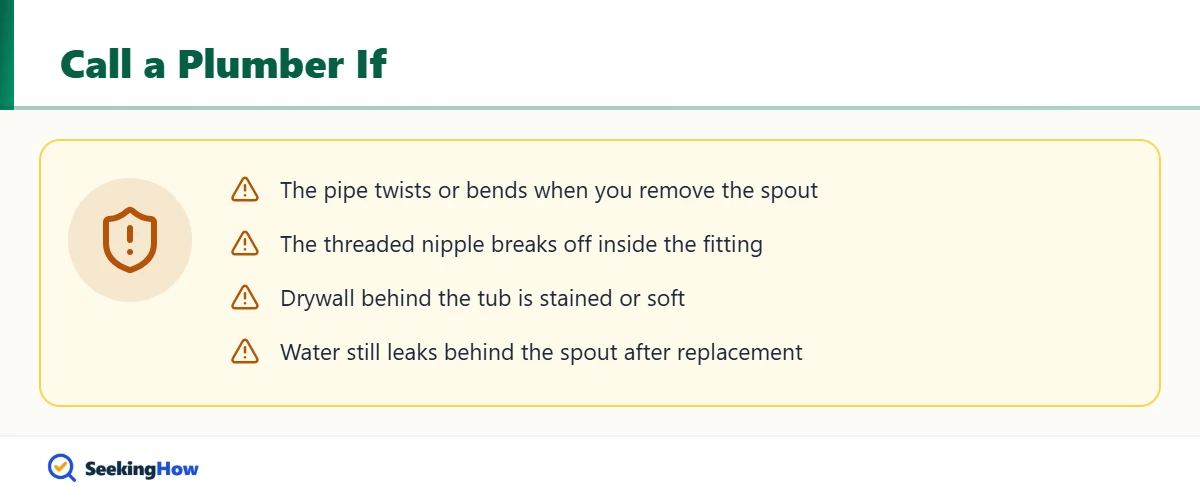
Call a licensed plumber if the pipe stub twists, bends or leaks when you remove the spout, if you see water stains or soft drywall on the other side of the wall, or if the threaded nipple is broken off inside the fitting. These signs point to a problem in the wall that can cause hidden water damage. Shut off the water supply before any work beyond a simple spout swap.
Prevention Tips
- Don’t hang on or pull down hard on the spout or diverter knob.
- Re-caulk around the spout when the old bead cracks.
- Clean mineral buildup from the diverter with vinegar to keep it moving freely.
- Fix faucet drips early so they don’t stain the tub or waste water.
Related Guides
- Tub spout leaking from the back: causes and fixes
- How to increase water pressure in your shower
- How to replace a kitchen faucet
- How to fix a leaking PVC joint without cutting
Sources
- HomeAdvisor: How much does a plumber cost
- U.S. EPA WaterSense: fixing household leaks (epa.gov/watersense)
- Manufacturer tub spout installation instructions (Moen, Delta, Kohler support sites)
Frequently Asked Questions
Can I replace a tub spout myself?
Yes. Most tub spouts are a 15 to 30 minute DIY job using a hex key or wrench, thread tape and silicone caulk. The key is buying a spout that matches your connection type and pipe length. Call a plumber if the pipe moves or leaks inside the wall.
How do I know if my tub spout is slip-on or threaded?
Look underneath the spout for a small set screw. A set screw means it is a slip-on spout on smooth copper pipe. No set screw usually means a threaded spout that unscrews counterclockwise. You can also look inside the spout opening for threads.
Do tub spouts fit all faucets?
No. Spouts vary by connection type, pipe size, required pipe length and diverter style. Universal spouts with adapters fit many setups, but matching your faucet brand ensures the finish and fit line up. Measure the pipe extension before you buy.
How much does a plumber charge to replace a tub spout?
Most plumbers handle a tub spout swap as a simple service call, often $150 to $400 including the part, depending on your area. Service call fees of $100 to $250 commonly include the first hour, which is usually enough for this job.
Why does my new tub spout leak behind the wall?
A leak behind a new spout usually means the pipe is the wrong length, the O-ring or thread tape isn’t sealing, or a fitting inside the wall is loose. Remove the spout, check the fit and seal, and call a plumber if water appears inside the wall.
Should I caulk around a tub spout?
Yes, caulk the top and sides where the spout meets the wall to keep water out of the wall cavity. Many plumbers leave a small gap at the bottom so any water that gets behind the spout can drain out and be noticed.
Will replacing the tub spout fix a dripping faucet?
No. Water dripping from the spout when the tub is off comes from a worn faucet cartridge or valve seat, not the spout. Replacing the cartridge fixes that drip. A new spout only fixes cracks, a failed diverter or leaks at the spout itself.