Quick Answer
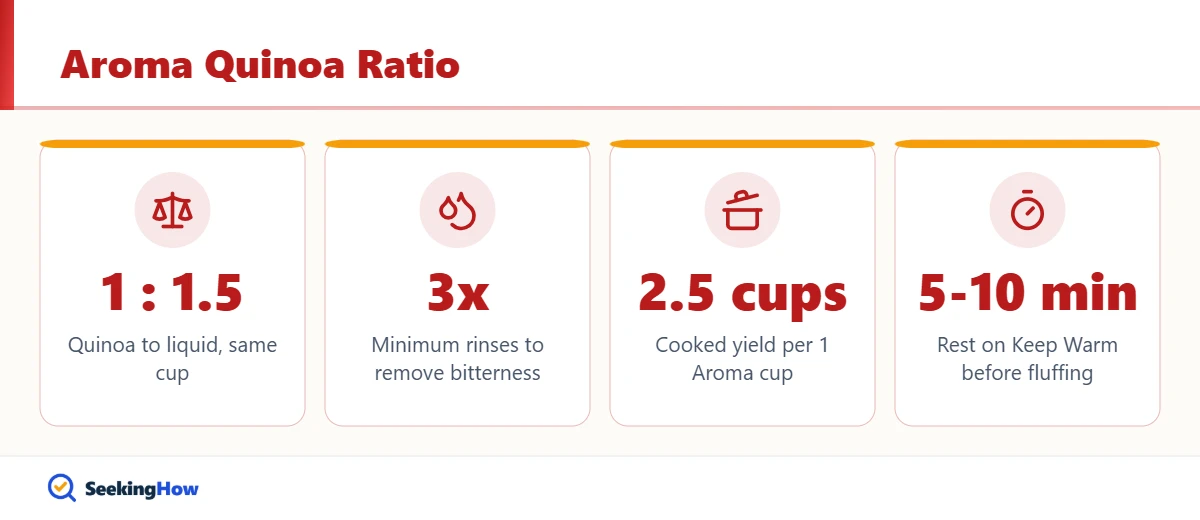
To cook quinoa in an Aroma rice cooker, rinse 1 Aroma cup of quinoa at least three times, add 1-1/2 Aroma cups of water or broth, and run the White Rice setting, which takes about 25 to 45 minutes. Let the quinoa rest 5 to 10 minutes on Keep Warm before fluffing. Skipping the rinse leaves quinoa bitter.
Key Takeaways
- Aroma’s manuals list a quinoa ratio of 1 part quinoa to 1-1/2 parts liquid, measured with the same cup.
- Use the White Rice setting; Aroma’s digital manuals list quinoa on White Rice, not Brown Rice.
- Rinse quinoa at least three times to wash off saponins, the natural coating that tastes bitter and soapy.
- One Aroma cup of uncooked quinoa makes about 2-1/2 Aroma cups cooked.
- Don’t use the rice water lines for quinoa; measure liquid with a cup instead.
An Aroma rice cooker makes fluffy quinoa with no pot watching, as long as you use the right ratio and setting. This guide shows how to cook quinoa in an Aroma rice cooker using the measurements in Aroma’s own cooking guides, plus fixes for mushy, wet, or bitter results.
What You’ll Need
- Aroma rice cooker and its inner pot
- The included Aroma rice measuring cup (3/4 U.S. cup)
- White, red, or tricolor quinoa
- Fine-mesh strainer (quinoa slips through regular colanders)
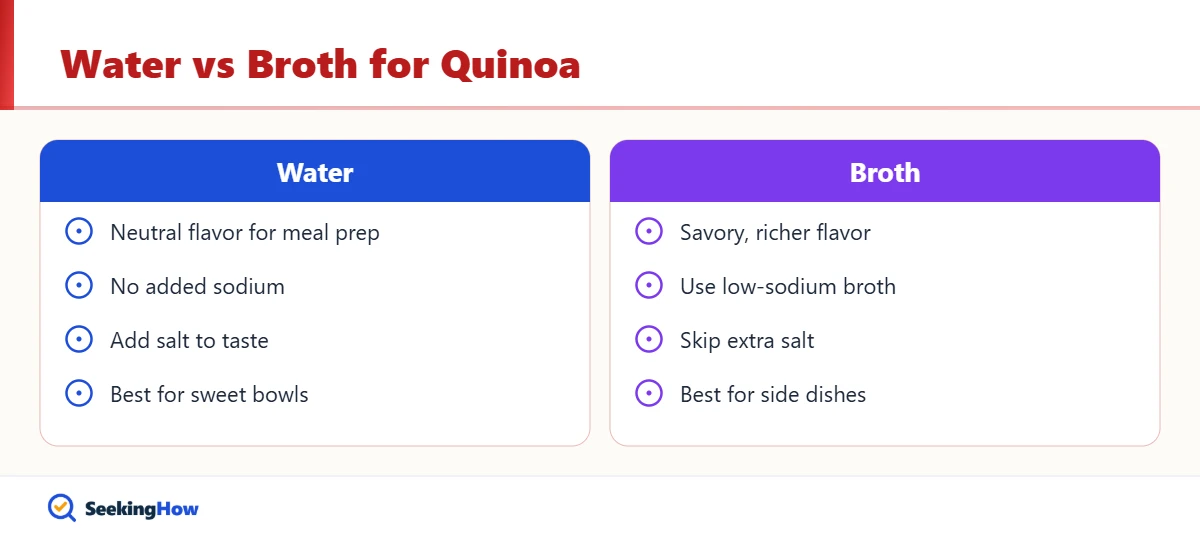
- Water or low-sodium broth
- Salt, about 1/4 teaspoon per cup (optional)
- 1 teaspoon olive oil or butter (optional, reduces sticking and foaming)
How To Cook Quinoa in an Aroma Rice Cooker: Step-by-Step
Step 1: Measure the Quinoa
Scoop quinoa with the Aroma cup and level it off. Use the same cup for the liquid so the ratio stays exact. Aroma’s 6-cup guide lists 2 cups of uncooked quinoa as the maximum for that size, so check your manual before scaling up.
Step 2: Rinse at Least Three Times
Put the quinoa in a fine-mesh strainer and rinse under cold water, rubbing the grains, for about 30 seconds; repeat until the water no longer looks foamy. Aroma recommends rinsing at least three times until the water runs clear. Skipping this step is the most common mistake and the main reason quinoa tastes bitter.
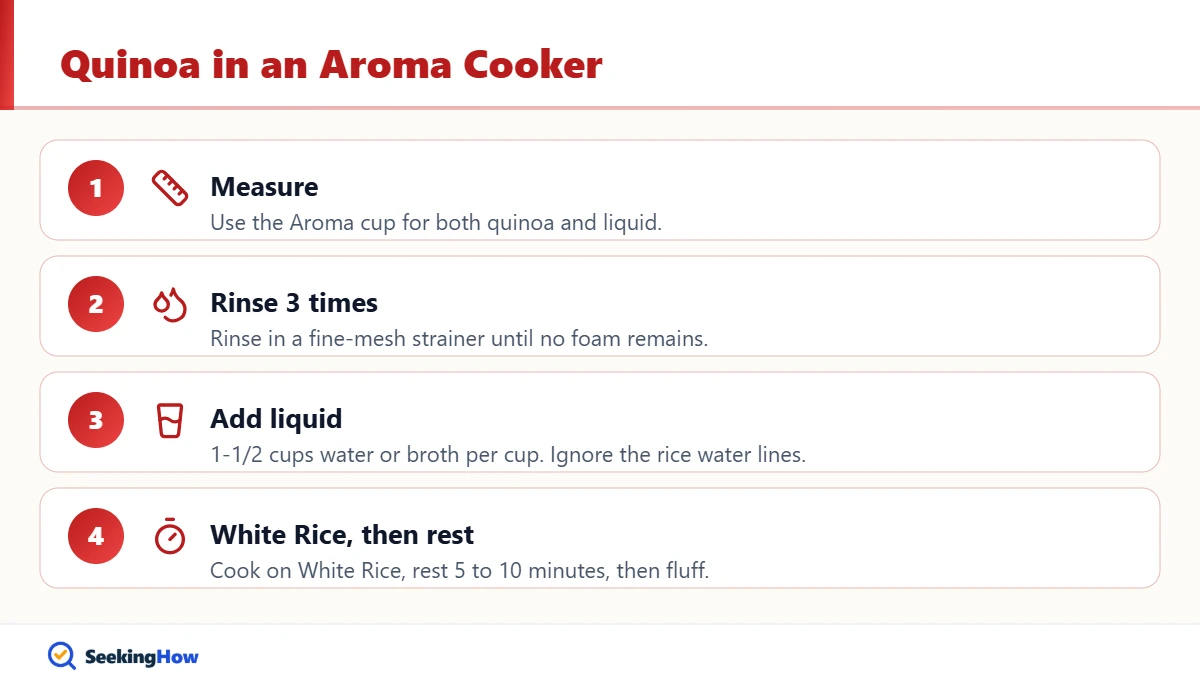
Step 3: Add 1-1/2 Cups Liquid per Cup of Quinoa
Transfer the drained quinoa to the inner pot and add 1-1/2 Aroma cups of water or broth for each Aroma cup of quinoa. Add salt and a teaspoon of oil if you like. Do not fill to the rice water lines, because those lines assume more water than quinoa needs and give a mushy result.
Step 4: Cook on the White Rice Setting
Dry the outside of the pot, set it in the cooker, close the lid, and press White Rice, or push down the Cook lever on switch-style models. Expect about 25 to 45 minutes depending on your model and quantity. Avoid the Brown Rice setting, which runs longer and can overcook quinoa.
Step 5: Rest and Fluff
When the cooker clicks to Keep Warm, leave the lid closed for 5 to 10 minutes so the last moisture absorbs. Then fluff with a fork or the rice paddle. Cooked quinoa is ready when the grains are tender and the little white germ ring has separated from each seed.
Bottom line: Rinse well, use 1 to 1-1/2 quinoa to liquid with the same cup, and cook on White Rice.
Quinoa Ratio Chart for Aroma Rice Cookers
| Uncooked quinoa (Aroma cup) | Water or broth (Aroma cup) | Approx. cooked yield |
|---|---|---|
| 1 cup | 1-1/2 cups | About 2-1/2 cups |
| 2 cups | 3 cups | About 5 cups |
| 3 cups | 4-1/2 cups | About 7-1/2 cups |
Larger Aroma models such as the 8-cup ARC-914SBD list up to 4 cups of uncooked quinoa; small 3-cup and 6-cup models hold less.
If That Didn’t Work
Problem: Quinoa is mushy. Cause: Too much water or filling to the rice lines. Fix: Use 1-1/4 cups liquid per cup next time and drain rinsed quinoa well.
Problem: Quinoa tastes bitter or soapy. Cause: Saponins were not rinsed off. Fix: Rinse longer and rub the grains, even if the package says pre-rinsed.
Problem: Quinoa is crunchy. Cause: Too little liquid or it was not rested. Fix: Add 2 to 3 tablespoons water, stir, and leave on Keep Warm for 10 minutes.
Problem: Foam bubbles out of the vent. Cause: Starch and saponins foaming. Fix: Rinse more thoroughly, add 1 teaspoon oil, and stay within the maximum capacity.
Safety and Food Storage
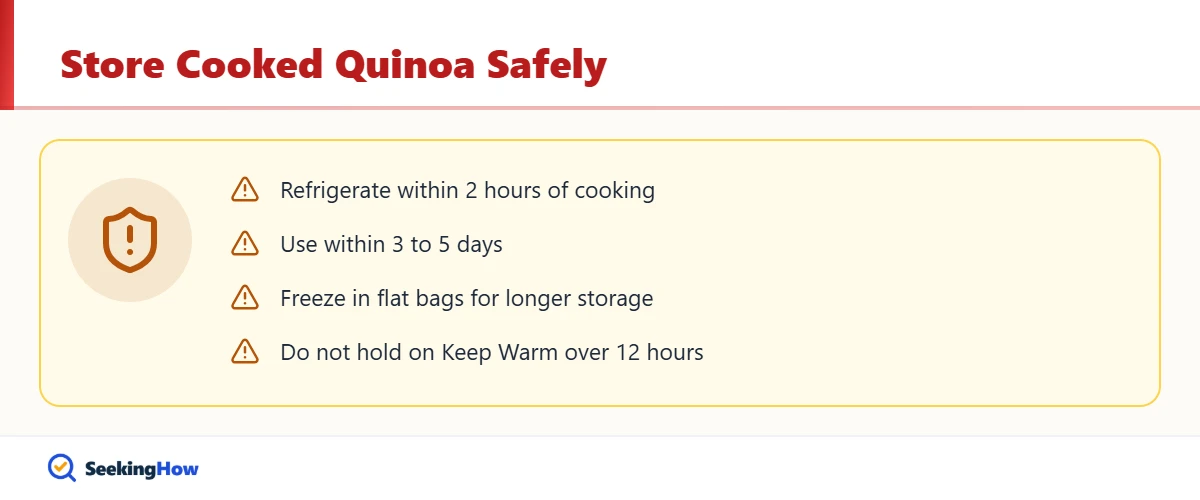
Keep your face and hands away from the steam vent and open the lid away from you. Refrigerate cooked quinoa within 2 hours in a shallow container and use it within 3 to 5 days, or freeze it for up to about 2 months. Aroma advises against leaving food on Keep Warm for more than 12 hours.
Related Guides
- How to use an Aroma rice cooker
- Aroma rice cooker water ratio for brown rice
- How to reset an Aroma rice cooker
- How to use an Oster rice cooker
Sources
- Aroma Housewares — 6-cup cooking guide (quinoa ratio, rinsing, maximum)
- Aroma Housewares — ARC-914SBD instruction manual (grain chart, Keep Warm)
- USDA Food Safety and Inspection Service — leftovers and food safety (fsis.usda.gov)
Frequently Asked Questions
What setting do I use for quinoa on an Aroma rice cooker?
Use the White Rice setting for quinoa on an Aroma rice cooker. Aroma’s digital manuals list quinoa under White Rice, and the cycle is long enough to fully cook it. The Brown Rice setting runs much longer and can make quinoa mushy.
What is the quinoa to water ratio in an Aroma rice cooker?
The quinoa to water ratio in an Aroma rice cooker is 1 to 1-1/2, measured with the same cup. For 1 Aroma cup of quinoa, add 1-1/2 Aroma cups of water or broth. Some cooks prefer 1 to 1-1/4 for firmer, drier grains for salads.
Do I have to rinse quinoa before cooking it in a rice cooker?
Yes, you should rinse quinoa before cooking it in a rice cooker. Rinsing removes saponins, a natural coating that tastes bitter and causes foaming. Aroma recommends rinsing at least three times until the water runs clear, even with pre-rinsed brands.
How long does quinoa take in an Aroma rice cooker?
Quinoa usually takes about 25 to 45 minutes in an Aroma rice cooker, depending on the model and amount. Add 5 to 10 minutes of resting time on Keep Warm. Digital models with longer soak phases take more time than basic switch-style cookers.
Can I use the water lines in the Aroma pot for quinoa?
No, the water lines in an Aroma pot are calibrated for rice, not quinoa. Following them adds too much water and makes quinoa soggy. Measure liquid with the Aroma cup at 1-1/2 cups per cup of quinoa instead.
Can I add vegetables to quinoa in an Aroma rice cooker?
Yes, you can stir in small diced vegetables or place them in the steam tray above the quinoa. Firm vegetables like carrots go in at the start, while spinach or peas can be stirred in during the resting time so they keep their color.