
Quick Answer
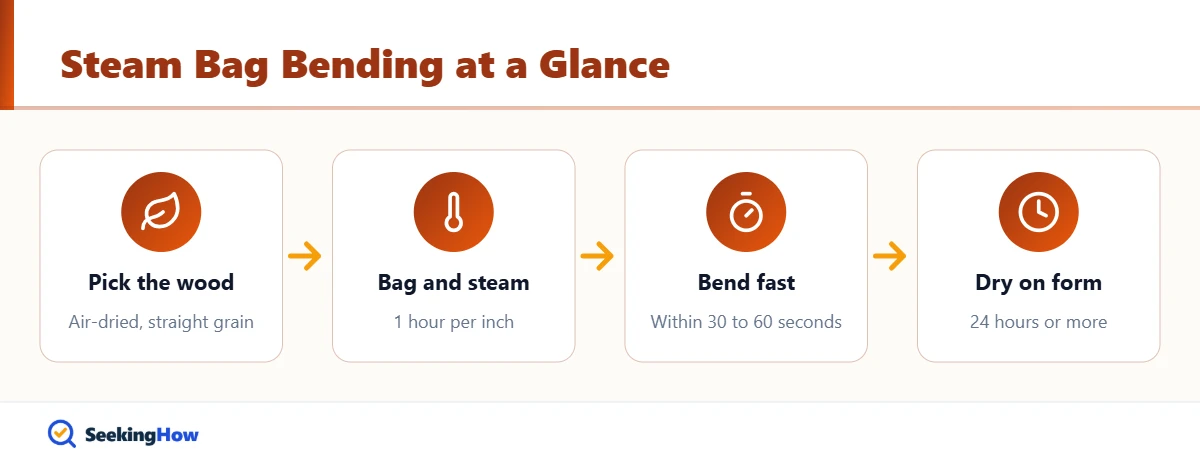
To steam bend wood without a steam box, seal the board inside a heavy plastic steam bag fed by a wallpaper steamer, steam it about 1 hour per inch of thickness, then bend it over a form within a minute. Use straight-grained, air-dried oak or ash, wear heat-proof gloves, and never seal the bag airtight.
Key Takeaways
- A steam bag plus a wallpaper steamer replaces a wooden steam box for most furniture-size parts.
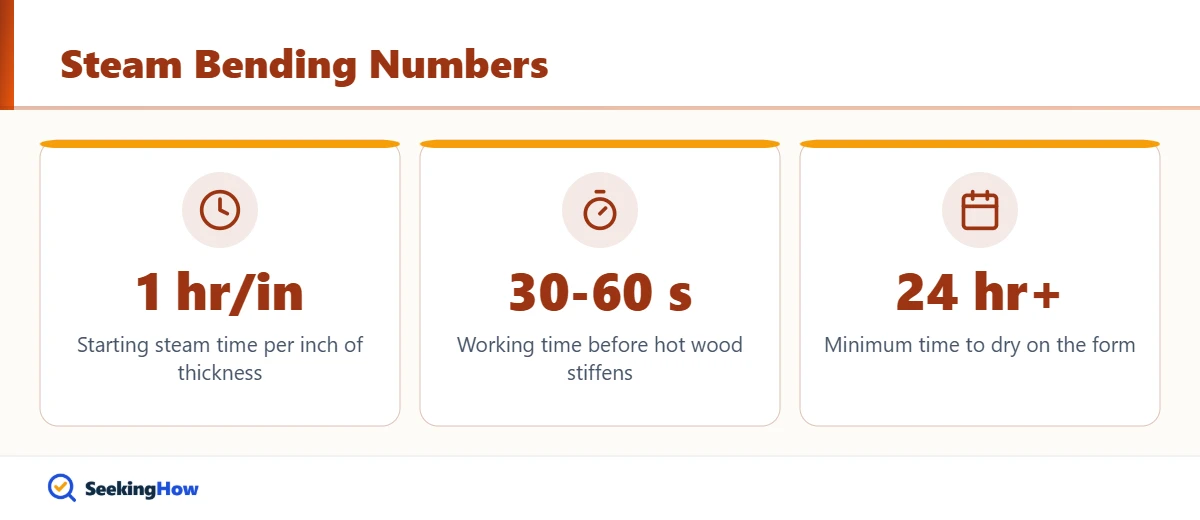
- The classic starting rule is 1 hour of steaming per inch of wood thickness.
- Air-dried white oak, ash, hickory, and cherry bend far better than kiln-dried lumber.
- You have roughly 30 to 60 seconds to bend the hot wood before it stiffens.
- A metal bending strap with end stops prevents the outside of the curve from splitting.
- Overbend slightly, because steam-bent wood springs back a little when released.
A traditional steam box takes a day to build and lots of storage space. If you only need to bend a few chair backs, handles, or trim pieces, you can steam bend wood without a steam box using a plastic bag, a hot pipe, or a household iron. The steam-bag method below is the one most hobbyists should start with.
What You’ll Need
- Wood: straight-grained, air-dried white oak, ash, hickory, red oak, cherry, or walnut, ideally under 1 inch thick
- Wallpaper steamer (the type with a hose), or a kettle or pot with a hose adapter
- Steam bag: heavy polyethylene tubing (about 6 mil) or a purpose-made steam bending bag
- Heat-resistant hose clamp or duct tape to attach the hose
- Bending form cut from stacked 3/4-inch plywood or MDF
- Bending strap: 1/16-inch steel or aluminum strip with wooden end blocks (recommended for tight bends)
- 4 to 8 clamps
- Heavy leather or insulated gloves and safety glasses
- Sawhorses and a slight slope so condensate drains out
- Clothes iron and cotton towels (optional, for thin strips)
How To Steam Bend Wood Without a Steam Box: Step-by-Step
Step 1: Choose and prepare the wood
Pick a board with grain running straight along its length and no knots in the bending zone. Air-dried wood bends much better than kiln-dried wood, because kiln drying sets the lignin and makes the fibers brittle. Mill the part to final thickness first, since bent parts are hard to plane afterward.
Step 2: Build the form and strap
Cut the form to the inside curve and screw it to a sturdy base so it will not shift under clamp pressure. For tight bends, make a bending strap the length of the part with wooden blocks at each end. The strap holds the outer fibers in compression, which is the main reason steam-bent parts split when made without one.
Step 3: Set up the steam bag
Slide the wood into the plastic tube, raise it on two or three spacers so steam can circulate all around, and close one end loosely. Insert the steamer hose into the other end and secure it with a clamp or tape. Tilt the bag slightly so water drains, and leave a small vent; a sealed bag can balloon and burst.
Step 4: Steam the wood
Run the steamer and start timing once the bag is fully inflated and hot. Use about 1 hour per inch of thickness as a starting point, so a 1/2-inch slat needs roughly 30 minutes. In practice, most people find steam bags heat wood faster than boxes because the steam touches the surface directly, so test a scrap at a shorter time first. Over-steaming makes wood mushy and prone to wrinkling on the inside face.

Step 5: Bend quickly over the form
Wearing gloves, pull the wood out (or leave it in the bag), set it in the strap, and bend it around the form in one smooth motion. Clamp the center first, then work toward the ends. You have about 30 to 60 seconds before the wood cools enough to resist, so rehearse the clamping sequence before you start the steamer.
Step 6: Let it dry on the form
Leave the part clamped on the form for at least 24 hours, and up to a week for thick stock. Removing it while damp lets the curve relax. Many woodworkers move the part to a simple drying jig after a day so the form is free for the next piece.
Bottom line: If your piece fits in a 6-foot bag and is under 1 inch thick, a steam bag and wallpaper steamer will do everything a steam box does.
Other No-Box Methods
- Hot pipe: Luthiers bend thin guitar sides (about 1/10 inch) over a heated metal pipe while spritzing with water. It suits strips, not thick stock.
- Iron and wet towels: Wrap a thin strip in wet cotton towels or foil and press with a clothes iron on high to generate steam locally, then bend in stages. This works for veneer and strips under about 1/8 inch.
- Boiling water soak: Pour boiling water over a strip or submerge it in a long pan for an hour or more. It is slower and less consistent than steam but needs nothing special.
For curves that do not need steam at all, see our guide on making curved wood arches with lamination and kerfing.
If That Didn’t Work
Problem: The outside of the bend split. Cause: Tension on the outer fibers or runout in the grain. Fix: Use a bending strap with end stops and choose straighter-grained stock.
Problem: The inside of the curve wrinkled or crushed. Cause: Over-steaming or a radius too tight for the species. Fix: Shorten the steaming time and open the radius slightly.
Problem: The wood would not bend at all. Cause: Kiln-dried lumber or not enough heat. Fix: Use air-dried wood and confirm the bag stays fully inflated and hot.
Problem: The part sprang back after unclamping. Cause: Removed before fully dry. Fix: Overbend by a few degrees and dry on the form longer. Minor springback can be corrected using the approach in straightening wood with water.
Problem: The plastic bag melted. Cause: Thin plastic touching the steamer hose or nozzle. Fix: Use heavier tubing and keep the hose end away from the plastic with a wooden collar.
| Method | Best thickness | Setup time | Difficulty | Best for |
|---|---|---|---|---|
| Steam bag + wallpaper steamer | 1/4 to 1 inch | 30 minutes | Moderate | Chair backs, handles, trim |
| Hot pipe | Under 1/8 inch | 15 minutes | Moderate | Instrument sides, strips |
| Iron and wet towels | Under 1/8 inch | 5 minutes | Easy | Veneer, small repairs |
| Boiling water soak | Under 1/4 inch | 10 minutes | Easy | Simple gentle curves |
Safety and When To Call a Pro
Steam causes severe burns faster than boiling water, so wear insulated gloves and long sleeves, and open the bag pointed away from your face. Keep the steamer on a stable surface, never let it run dry, and follow its fill and cool-down instructions before refilling.
Consider a professional furniture maker or a shop with a steam box if you need parts thicker than about 1-1/2 inches, compound bends, or matched sets for chairs that must bear weight. Repeated failures on structural chair parts are a sign the job needs commercial equipment.

Prevention Tips
- Buy bending stock from a local sawmill that sells air-dried hardwood.
- Cut a few extra blanks; even experienced benders lose some pieces.
- Keep a notebook of species, thickness, and steam time to repeat successes.
- Seal finished bent parts with finish so humidity swings do not change the curve.
Related Guides
Sources
- USDA Forest Products Laboratory: Wood Handbook, bending of solid wood
- OSHA: hot surfaces, steam, and workshop safety
Frequently Asked Questions
Can you steam bend wood with a wallpaper steamer?
Yes, a wallpaper steamer is the most common steam source for home bending. It produces steady low-pressure steam through a hose that feeds directly into a bag or small box. Choose a model with at least a 1-gallon reservoir so it can run an hour without refilling.
How long do you steam wood before bending?
Steam wood about 1 hour per inch of thickness as a starting point. A 1/4-inch strip needs around 15 minutes and a 3/4-inch part about 45 minutes. Steam bags often work faster, so test a scrap. Too much time can make the wood mushy and cause wrinkles on the inside of the curve.
What wood is best for steam bending?
White oak, ash, hickory, elm, and beech are among the best woods for steam bending. Cherry, walnut, and red oak also bend reasonably well. Softwoods such as pine and most plywood bend poorly. Whatever the species, air-dried, straight-grained stock outperforms kiln-dried boards with knots or runout.
Can you steam bend kiln-dried wood?
You can steam bend kiln-dried wood, but failure rates are much higher. Kiln drying makes fibers stiffer and more brittle, so they tend to crack on the outside of the curve. Soaking kiln-dried stock in water for a day before steaming and using a bending strap improve the odds.
Can I bend wood with boiling water instead of steam?
Yes, boiling water can bend thin wood strips, though less predictably than steam. Submerge strips under about 1/4 inch in a long pan of boiling water or pour it over them repeatedly for an hour or more. Thick boards rarely heat through evenly with this method.
Why did my steam bent wood crack?
Steam bent wood usually cracks because the outer fibers are stretched beyond their limit. Grain runout, knots, kiln-dried stock, or bending without a compression strap are the most common causes. Using straighter grain and a metal strap with end blocks prevents most outer-face splits.
How do I stop steam bent wood from springing back?
Steam bent wood springs back less if it dries fully on the form and is overbent by a few degrees. Leave the part clamped at least 24 hours, longer for thick stock. Once dry, glue or fasten it into the final assembly promptly so the joinery holds the curve.