
Quick Answer
To shower with stitches on your back, wait the 24 to 48 hours your clinician advises, then take a short, lukewarm shower of 5 to 10 minutes with your back angled away from the spray. Let soapy water run over the stitches without scrubbing, pat the area dry with a clean towel, and put on a fresh dressing if instructed. Never soak in a bath, hot tub, or pool.
Key Takeaways
- Most stitched wounds should stay dry for the first 24 to 48 hours; always follow your own discharge instructions first.
- After that, brief showers are usually fine, but soaking in baths, pools, or hot tubs is not until the wound is fully healed.
- Face away from the shower head so water runs gently over the stitches instead of spraying directly on them.
- Never scrub stitches; let mild soap and water rinse over them, then pat dry.
- A waterproof dressing or a long-handled helper solves the problem of reaching your own back.
- Spreading redness, pus, warmth, fever, or a wound that opens needs prompt medical care.
Stitches on your back are tricky because you cannot see them or easily reach them. This guide explains how to shower with stitches on your back safely, how to keep a dressing dry, how to dry the area without help, and the infection signs to watch for.
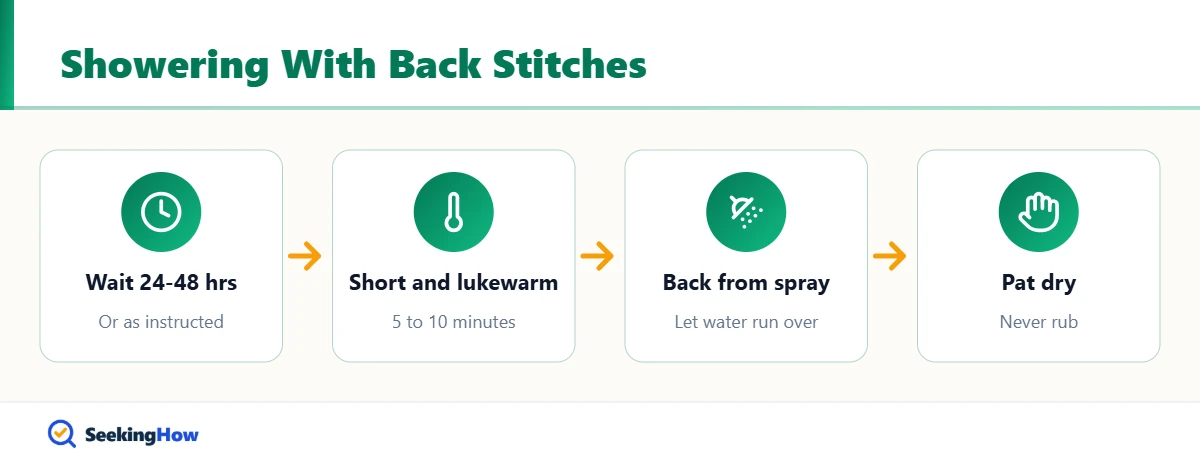
What You’ll Need
- Mild, fragrance-free soap
- Clean towel used only for the wound area
- Waterproof transparent dressing large enough to cover the stitches with a 1-inch border (if told to keep it covered)
- Fresh gauze and medical tape or a replacement bandage
- Handheld shower head (optional, helpful)
- Hand mirror and wall mirror, or a helper, to check the wound
- Hair dryer on the cool setting (optional)
How To Shower With Stitches on Your Back: Step-by-Step
Step 1: Check Your Instructions and the Timing
Read your discharge or visit instructions; they override general advice. Most clinicians ask you to keep stitches dry for the first 24 to 48 hours, while some surgical wounds have different rules. If you were told to keep a dressing on for a set time, cover it instead of removing it.
Step 2: Prepare a Short, Lukewarm Shower
Set the water to lukewarm and plan for 5 to 10 minutes. Hot water and long showers soften the skin around the wound and can loosen dissolvable stitches or adhesive strips early. Lay out your clean towel and fresh dressing before you step in.
Step 3: Cover or Uncover as Instructed
If you must keep the wound covered, apply a waterproof transparent dressing with at least a 1-inch border of intact skin on all sides. If you have a regular gauze dressing and are allowed to get the wound wet, remove it gently before the shower. Plastic wrap and tape usually leak on the back, so a purpose-made waterproof dressing works better.
Step 4: Face Away From the Spray
Stand facing the shower head and wash your front and hair first, keeping your back out of the direct stream. When you rinse your back, turn so water runs down from your shoulders rather than blasting onto the stitches. A handheld shower head on low pressure gives the most control.
Step 5: Let Soapy Water Run Over the Stitches
Lather soap on your shoulders or upper back and let the suds flow over the wound, then rinse the same way. Do not scrub, rub with a washcloth, or use a loofah on the stitches. Skip shampoo or conditioner running down the wound when you can by tilting your head forward.
Step 6: Pat Dry Completely
Press a clean towel against the area to blot it dry; draping the towel over a shoulder and pulling it diagonally across your back works if you cannot reach. A hair dryer on the cool setting held at least 12 inches away can dry hard-to-reach spots. Never rub the stitches.
Step 7: Re-dress and Inspect
Apply a fresh dressing or ointment only if your clinician told you to. Use a hand mirror facing a wall mirror, or ask someone to look, for redness, swelling, or drainage. In practice, a quick daily photo with your phone makes it easy to spot changes.
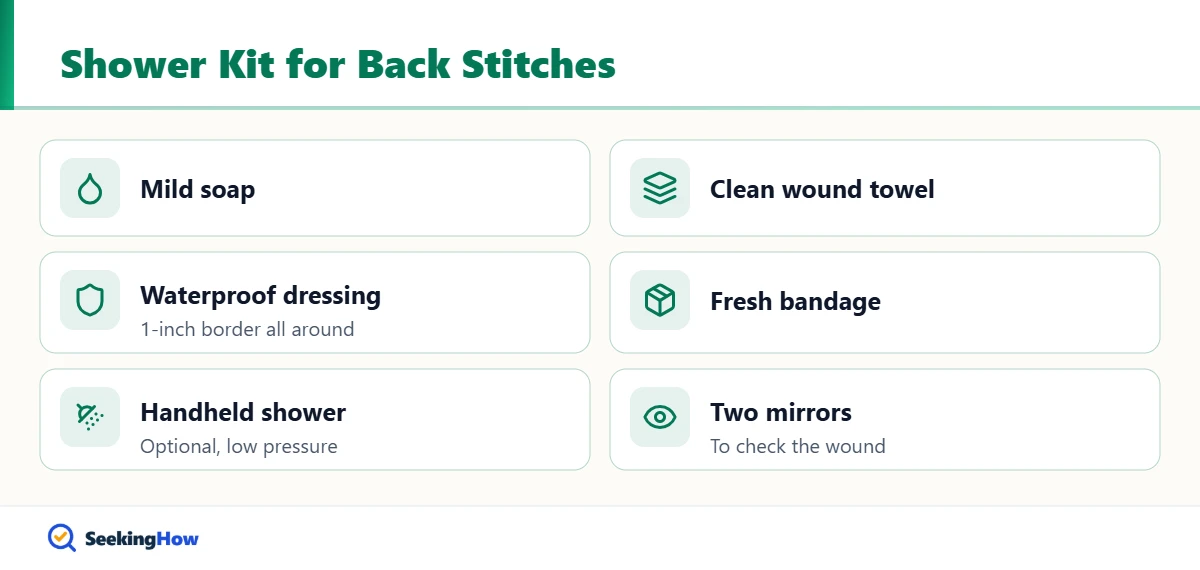
Bottom line: keep stitches dry for the first 24 to 48 hours, then take short lukewarm showers with your back away from the spray, pat dry, and never soak.
If That Didn’t Work
Problem: The waterproof dressing leaked. Cause: Too small a border or wet skin when applied. Fix: Remove it, pat the wound dry, and apply a larger dressing to fully dry skin.
Problem: You cannot reach to dry or dress the wound. Cause: Location on the mid or upper back. Fix: Ask a helper, use the towel-diagonal method, or ask your clinic for a dressing you can leave on for several days.
Problem: The stitches got soaked accidentally. Cause: Long exposure to spray or a bath. Fix: Pat dry right away and watch for infection signs; one wetting rarely causes harm, but call your clinician if you are unsure.
Problem: You also want to swim. Cause: Pools and open water carry more bacteria than shower water. Fix: Wait until cleared; see how to keep stitches dry while swimming.
Water Exposure With Stitches Compared
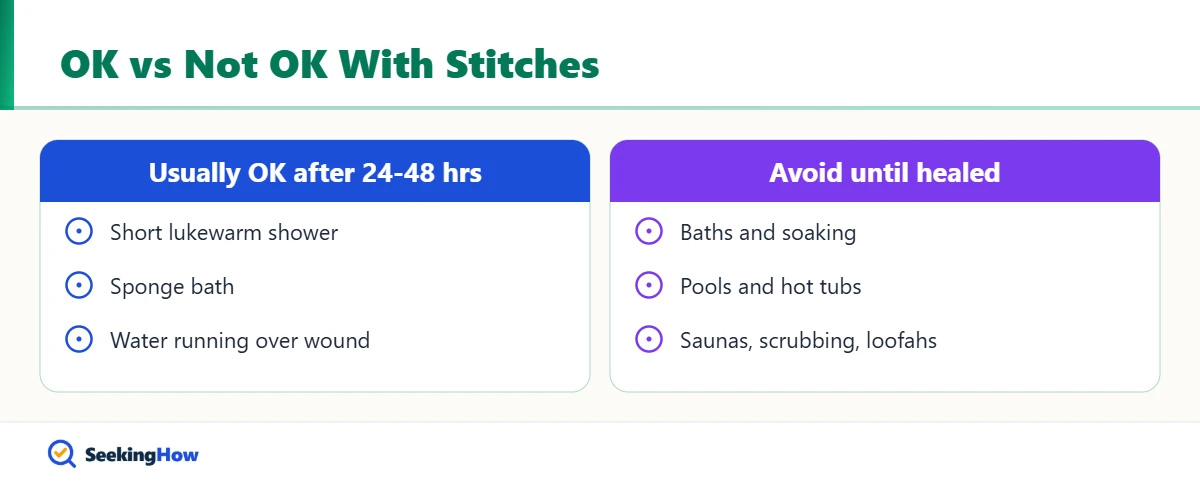
| Activity | Usually OK after 24 to 48 hours? | Notes |
|---|---|---|
| Short lukewarm shower | Yes, per instructions | Best option; back away from spray |
| Sponge bath | Yes | Good for the first 48 hours |
| Bath or soak | No | Wait until stitches are out and wound is closed |
| Hot tub or pool | No | Higher infection risk; wait for clearance |
| Sauna or steam room | No | Heat and moisture soften the wound |
Safety and When To See a Doctor
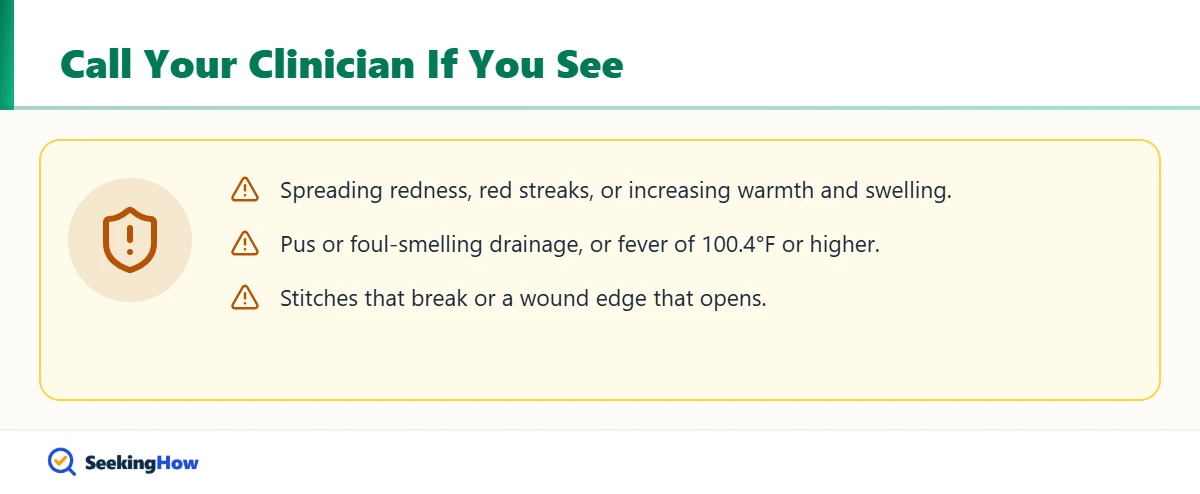
Contact your clinician promptly if you notice:
- Redness spreading more than about 1/2 inch beyond the wound, or red streaks.
- Increasing pain, swelling, or warmth after the first 2 to 3 days.
- Pus, cloudy or foul-smelling drainage.
- Fever of 100.4°F (38°C) or higher, or chills.
- Stitches that break or come out early, or a wound edge that opens.
- Bleeding that soaks through a dressing despite 10 minutes of firm pressure.
Keep your stitch-removal appointment; back stitches commonly stay in longer than stitches on the face because the skin there is thicker and moves more.
Prevention Tips
- Wear loose, soft shirts so seams and straps do not rub the wound.
- Avoid heavy lifting and deep twisting until your clinician clears you.
- Keep skin glue and adhesive strips dry and let them fall off on their own; see how to remove super glue from skin for household glue only, not medical adhesive.
Related Guides
- How to keep stitches dry while swimming (and when to wait)
- How to remove super glue from skin
- How to reduce back pain while you recover
Sources
- Mayo Clinic: Cuts and scrapes first aid and wound care (mayoclinic.org)
- NHS: Stitches, how to look after them (nhs.uk)
- American Academy of Dermatology: Wound care tips (aad.org)
Frequently Asked Questions
How soon can I shower after getting stitches on my back?
Most people can shower 24 to 48 hours after getting stitches, but follow your own discharge instructions first. Some surgical wounds and dressings have different rules. Until then, use a sponge bath and keep the stitched area dry and covered.
Can I let water run over my stitches?
Yes, once your clinician allows it, letting clean shower water run gently over stitches is usually fine. Avoid direct high-pressure spray and do not scrub. Keep showers short, then pat the area completely dry. Do not soak stitches in a bath, pool, or hot tub.
What happens if my stitches get wet too early?
If stitches get wet too early, pat them dry gently and watch for infection signs. A brief, accidental wetting rarely causes problems. Repeated soaking can soften skin, weaken the wound, and raise infection risk. Call your clinician if you notice redness, drainage, or increasing pain.
How do I dry stitches on my back by myself?
To dry stitches on your back by yourself, drape a clean towel over one shoulder, pull it diagonally across your back, and press rather than rub. A hair dryer on the cool setting held at least 12 inches away also works. Ask a helper if the wound is hard to reach.
Should I cover stitches with plastic wrap in the shower?
Plastic wrap is not ideal for stitches on the back because it is hard to seal and often leaks. A waterproof transparent dressing with at least a 1-inch border of dry skin works much better. Only cover the stitches if your clinician told you to keep the wound dry.
Can I take a bath with stitches?
No, you should not take a bath with stitches. Soaking softens the skin and wound edges and exposes the stitches to bacteria in standing water. Wait until the stitches are removed and the wound is fully closed, or until your clinician says it is safe.
How long do stitches on the back stay in?
Stitches on the back often stay in about 10 to 14 days, longer than facial stitches, because the skin is thicker and moves more. Your clinician will give the exact timing. Dissolvable stitches break down on their own over weeks and do not need removal.