
Quick Answer
To shave your face while on Accutane (isotretinoin), soften hair with warm water for 2–3 minutes, apply a fragrance-free shave gel, use a sharp clean razor or an electric shaver with light pressure in the direction of hair growth, rinse with cool water, and apply a gentle moisturizer. Skip alcohol aftershaves, and never wax while on the drug.
Key Takeaways
- Shaving is generally considered the safest facial hair removal method during isotretinoin treatment.
- Isotretinoin labeling advises avoiding waxing, dermabrasion, and laser treatments during treatment and for at least 6 months after.
- Skin on isotretinoin is thinner and drier, so it nicks, chafes, and peels more easily.
- Shaving with the grain, using fewer passes, and a fresh blade reduce irritation.
- Alcohol-based aftershaves and fragranced products often sting and worsen dryness during treatment.
Isotretinoin, sold under brand names including Accutane, Absorica, and Claravis, shrinks oil glands and leaves skin dry and fragile. You can keep shaving, but knowing how to shave your face while on Accutane with a gentler routine prevents cuts, razor burn, and peeling.
What You’ll Need
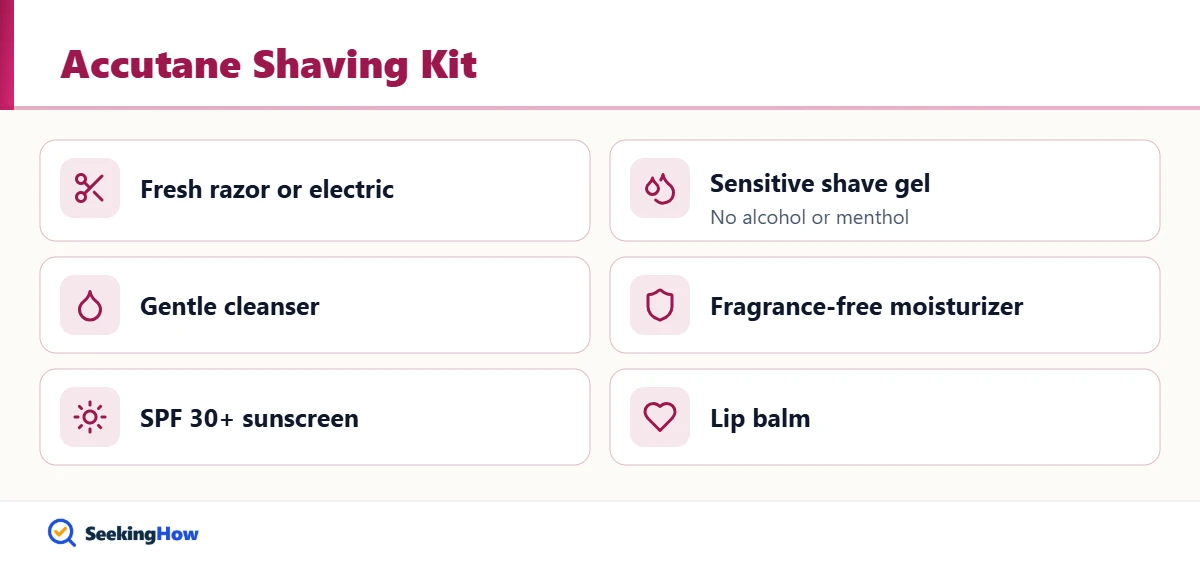
- A fresh multi-blade cartridge razor or a single-blade safety razor, or an electric shaver (often gentler for very sensitive skin)
- Fragrance-free, alcohol-free shave gel or cream for sensitive skin
- Gentle, non-foaming cleanser
- Fragrance-free moisturizer (a ceramide or petrolatum-based product works well)
- Clean washcloth
- Broad-spectrum sunscreen, SPF 30 or higher
- Styptic pencil or clean gauze for nicks (optional)
How To Shave Your Face While on Accutane: Step-by-Step
Step 1: Check With Your Dermatologist First
Ask your prescriber whether they have specific shaving guidance for your skin, especially if you have active cracking, open lesions, or a rash. Most dermatologists consider careful shaving fine during treatment. Never switch to waxing or threading without asking, because isotretinoin raises the risk of skin tearing and scarring.
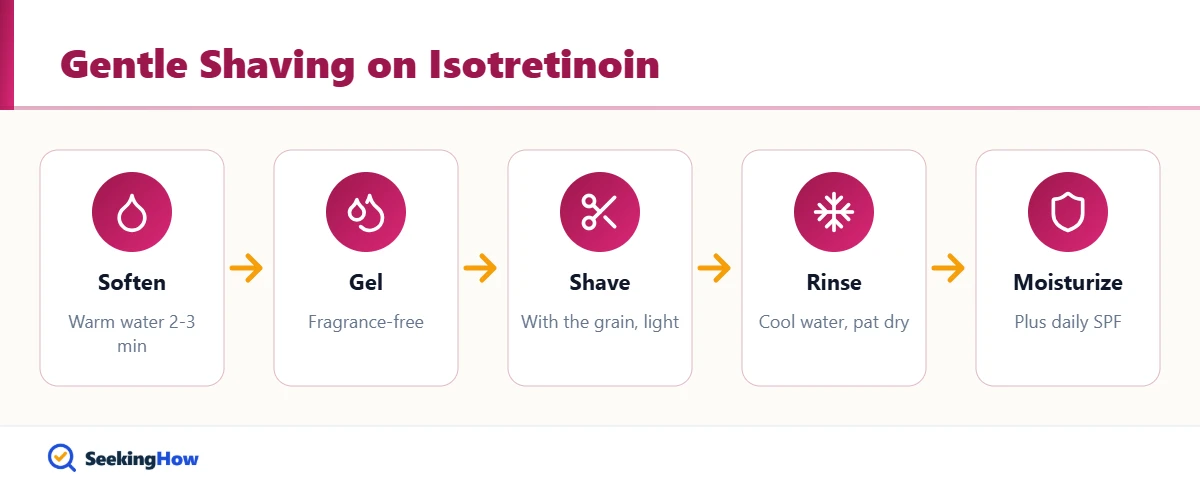
Step 2: Soften the Hair
Shave right after a warm, not hot, shower, or hold a warm damp washcloth on your face for 2 to 3 minutes. Softened hair cuts with less drag, which means less pulling on fragile skin. Hot water strips oil and increases dryness.
Step 3: Apply a Fragrance-Free Shave Gel
Spread a thin, even layer of sensitive-skin shave gel or cream over the area and let it sit for about 30 seconds. Avoid menthol, alcohol, and strong fragrances, which commonly sting during treatment. Never dry-shave on isotretinoin.
Step 4: Shave With the Grain Using Light Pressure
Glide the razor in the direction your hair grows, with almost no pressure, and rinse the blade after every one or two strokes. Limit passes over each area to one or two. The most common mistake is going against the grain for a closer shave, which is the main cause of razor burn and nicks on thinned skin.
Step 5: Rinse With Cool Water and Pat Dry
Rinse your face with cool water to remove all gel, then pat dry with a clean towel. Rubbing with a towel can scrape off the top layer of dry skin.
Step 6: Moisturize and Protect
Apply a fragrance-free moisturizer immediately while skin is still slightly damp. Use sunscreen during the day, since isotretinoin can increase sun sensitivity. In practice, most people find their skin tolerates shaving much better when they moisturize twice daily, not just after shaving.
Bottom line: soften, lubricate, shave with the grain in one or two passes, then moisturize; if shaving still irritates, switch to an electric shaver.
Hair Removal Methods on Isotretinoin
| Method | During treatment | Why |
|---|---|---|
| Electric shaver | Generally OK | Lowest risk of nicks |
| Razor shaving | Generally OK with care | Minimal skin trauma when done gently |
| Trimming | Generally OK | No contact with the skin surface |
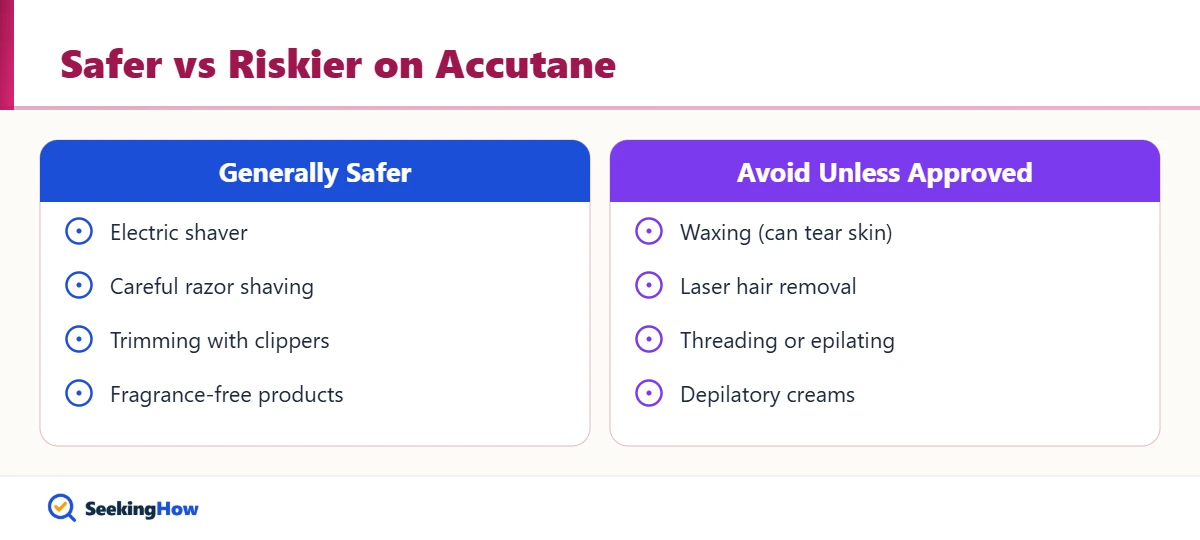
| Waxing | Avoid | Can tear skin and cause scarring |
| Threading or epilating | Avoid unless approved | Pulls fragile skin |
| Laser hair removal | Avoid unless approved | Labeling advises waiting at least 6 months after treatment |
| Depilatory creams | Avoid unless approved | Chemicals irritate dry, thin skin |
If That Didn’t Work
Problem: Burning or stinging after shaving. Cause: Fragrance, alcohol, or too many passes. Fix: Switch to fragrance-free products and one pass with the grain.
Problem: Frequent nicks. Cause: Dull blade or pressure on thinned skin. Fix: Replace the blade every 5 to 7 shaves, or use an electric shaver.
Problem: Peeling, flaky beard area. Cause: Isotretinoin dryness made worse by shaving. Fix: Shave less often and use a thicker barrier moisturizer at night.
Problem: Shaving over acne bumps. Cause: Active breakouts in the shave area. Fix: Shave around them or trim instead; never shave the top off a lesion.
When To See a Doctor
Contact your dermatologist if a nick does not stop bleeding after 10 minutes of pressure, if a cut becomes red, warm, swollen, or oozes pus, or if your skin cracks, crusts, or blisters in the shave area. Report a widespread rash, severe peeling, or skin that tears easily, since your dose or skin care may need adjusting. Seek urgent care for a severe skin reaction with blisters, fever, or peeling skin over large areas.
Prevention Tips
- Shave every other day instead of daily if your skin allows it.
- Use a clean towel and keep your razor dry between uses.
- Use a lip balm, since dry lips often crack near the shave line.
- Keep waxing, laser, and chemical peels off the schedule until your dermatologist clears them.
Related Guides
Sources
- American Academy of Dermatology – isotretinoin and shaving tips
- MedlinePlus – Isotretinoin drug information
- NHS – Isotretinoin capsules
Frequently Asked Questions
Can you shave your face while on Accutane?
Yes, most dermatologists consider shaving acceptable during isotretinoin treatment and the safest hair removal option. Your skin will be drier and more fragile, so use a fresh blade, fragrance-free shave gel, light pressure, and shave with the grain. Ask your dermatologist if your skin is cracked or inflamed.
Why does shaving hurt more on Accutane?
Shaving hurts more on Accutane because isotretinoin reduces oil production and thins the outer skin layer, leaving skin dry and easily irritated. Razors drag more on dry skin and nick more easily. Softening hair first, using a rich shave gel, and moisturizing twice daily all help.
Is an electric razor better on Accutane?
An electric shaver is often the gentler choice on Accutane because the blades do not touch the skin directly, which means fewer nicks and less irritation. The trade-off is a slightly less close shave. Many people switch to an electric shaver if razor shaving keeps causing burns or cuts.
Can I wax my face while on Accutane?
No, waxing is not recommended while on Accutane. Isotretinoin labeling advises avoiding wax hair removal during treatment and for at least 6 months afterward, because waxing can tear fragile skin and cause scarring. Ask your dermatologist before trying any method other than shaving or trimming.
What aftershave can I use on Accutane?
Use a fragrance-free, alcohol-free moisturizer or balm instead of a traditional aftershave while on Accutane. Alcohol splashes sting and dry out skin that is already dehydrated. Products with ceramides, glycerin, or petrolatum help repair the skin barrier after shaving.
How do I stop razor bumps while on Accutane?
To reduce razor bumps on Accutane, shave with the grain, limit passes to one or two, replace blades often, and avoid shaving every day. Do not use exfoliating acids or scrubs unless your dermatologist approves, since they can irritate isotretinoin-treated skin.