Quick Answer
To reduce lip swelling from a bee sting, remove any stinger within seconds by scraping or pulling it out, wash the lip, and hold a cloth-wrapped cold pack on it for 10 to 20 minutes at a time. An oral antihistamine taken as labeled can ease swelling and itching. Call 911 if the tongue or throat swells or breathing becomes difficult.
Key Takeaways
- Getting the stinger out fast matters more than the removal method; scraping or pulling both work.
- Lips swell dramatically because the tissue is soft and full of blood vessels, so even a normal reaction looks alarming.
- Cold compresses for 10 to 20 minutes at a time are the most effective home treatment for lip swelling.
- Large local swelling can peak 1 to 2 days after a sting and take up to a week or so to fully fade.
- Swelling of the tongue, throat, or face with hives, wheezing, or dizziness is anaphylaxis and needs epinephrine and 911.
- A sting inside the mouth carries a higher risk of airway swelling and should be watched closely.
A sting on the lip, often from a bee that landed on a drink or food, can make the lip balloon within minutes. This guide explains how to reduce lip swelling from a bee sting at home and how to recognize the allergic warning signs that need emergency care.
What You’ll Need
- Credit card edge, fingernail, or tweezers for stinger removal
- Mild soap and cool water
- Cold pack, ice cubes in a bag, or a bag of frozen vegetables
- Clean thin cloth
- Oral antihistamine, non-drowsy or standard, taken as labeled (optional)
- Epinephrine auto-injector, if prescribed for you
- Plain petroleum jelly for dry, cracked lips (optional)
How To Reduce Lip Swelling From a Bee Sting: Step-by-Step
Step 1: Check for Danger Signs First
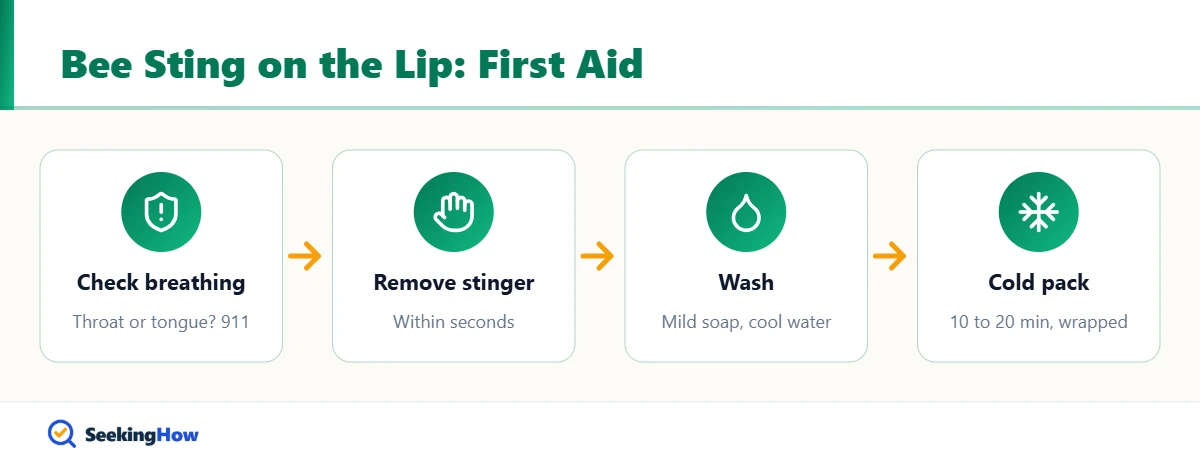
Before treating the lip, check for swelling of the tongue or throat, trouble breathing or swallowing, hives on other parts of the body, wheezing, dizziness, or a hoarse voice. These are signs of anaphylaxis. If any appear, use an epinephrine auto-injector if you have one and call 911 immediately.
Step 2: Remove the Stinger Within Seconds
Honeybees leave a barbed stinger with a venom sac that keeps pumping venom. Scrape it out with a fingernail or card edge, or pull it with tweezers, as quickly as possible. Wasps and hornets do not leave stingers, so if you see nothing, move on.
Step 3: Wash the Lip Gently
Rinse the area with mild soap and cool water and pat dry. Cleaning reduces the chance of infection at the sting site. Avoid scrubbing, which increases irritation and swelling.
Step 4: Apply Cold for 10 to 20 Minutes
Wrap a cold pack or ice in a thin cloth and hold it against the lip for 10 to 20 minutes, then remove it for at least 10 minutes and repeat as needed for the first few hours. Cold narrows blood vessels and slows swelling. Never put ice directly on the lip; the thin skin can get cold injury quickly.
Step 5: Take an Oral Antihistamine if Appropriate
An over-the-counter oral antihistamine, taken according to the package directions, can reduce itching and swelling. Ask a pharmacist first for children, during pregnancy, or if you take other medications. Do not apply hydrocortisone cream or other creams to the inner lip or mouth unless a clinician advises it.
Step 6: Keep Your Head Raised
Sleep or rest with your head on an extra pillow for the first night. Keeping the head above the heart helps fluid drain from the face. Most people find the lip looks noticeably smaller the next morning.
Step 7: Avoid Irritants While It Heals
Skip hot, spicy, salty, or acidic foods and drinks, and avoid lip products with fragrance or menthol for a few days. A thin layer of plain petroleum jelly on the outer lip protects stretched, dry skin. Do not pick at the sting site.
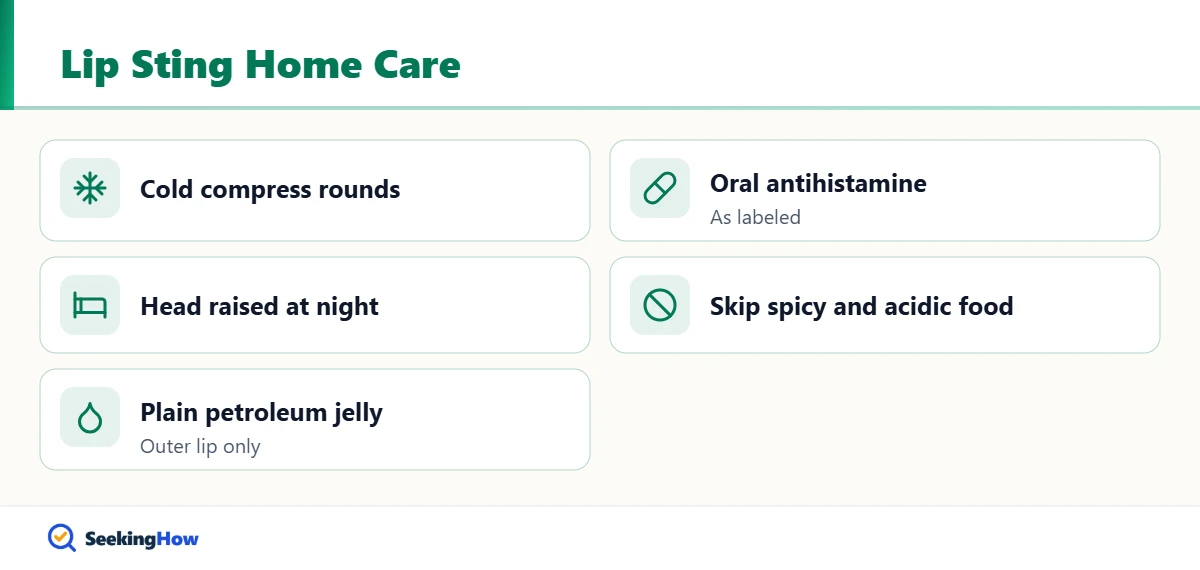
Bottom line: scrape out the stinger, cool the lip in 10 to 20 minute rounds, consider an oral antihistamine, and treat any throat or breathing symptoms as an emergency.
If That Didn’t Work
Problem: Swelling keeps spreading for a day or two. Cause: A large local reaction, which can peak 24 to 48 hours after a sting. Fix: Continue cold and antihistamine; call a doctor if swelling is severe or spreads across the face, since a short course of prescription medicine may help.
Problem: The lip becomes more painful, red, and warm after 2 to 3 days. Cause: Possible infection. Fix: See a doctor, especially if there is pus or fever.
Problem: Swelling has not gone down after a week. Cause: Persistent reaction or a retained stinger fragment. Fix: Have a clinician examine the lip.
Problem: The lip swells without a clear sting. Cause: Food allergy, cosmetics, or injury. Fix: See our guide on how to reduce lip swelling for other causes.
Normal Reaction vs Allergic Emergency
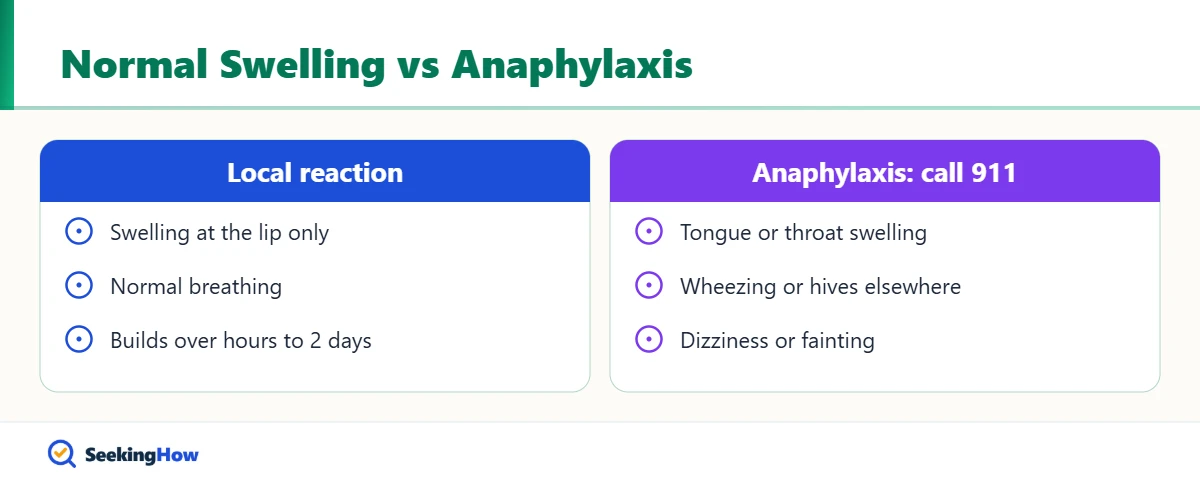
| Sign | Normal or large local reaction | Anaphylaxis (call 911) |
|---|---|---|
| Location | Lip and area around the sting | Tongue, throat, face, or whole body |
| Breathing | Normal | Wheezing, tightness, trouble swallowing |
| Skin | Redness and swelling at the site | Hives or flushing elsewhere |
| Other symptoms | Pain, itching | Dizziness, fainting, vomiting, weak pulse |
| Timing | Builds over hours to 2 days | Usually within minutes to an hour |
Safety and When To See a Doctor
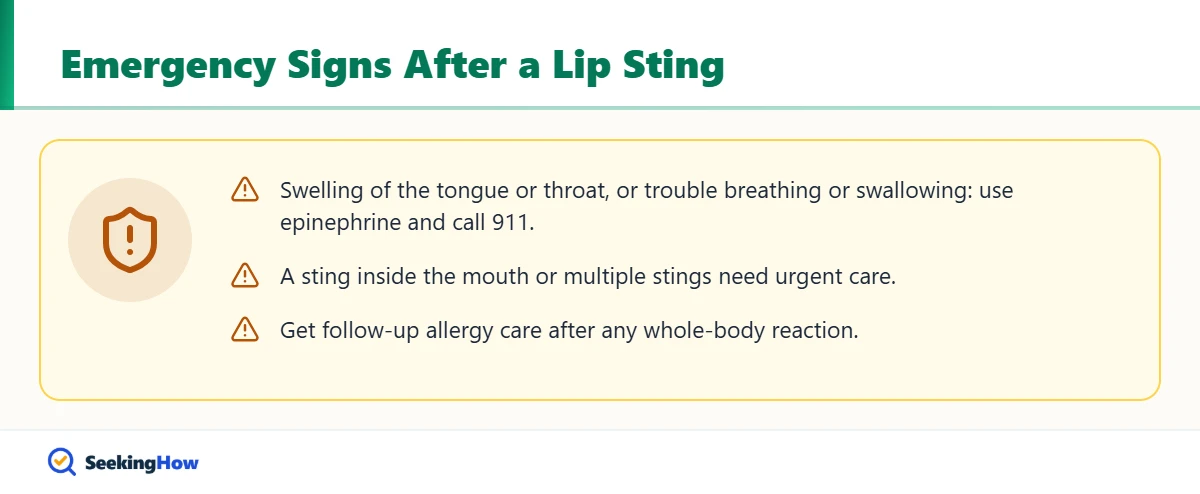
- Call 911: swelling of the tongue or throat, difficulty breathing or swallowing, hives spreading over the body, dizziness, fainting, or confusion, even if symptoms seem to improve after epinephrine.
- Get urgent care: a sting inside the mouth or on the tongue, multiple stings (around 10 or more), or a child with significant facial swelling.
- See a doctor: swelling that spreads across the face, signs of infection, or swelling lasting longer than a week.
- Follow up: anyone who has had a whole-body reaction should ask a doctor about an epinephrine prescription and allergy testing; venom immunotherapy can lower future risk.
Prevention Tips
- Use cups with lids or straws outdoors, and check cans before sipping.
- Cover sweet foods and drinks at picnics and cookouts.
- Stay calm and move away slowly from bees rather than swatting.
- Carry your epinephrine auto-injector at all times if you have a known venom allergy.
Related Guides
- How to reduce lip swelling from any cause
- How to get rid of ants in the house quickly
- How to reduce pimples naturally
Sources
- Mayo Clinic: Bee stings symptoms, first aid, and treatment (mayoclinic.org)
- American Academy of Allergy, Asthma and Immunology: Stinging insect allergy (aaaai.org)
- NHS: Insect bites and stings (nhs.uk)
Frequently Asked Questions
How long does lip swelling from a bee sting last?
Lip swelling from a bee sting usually improves within a few hours to 2 days. A large local reaction can keep spreading for 24 to 48 hours and take up to about a week to fully go away. Swelling that lasts longer or keeps worsening should be checked by a doctor.
Is a bee sting on the lip dangerous?
A bee sting on the lip is usually not dangerous, but it needs closer watching than a sting on the arm because it is near the airway. Lips swell a lot even in a normal reaction. Swelling of the tongue or throat, trouble breathing, or hives elsewhere is an emergency.
Should I take Benadryl for a bee sting on the lip?
An oral antihistamine such as diphenhydramine or a non-drowsy option can help reduce itching and swelling from a bee sting. Follow the package directions and ask a pharmacist about children, pregnancy, or other medicines. Antihistamines do not treat anaphylaxis; epinephrine and 911 are needed for that.
Does ice help bee sting swelling on the lips?
Yes, ice is one of the best ways to reduce bee sting swelling on the lips. Wrap ice or a cold pack in a thin cloth and apply for 10 to 20 minutes, then take a 10-minute break. Never place ice directly on the lip, because the thin skin can be injured.
What is the fastest way to remove a bee stinger?
The fastest way to remove a bee stinger is whichever method you can use immediately: scrape it with a fingernail or card edge, or pull it with tweezers. Speed matters more than technique because the venom sac keeps pumping for a short time. Wasps usually do not leave stingers.
Can you put toothpaste or baking soda on a bee sting on the lip?
Toothpaste and baking soda are popular home remedies, but there is little evidence they reduce swelling, and they can irritate the lips or be swallowed. Cold compresses and an oral antihistamine are more reliable. Keep anything other than plain petroleum jelly off the inner lip.
When should a child with a lip sting see a doctor?
A child with a lip sting should see a doctor if swelling spreads across the face, the sting was inside the mouth, the child was stung multiple times, or there are signs of infection. Call 911 for any breathing trouble, tongue or throat swelling, widespread hives, or unusual sleepiness.