Quick Answer
To reduce foot swelling after a flight, walk for 10 to 20 minutes once you land, then lie down with your feet raised above heart level for 15 to 20 minutes and repeat ankle pumps. Drink water and limit salty food. Mild, even swelling in both feet usually fades within 24 to 48 hours; swelling in one leg with pain or redness needs a doctor.
Key Takeaways
- Sitting still for hours lets fluid pool in the feet and ankles, so mild swelling after a flight is common.
- Walking and calf exercises restart the calf muscle pump that moves fluid back toward the heart.
- Raising the feet above heart level for 15 to 20 minutes helps fluid drain.
- Graduated compression socks worn during the flight reduce swelling for many travelers.
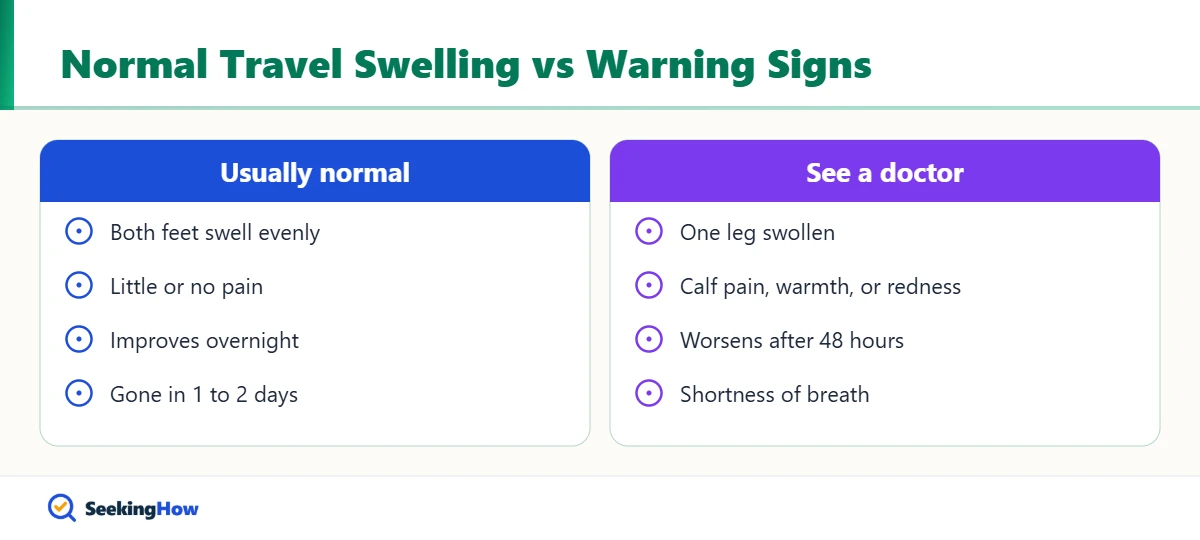
- Normal travel swelling affects both feet evenly and fades within 1 to 2 days.
- Swelling in one leg, calf pain, warmth, or shortness of breath after travel can signal a blood clot.
Puffy ankles and shoes that suddenly feel tight are a familiar end to a long trip. This guide explains how to reduce foot swelling after a flight quickly, what to do on your next flight to prevent it, and which symptoms point to something more serious than travel swelling.
What You’ll Need
- Pillows, a rolled blanket, or a wall to prop your feet
- Water bottle
- Graduated compression socks, 15 to 20 mmHg (for the return flight)
- Loose, comfortable shoes or slip-on sandals
- Cool water basin or cold pack (optional)
How To Reduce Foot Swelling After a Flight: Step-by-Step
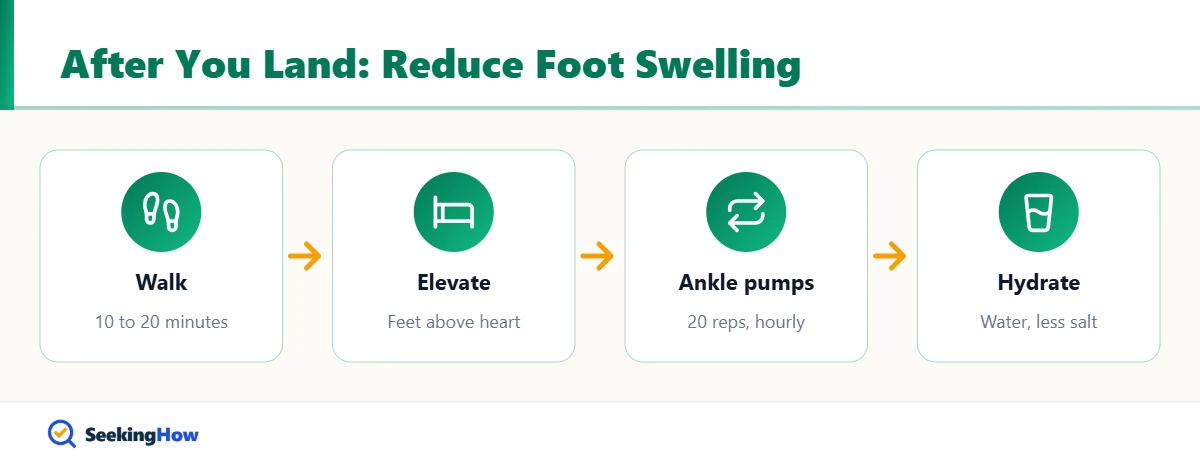
Step 1: Walk as Soon as You Land
Walk through the terminal instead of taking moving walkways, and aim for 10 to 20 minutes of easy walking. Each step contracts the calf muscles and squeezes fluid out of the lower legs. Heading straight from the plane to a car or a hotel bed keeps fluid parked in your feet.
Step 2: Elevate Your Feet Above Heart Level
Lie down and rest your legs on 2 to 3 pillows or up a wall for 15 to 20 minutes. Your feet must sit higher than your heart for gravity to help. In practice, two elevation sessions on arrival day work better than one long one.
Step 3: Do Ankle Pumps and Toe Curls
While elevated, flex and point your feet 20 times, circle each ankle 10 times each direction, and curl your toes 10 times. These small movements push fluid upward. Repeat every hour or so for the rest of the day.
Step 4: Drink Water and Go Easy on Salt
Rehydrate with water over the next several hours, since cabin air is dry. Limit salty airport and restaurant food and alcohol for the day, both of which can increase fluid retention. Drinking less water to avoid swelling backfires, because the body holds onto fluid when dehydrated.
Step 5: Cool Your Feet and Loosen Footwear
Soak your feet in cool, not icy, water for 10 to 15 minutes or apply a wrapped cold pack. Switch to loose shoes or sandals so tight straps and laces do not trap more fluid. Avoid a hot bath on arrival, since heat widens blood vessels and can increase swelling.
Step 6: Check Both Legs the Next Morning
Swelling from sitting should be clearly smaller the next morning and gone within 24 to 48 hours. Compare your legs side by side. A difference in size, a painful calf, or redness on one side is a reason to call a doctor rather than wait.
How To Prevent Foot Swelling on Your Next Flight
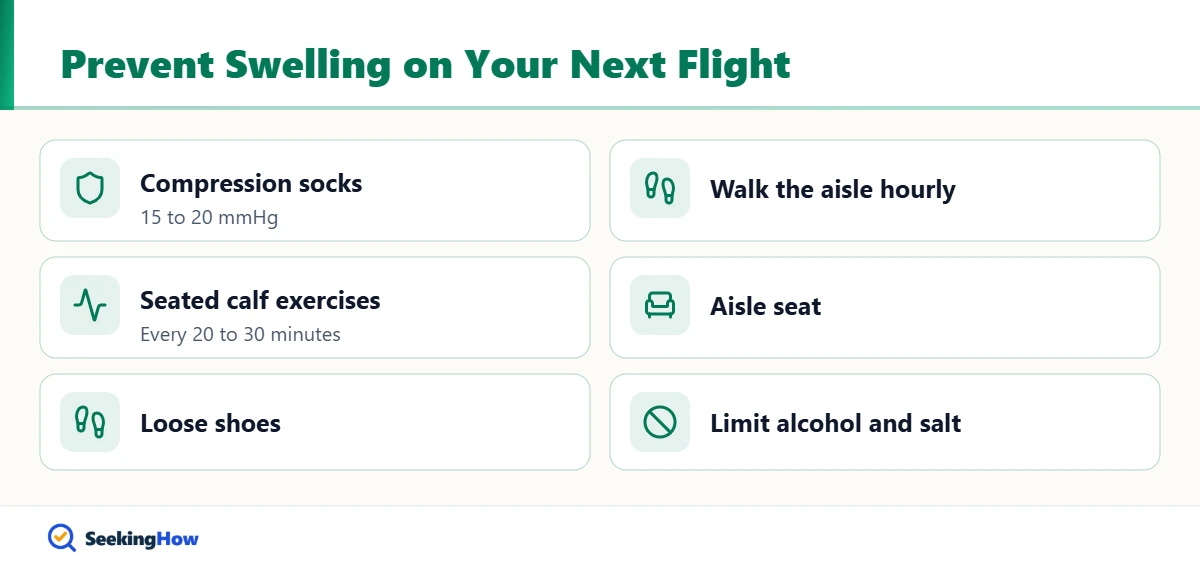
- Wear compression socks of 15 to 20 mmHg, put on before you leave home.
- Move every hour: walk the aisle when the seatbelt sign is off.
- Do seated exercises every 20 to 30 minutes: heel raises, toe raises, and ankle circles.
- Keep the space under the seat in front clear so you can stretch your legs.
- Book an aisle seat on flights over 4 hours to make walking easier.
- Skip tight waistbands and shoes, and limit alcohol and salty snacks.
Bottom line: walk, elevate, and hydrate on arrival, and wear compression socks with hourly movement on the way home.
If That Didn’t Work
Problem: Swelling has lasted more than 2 days. Cause: Ongoing fluid retention or an underlying condition. Fix: Contact a doctor, especially if you take blood pressure medication or have heart, kidney, or liver disease.
Problem: Feet swell on every flight even with exercises. Cause: Vein valve weakness or long, cramped seating. Fix: Add compression socks and ask a doctor about chronic venous insufficiency.
Problem: Swelling leaves a dent when pressed that lasts for many seconds. Cause: Pitting edema, which can be benign after travel but can also reflect heart or kidney issues. Fix: Have a doctor evaluate it if it persists.
Problem: Legs ache as well as swell. Cause: Muscle stiffness from sitting. Fix: Add calf stretches and see our guide on how to reduce leg pain.
Relief Methods Compared
| Method | When | Time | Best for |
|---|---|---|---|
| Walking | Right after landing | 10 to 20 minutes | Restarting circulation, best first step |
| Leg elevation | Arrival day | 15 to 20 minutes, 2 times | Draining fluid |
| Compression socks | During flight | Whole trip | Prevention on long flights |
| Seated exercises | During flight | 1 to 2 minutes every 30 minutes | Window seats and full flights |
| Cool soak | Evening | 10 to 15 minutes | Comfort and tight, warm feet |
Safety and When To See a Doctor
Travel lasting 4 hours or more raises the risk of deep vein thrombosis (DVT), a blood clot in a deep leg vein. Risk is higher with recent surgery, pregnancy, hormonal birth control or hormone therapy, cancer, obesity, or a previous clot. Seek care if you notice:
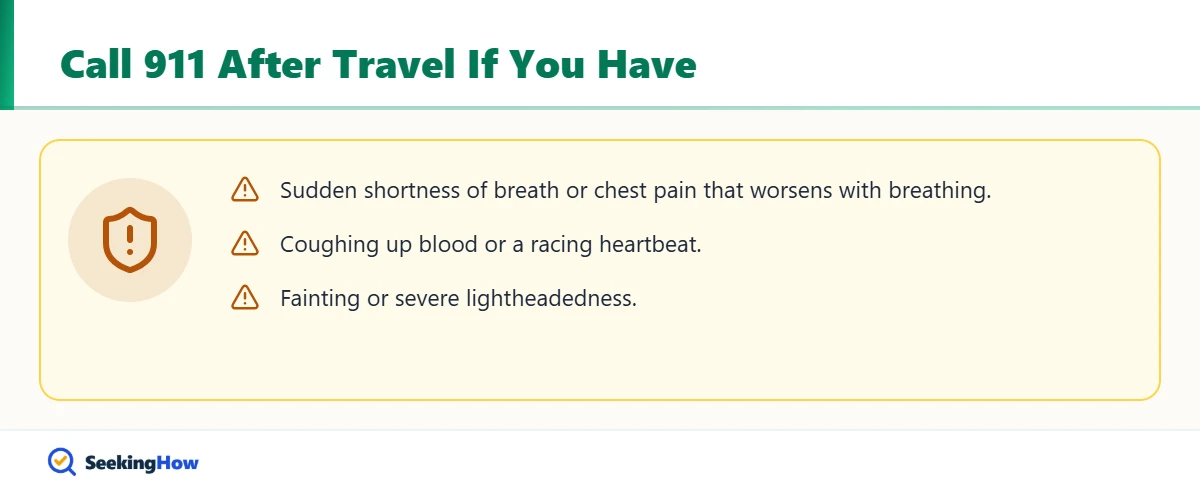
- Emergency: sudden shortness of breath, chest pain that worsens with breathing, coughing blood, or a racing heart, which can signal a clot in the lungs. Call 911.
- Swelling in one leg or ankle only, especially with calf pain, cramping, warmth, or red or darkened skin.
- Swelling that keeps worsening or has not improved after 48 hours.
- Swelling with shortness of breath on exertion or when lying flat.
If you are at higher risk for clots, ask your doctor before long flights about compression socks or other precautions.
Related Guides
- How to reduce leg pain: home relief and when to see a doctor
- How to reduce blood pressure with daily habits
- How to reduce back pain after long sitting
Sources
- CDC: Blood clots and travel, what you need to know (cdc.gov)
- NHS: Swollen ankles, feet and legs (oedema) (nhs.uk)
- Mayo Clinic: Deep vein thrombosis symptoms and causes (mayoclinic.org)
Frequently Asked Questions
Is it normal for feet to swell after a flight?
Yes, mild swelling in both feet and ankles after a flight is normal and common. Sitting still for hours lets fluid collect in the lower legs. It usually improves after walking and elevating your feet and resolves within 24 to 48 hours without treatment.
How long does foot swelling last after flying?
Foot swelling from flying usually lasts a few hours to 2 days. Walking, elevation, and hydration speed recovery, and most people see clear improvement by the next morning. Swelling that lasts longer than 48 hours or keeps getting worse should be checked by a doctor.
Do compression socks prevent swelling on flights?
Yes, graduated compression socks reduce ankle and foot swelling for many travelers on long flights. Socks of 15 to 20 mmHg are widely available without a prescription. Put them on before the trip. People with circulation problems or diabetes should ask a doctor before wearing them.
Why do my feet swell more on long flights?
Feet swell more on long flights because of extended sitting with bent knees, limited movement, and dry cabin air. Lower cabin pressure, alcohol, and salty snacks may also play a role. The longer the flight, the more fluid collects, especially if you rarely get up.
Should I worry about a blood clot after a flight?
Most travelers do not develop blood clots, but you should know the signs. Swelling in one leg, calf pain or tenderness, warmth, or redness can indicate deep vein thrombosis and needs prompt care. Sudden shortness of breath or chest pain after travel is an emergency; call 911.
Does drinking water reduce swelling after a flight?
Drinking water helps reduce swelling after a flight because dehydration encourages the body to hold onto fluid. Cabin air is dry, so many travelers arrive slightly dehydrated. Sip water steadily and limit alcohol and very salty foods for the rest of the day.
Can I take a diuretic for travel swelling?
Do not take a diuretic for travel swelling unless a doctor prescribes it. Normal post-flight swelling resolves on its own with movement and elevation. Diuretics can upset fluid and electrolyte balance, and persistent swelling may have a cause that needs proper diagnosis.