Quick Answer
To lighten walnut stain without sanding, wipe fresh oil-based walnut stain with mineral spirits on a clean rag; for dried stain, scrub with mineral spirits and a synthetic abrasive pad, then apply household chlorine bleach to fade the dye. Topcoated wood must be chemically stripped first. Wear nitrile gloves and never mix bleach with other chemicals.
Key Takeaways
- Walnut stain that is still wet can be lightened by wiping it with mineral spirits within the stain’s open time.
- Dried, uncoated oil-based stain lightens with repeated mineral spirits scrubs using a gray or white synthetic pad.
- Chlorine bleach removes many dye colors in stain; it does not change the wood’s natural color.
- Two-part A/B wood bleach lightens the wood itself and is the strongest no-sanding option.
- Stain under polyurethane or lacquer cannot be lightened until the topcoat is stripped.
- Applying a lighter stain over a darker one does not make the wood lighter.
Dark walnut stain often looks far deeper on the wood than on the can lid, especially on pine and other soft, blotchy species. You can lighten walnut stain without sanding by dissolving and lifting the excess pigment, then fading the remaining dye with bleach. The right method depends on how long ago you stained and whether a topcoat is on top.
What You’ll Need
- Odorless mineral spirits (for oil-based stain) or warm water (for water-based stain)
- Lint-free cotton rags or shop towels
- Gray or white synthetic abrasive pads (or 0000 steel wool on wood without tannin concerns)
- Household chlorine bleach (plain, unscented)
- Two-part A/B wood bleach (optional, for lightening the wood itself)
- Citrus- or soy-based finish stripper and a plastic scraper (only if topcoated)
- Nitrile gloves, splash goggles, and a respirator rated for organic vapors when stripping
- Synthetic-bristle brush for bleach
- Clean water and rags for rinsing
How To Lighten Walnut Stain Without Sanding: Step-by-Step
Step 1: Check the stain type and finish
Read the can label to confirm whether the walnut stain is oil-based or water-based, and test a hidden spot with a drop of water. If water beads up, a topcoat such as polyurethane is present and must be removed first. Skipping this check is the most common reason nothing seems to work.
Step 2: Wipe fresh stain with mineral spirits
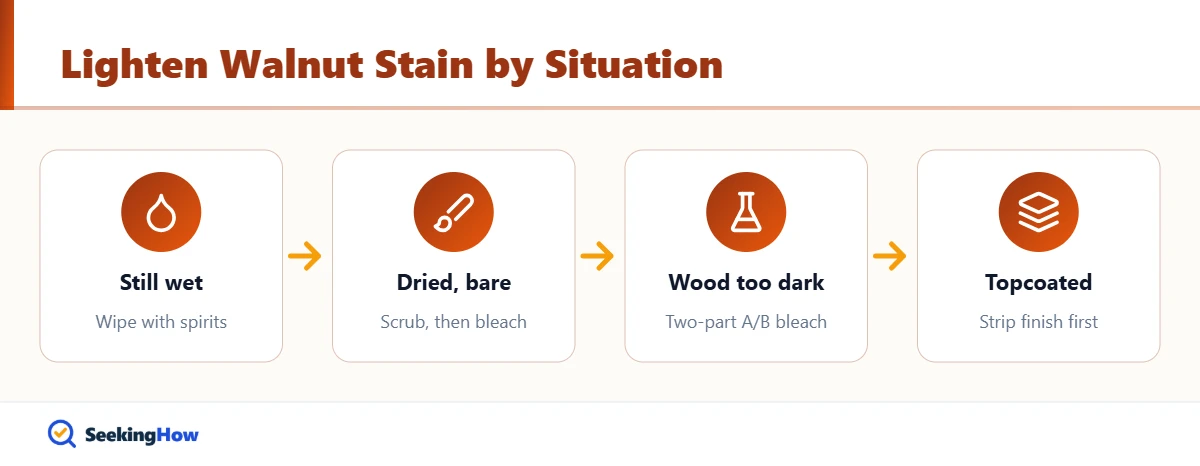
If the stain was applied within the last few hours, dampen a rag with mineral spirits and wipe firmly with the grain. Switch to a clean section of rag often so you lift pigment instead of spreading it around. Most oil-based stains can be lightened noticeably this way until they fully dry, usually within 8 to 24 hours.
Step 3: Scrub dried stain with solvent and a pad
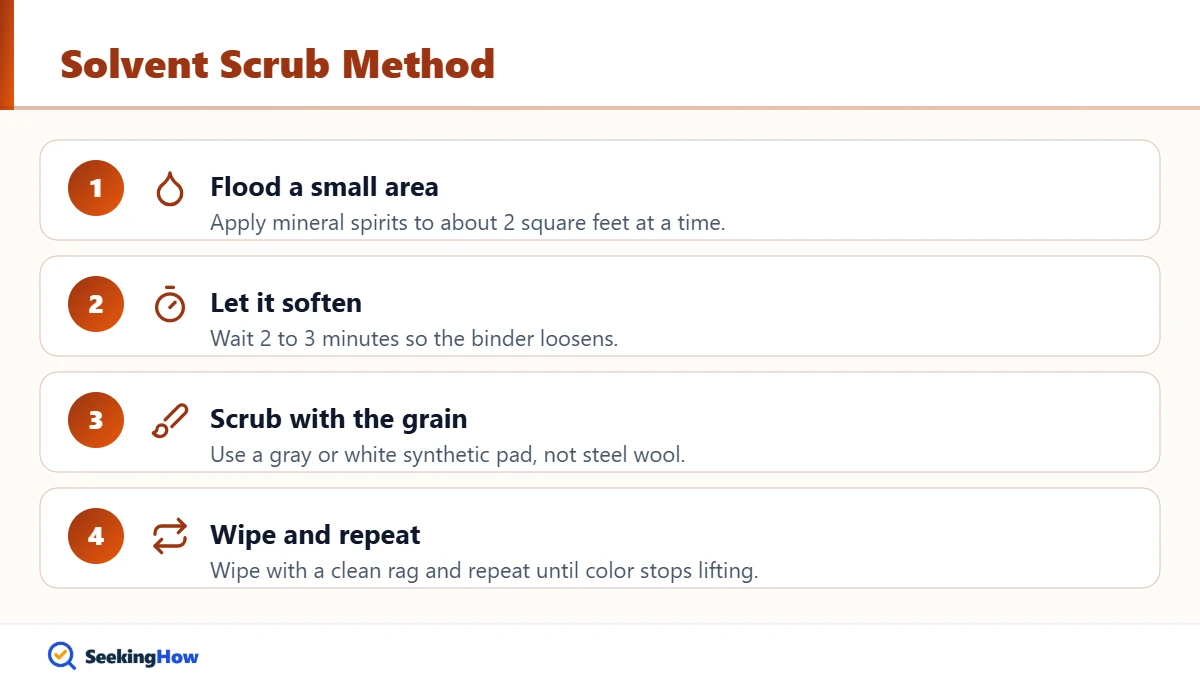
For stain that has dried but has no topcoat, flood a small area with mineral spirits, let it sit 2 to 3 minutes, and scrub with a synthetic pad along the grain. Wipe immediately and repeat until the color stops lifting. In practice, most people find two or three passes take walnut stain down a full shade or more.
Step 4: Bleach the remaining dye
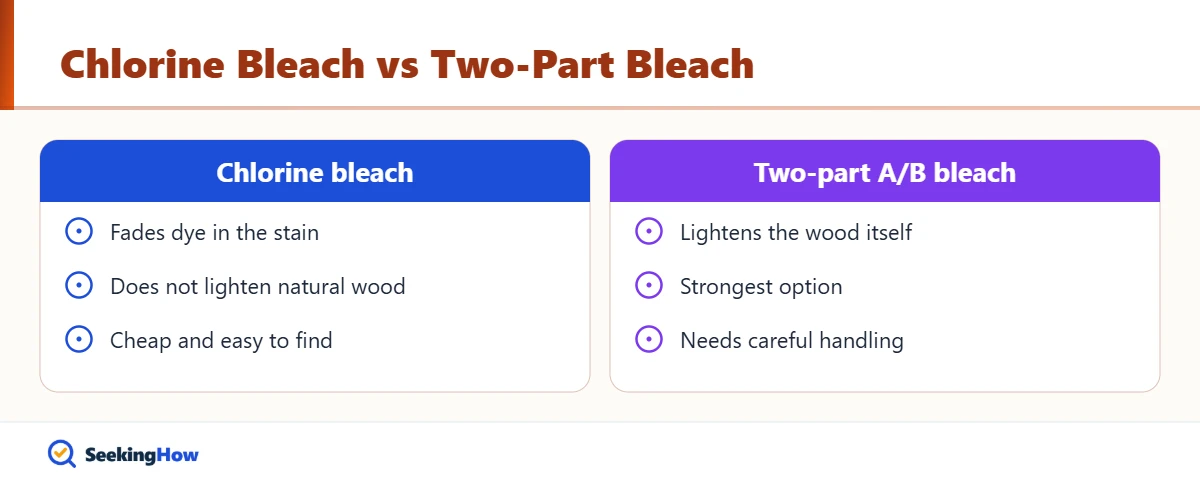
Let the solvent evaporate for at least an hour. Brush plain chlorine bleach onto the wood, let it work for 15 to 30 minutes, and reapply if the color is still too dark. Many walnut stains contain dye that chlorine bleach fades well, while pigment particles stay put, so the result depends on the product.
Step 5: Use two-part bleach if you need lighter wood
If the wood itself still looks too dark, apply A/B wood bleach following the label exactly: usually part A, then part B a few minutes later. This bleach lightens the wood’s natural color, not just the stain. Never use it right after chlorine bleach without rinsing and drying between.
Step 6: Rinse, neutralize, and dry
Wipe the surface with clean water (or the neutralizer recommended on the bleach label) to stop the reaction. Let the wood dry for at least 24 hours before re-staining or finishing. Bleaching raises the grain, so a very light pass with a fine synthetic pad smooths it without true sanding.
If the Walnut Stain Is Under a Topcoat
Stain sealed under polyurethane, varnish, or lacquer will not respond to solvents or bleach. Apply a citrus- or soy-based stripper, wait the time on the label, scrape the softened finish with a plastic scraper, and clean residue with the stripper’s recommended wash. Our guide on how to remove polyurethane from wood walks through that process, and then you can follow Steps 3 through 6 above.
Bottom line: Wipe with mineral spirits while the stain is fresh, bleach if it has dried, and strip only if a clear coat is on top.
If That Didn’t Work
Problem: The color barely changed after mineral spirits. Cause: Water-based stain or a hidden topcoat. Fix: Try warm water for water-based stain, or test for a finish and strip it.
Problem: Blotchy dark patches remain. Cause: Soft or end grain absorbed extra pigment. Fix: Focus scrubbing and bleach on those areas; next time use a pre-stain conditioner.
Problem: The wood turned gray or green after bleaching. Cause: Reaction with steel wool residue or tannins. Fix: Use synthetic pads, rinse thoroughly, and apply oxalic acid wood bleach to remove iron-tannin gray stains.
Problem: The new finish will not dry. Cause: Bleach or stripper residue. Fix: Rinse again, let the wood dry 48 hours, and test a hidden spot first.
| Situation | Best method | Time | How much lighter |
|---|---|---|---|
| Stain still wet | Mineral spirits wipe | 10 to 20 minutes | Significant |
| Dried, no topcoat | Solvent scrub plus chlorine bleach | 2 to 3 hours plus drying | Moderate to significant |
| Wood itself too dark | Two-part A/B bleach | 4 hours plus 24-hour dry | Strongest |
| Under polyurethane | Strip, then scrub and bleach | 1 to 2 days | Moderate to significant |
Safety and When To Call a Pro
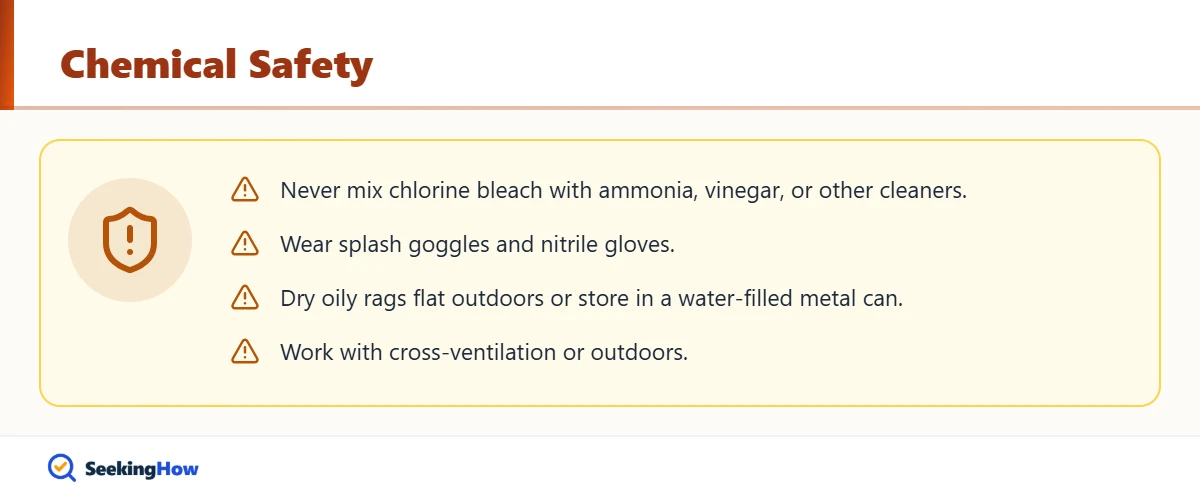
Never mix chlorine bleach with ammonia, vinegar, or other cleaners, because the combination can release toxic gases. Work outdoors or with cross-ventilation, wear splash goggles and nitrile gloves, and let solvent-soaked rags dry flat outdoors or store them in a sealed metal can filled with water, because oily rags can self-ignite.
Call a furniture refinisher for antiques, veneered pieces where liquid can lift the veneer, or furniture built before 1978 that may have lead-based paint under the stain. A professional can test for lead and strip safely without damaging thin veneers.
Prevention Tips
- Test stain on a scrap of the same wood before staining the project.
- Use a pre-stain wood conditioner on pine, birch, and maple to prevent dark blotches.
- Wipe off excess stain within the time on the label instead of letting it soak.
- Choose a lighter shade than you think; you can add a second coat but removing color is harder.
Related Guides
- How to change wood color from dark to light
- How to remove polyurethane from wood
- How to straighten wood with water
Sources
- U.S. EPA: paint stripper safety and methylene chloride rules
- CDC: household chemical safety and avoiding mixing cleaners
- USDA Forest Products Laboratory: Wood Handbook, finishing wood
Frequently Asked Questions
Can you lighten stain after it dries?
Yes, you can lighten dried stain if no topcoat is on it. Scrub with mineral spirits and a synthetic pad to lift pigment, then use chlorine bleach to fade dye. Results are more limited than wiping fresh stain, and very dark pigment-heavy stains may need several rounds.
Does mineral spirits remove wood stain?
Mineral spirits removes oil-based wood stain best while it is fresh and partly removes it after drying. It dissolves the oil binder so pigment can be wiped away. It has little effect on water-based stain, which responds better to warm water while still fresh.
Will a lighter stain over dark stain make it lighter?
No, a lighter stain over a darker stain will not make wood lighter. Stains are translucent, so the darker color underneath still shows through. You must remove or bleach the dark stain first, then apply the lighter shade if you want a different color.
Does bleach lighten wood stain?
Yes, household chlorine bleach lightens many wood stains by breaking down their dye. It does not dissolve pigment particles or lighten the natural color of the wood. For natural wood color, use two-part A/B wood bleach, and for gray water or iron stains, use oxalic acid.
How long should bleach sit on stained wood?
Leave chlorine bleach on stained wood for about 15 to 30 minutes per application. Check the color as it dries, since wet wood looks darker than it will be. Rinse with clean water when you reach the shade you want, then let the wood dry at least 24 hours.
Can I lighten walnut stain on polyurethane-coated furniture?
Not without removing the polyurethane first. The clear coat seals the stain, so solvents and bleach cannot reach it. Use a chemical stripper to remove the finish, then scrub and bleach the stain. A tinted toner can make it appear different but will not truly lighten it.
Will lightening stain raise the wood grain?
Yes, bleach and water-based steps usually raise the grain slightly. Let the wood dry fully, then knock down the fuzz with a light pass of a fine synthetic pad. That smooths the surface without the heavy sanding that removes wood or cuts through veneer.