
Quick Answer
To hang a tapestry on a brick wall without nails, clip two or three brick clips onto bricks that stand proud of the mortar, then hang the tapestry from a lightweight rod or wooden hanger resting on the clips. Setup takes about 15 minutes and leaves no holes. Standard adhesive hooks are not recommended for brick.
Key Takeaways
- Brick clips grip the top and bottom edges of a single brick, so they need no drilling, nails, or adhesive.
- Brick clips only work when the brick faces stick out past the mortar joints.
- 3M says standard Command products are not recommended on rough surfaces such as brick.
- A rod or wooden poster hanger spreads the weight and keeps the tapestry from sagging between clips.
- Hot glue can hold very light fabric on brick but may leave residue in porous brick.
- Recessed or flush-mortar brick needs a tension rod, freestanding display, or ceiling hanging instead.
Exposed brick makes a great backdrop for textiles, but drilling into brick or mortar is noisy, permanent, and often off-limits for renters. You can hang a tapestry on a brick wall without nails using brick clips, a rod, and a little planning. This guide shows the clip method step by step, plus backup options for brick that clips will not fit.
What You’ll Need
- Brick clips sized for your brick height (measure first), 2 to 4 clips
- Lightweight curtain rod, wooden dowel (1/2 to 3/4 inch), or a wooden poster or tapestry hanger
- Tape measure and a small level
- Stiff brush to clean brick faces
- Clip rings or a sewn rod pocket (if your tapestry has neither)
- Painter’s tape for marking (optional)
- Tension rod (optional, for alcoves or between walls)
How To Hang a Tapestry on a Brick Wall Without Nails: Step-by-Step
Step 1: Check that the bricks will accept clips
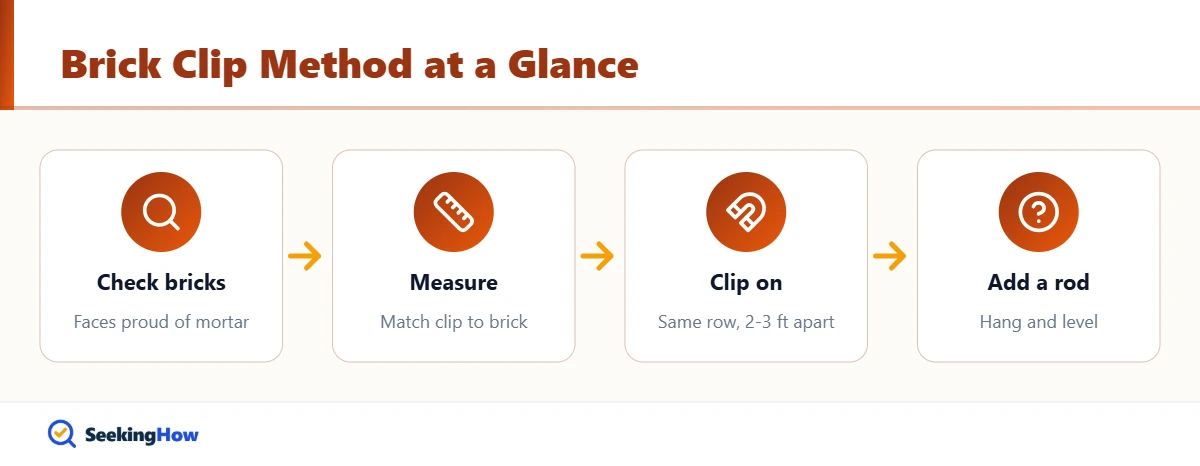
Run your finger across a mortar joint. If the brick face stands out past the mortar by roughly 1/8 inch or more, brick clips can grip the top and bottom edges. If the mortar is flush with or proud of the brick, clips will not hold, so jump to the alternatives below.
Step 2: Measure brick height and buy matching clips
Measure the height of one brick from its top edge to its bottom edge. Brick clips are sold in ranges that match common brick sizes, and a clip that is too large will slide off. Check the weight rating on the package; most tapestries weigh only 1 to 3 pounds, well within typical ratings.
Step 3: Mark the hanging height
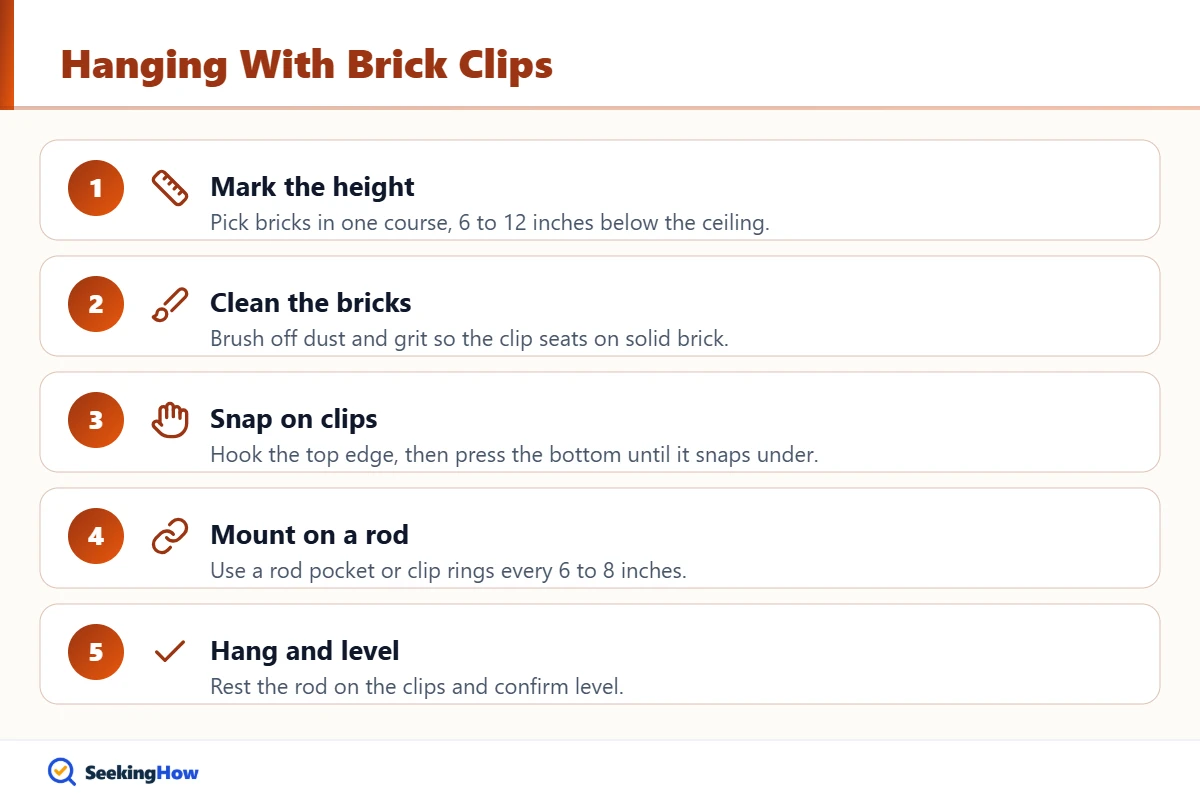
Decide where the top of the tapestry should sit, usually 6 to 12 inches below the ceiling or centered over furniture. Pick bricks in the same course (row) so the clips are perfectly level. Use painter’s tape to mark the bricks and check the line with a level.
Step 4: Brush the bricks and snap on the clips
Brush away dust and loose grit so the clip’s teeth seat against solid brick. Hook the top of the clip over the brick’s upper edge, then press the bottom until it snaps under the lower edge. Space clips about every 2 to 3 feet; a 5-foot tapestry usually needs two or three.
Step 5: Mount the tapestry on a rod
Slide a dowel or rod through the tapestry’s rod pocket, or attach clip rings along the top edge every 6 to 8 inches. Hanging fabric directly on the clips creates scallops and uneven stretching. In practice, most people find a wooden poster hanger with magnetic or clamping rails gives the cleanest, flattest look.
Step 6: Hang and level
Rest the rod on the clip hooks, center the tapestry, and check level once more. Tug gently to confirm each clip is seated. Adjust the bottom edge so it hangs freely without dragging on furniture or baseboards.
Bottom line: If your bricks stick out past the mortar, brick clips plus a rod are the best no-nail method; if not, use a tension rod or hang from the ceiling.
Alternatives for Flush or Painted Brick
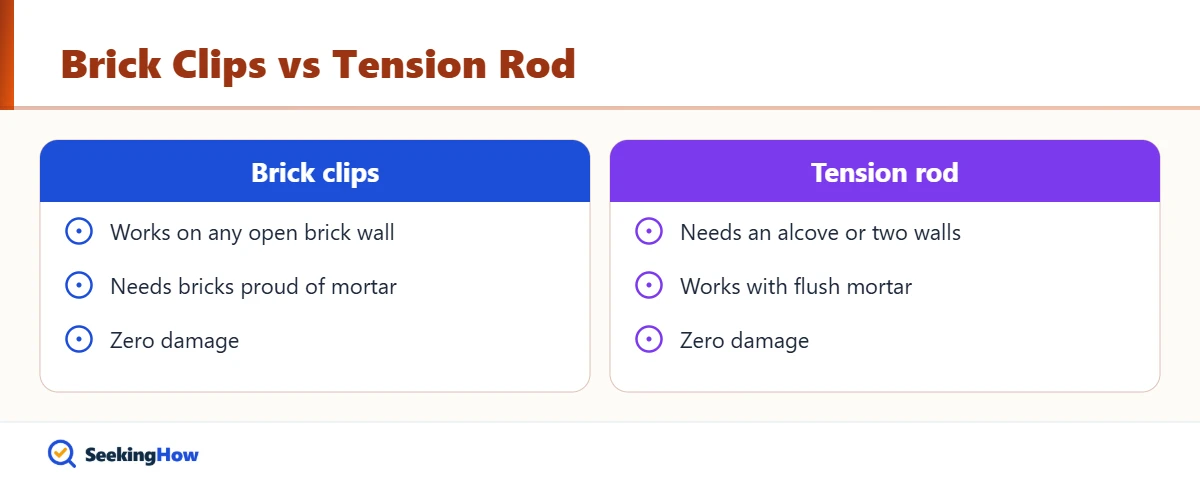
- Tension rod: In an alcove, window bay, or between two walls, a spring tension rod holds a tapestry with no wall contact at all.
- Ceiling hanging: If the ceiling is drywall, hang the tapestry from the ceiling just in front of the brick; see our guide to hanging a tapestry on the ceiling without holes.
- Fishing line from above: Suspend a dowel from ceiling hooks or a crown molding with clear line, as in how to hang fishing line from the ceiling.
- Leaning display: Drape the tapestry over a decorative ladder or freestanding rack placed against the brick.
- Hot glue (light fabric only): Low-temperature hot glue can hold a small fabric hook on brick for lightweight cloth, but it can leave residue on porous, unsealed brick.
If That Didn’t Work
Problem: Clips keep popping off. Cause: Wrong clip size or crumbling brick edges. Fix: Re-measure brick height, buy the matching size, and choose bricks with sharp, solid edges.
Problem: The tapestry sags in the middle. Cause: Clips too far apart or hanging without a rod. Fix: Add a center clip and use a stiffer dowel.
Problem: Adhesive hooks fell within days. Cause: Rough, porous brick prevents full contact. Fix: Switch to brick clips or a tension rod; adhesive strips are not designed for brick.
Problem: The tapestry hangs crooked. Cause: Clips placed on different brick courses. Fix: Move all clips to the same row and recheck with a level.
| Method | Damage risk | Holds | Best for |
|---|---|---|---|
| Brick clips + rod | None | Most tapestries | Bricks proud of mortar |
| Tension rod | None | Light to medium fabric | Alcoves, between walls |
| Ceiling hooks or line | Small ceiling marks | Light fabric | Flush mortar brick |
| Hot glue | Possible residue | Very light fabric | Sealed or painted brick |
| Adhesive strips | Failure, falling | Unreliable | Not recommended |
Safety and When To Call a Pro
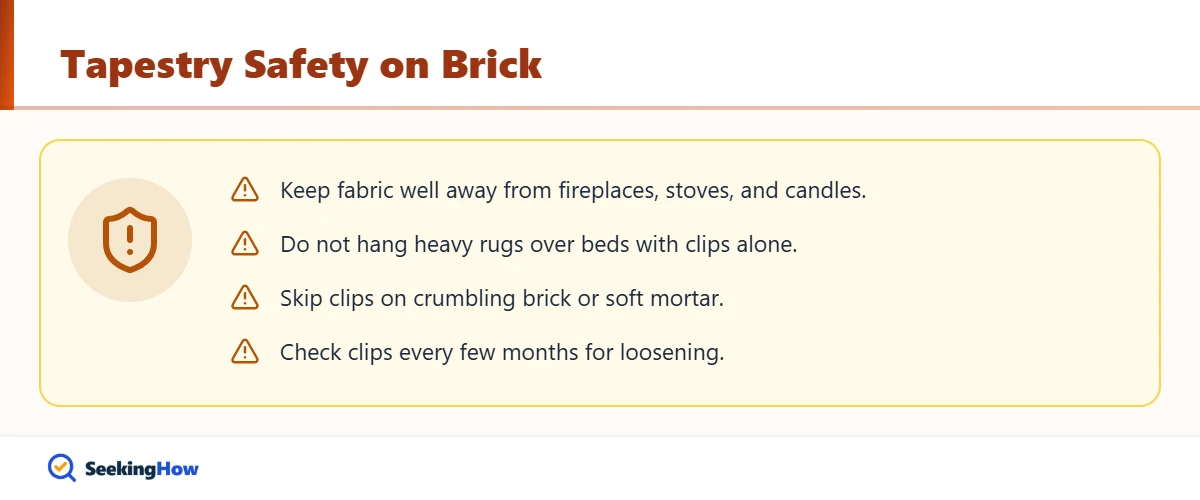
Keep tapestries at least a few feet from fireplaces, wood stoves, candles, and heaters, since thin fabric ignites easily; brick walls around fireplaces are a common spot where this goes wrong. Avoid hanging heavy rugs or wall hangings over beds or seating with clips alone.
If you want to hang a heavy rug, mirror, or anything over about 20 pounds on brick, or if the brick is crumbling, cracked, or the mortar is soft and sandy, have a mason or handyman assess it and install proper masonry anchors in the mortar joints.
Prevention Tips
- Check clips every few months; settling or vibration can loosen them.
- Keep tapestries out of direct sun to prevent fading.
- Vacuum the tapestry gently with a brush attachment to remove brick dust.
- Seal very dusty or crumbly brick with a masonry sealer before hanging anything.
Related Guides
- How to hang a tapestry on the ceiling without holes
- How to hang fishing line from the ceiling
- How high to hang a mirror over a console table
Sources
- 3M Command: product surface guidance (not recommended on rough surfaces such as brick)
- National Fire Protection Association: home fire safety and keeping fabrics away from heat sources
Frequently Asked Questions
Do Command strips work on brick?
No, standard Command strips are not recommended for brick. 3M says its products are not suited to rough surfaces such as brick, because the adhesive cannot make full contact with the textured, porous surface. Hooks may hold briefly, then fall without warning, so use brick clips instead.
What are brick clips?
Brick clips are spring-steel clamps that grip the top and bottom edges of a single brick. They have a hook on the front for hanging items and need no drilling, nails, or adhesive. They only work when the brick faces protrude past the mortar joints.
How do I know what size brick clip to buy?
Measure the height of one brick from top edge to bottom edge and buy clips rated for that range. Common clips fit standard modular bricks, but older or oversize bricks may need a different model. A mismatched clip will either not snap on or will slide off.
Can you hang a tapestry on brick with hot glue?
Yes, hot glue can hold a small hook for a very light tapestry, but it is a compromise. On porous, unsealed brick, glue can leave residue that is hard to remove. Use low-temperature glue, test a hidden spot, and switch to brick clips for anything heavier.
How do renters hang things on exposed brick?
Renters usually hang things on exposed brick with brick clips, tension rods, or freestanding displays, because all three avoid holes. Check your lease before drilling into mortar. Brick clips are the most flexible option and can be moved or removed in seconds without marks.
How many brick clips do I need for a tapestry?
Most tapestries need two or three brick clips. Place one near each end of the rod and add a center clip for anything wider than about 5 feet. The rod carries the fabric, so the clips mainly need to support the rod evenly.
Is it safe to hang a tapestry above a brick fireplace?
Hanging a tapestry directly above a working fireplace is not recommended. Fabric can scorch or ignite from heat, sparks, or embers. If the fireplace is used, choose a nonflammable decor item for the mantel wall and keep tapestries on another wall well away from heat.