Quick Answer
Oregano is safe to eat in normal cooking amounts, roughly 1/4 to 1 teaspoon of dried oregano or 1 to 3 teaspoons of fresh leaves per serving, several times a day. Concentrated forms are different: oregano oil and high-dose supplements can irritate the stomach, and pregnant people, anyone on blood thinners, and people with mint-family allergies should skip them.
Key Takeaways
- Oregano used as a culinary herb is considered safe for most people, including children and pregnant people.
- There is no official daily upper limit for oregano; safety depends on the form, not just the amount.
- Oregano oil is far more concentrated than the dried herb and can cause stomach upset or mouth irritation.
- Medicinal amounts of oregano are considered possibly unsafe during pregnancy.
- Oregano may slow blood clotting and lower blood sugar, so supplements need a doctor’s input if you take related medications.
- People allergic to basil, mint, sage, thyme, or lavender may also react to oregano.
Most questions about how much oregano is safe to eat come from people who cook with a heavy hand or who are considering oregano oil capsules. The herb on your spice rack and the supplement in a dropper bottle carry very different risks, so the answer depends on which one you mean.
What You’ll Need To Judge Your Intake
- A measuring spoon set (1/4, 1/2, and 1 teaspoon) to see what you actually use
- The label of any oregano oil or capsule you take, showing concentration and serving size
- A list of your current medications, especially blood thinners, diabetes drugs, and lithium
- Your allergy history for mint-family (Lamiaceae) plants
- Your doctor or pharmacist’s contact info if you plan to take a supplement (optional for cooking use)
How Much Oregano Is Safe To Eat: Step-by-Step Check
Step 1: Identify the Form You’re Using
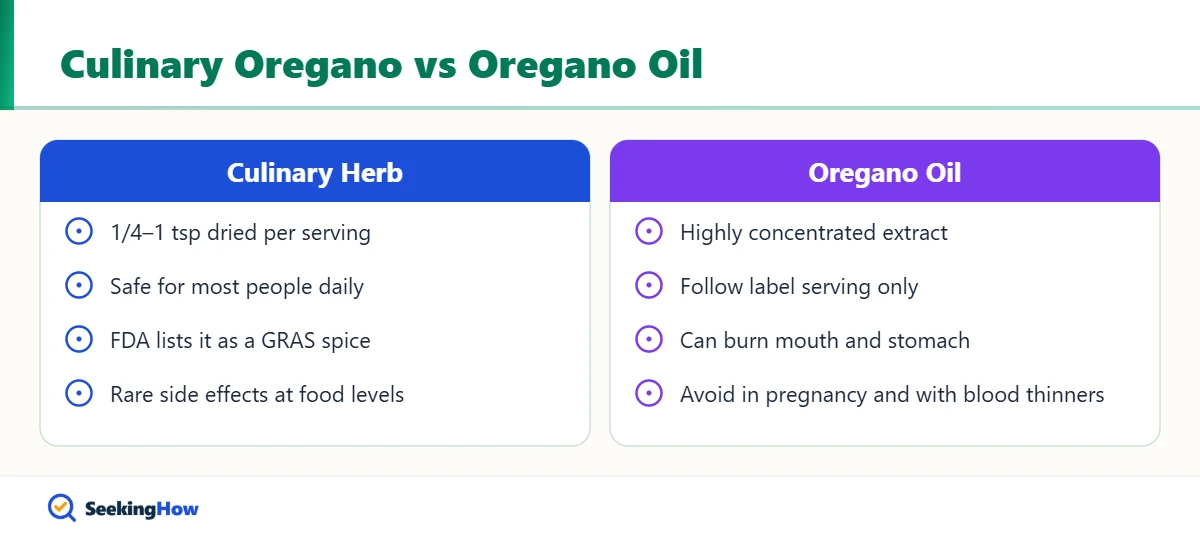
Separate culinary oregano (fresh leaves, dried leaves, ground oregano) from concentrated products (oregano oil, oil of oregano capsules, extracts, and teas brewed strong for medicinal use). The U.S. FDA classifies oregano as a spice that is generally recognized as safe for its intended use in food. That status does not extend to concentrated oils taken in medicinal doses.
Step 2: Compare Your Cooking Amount With Typical Use
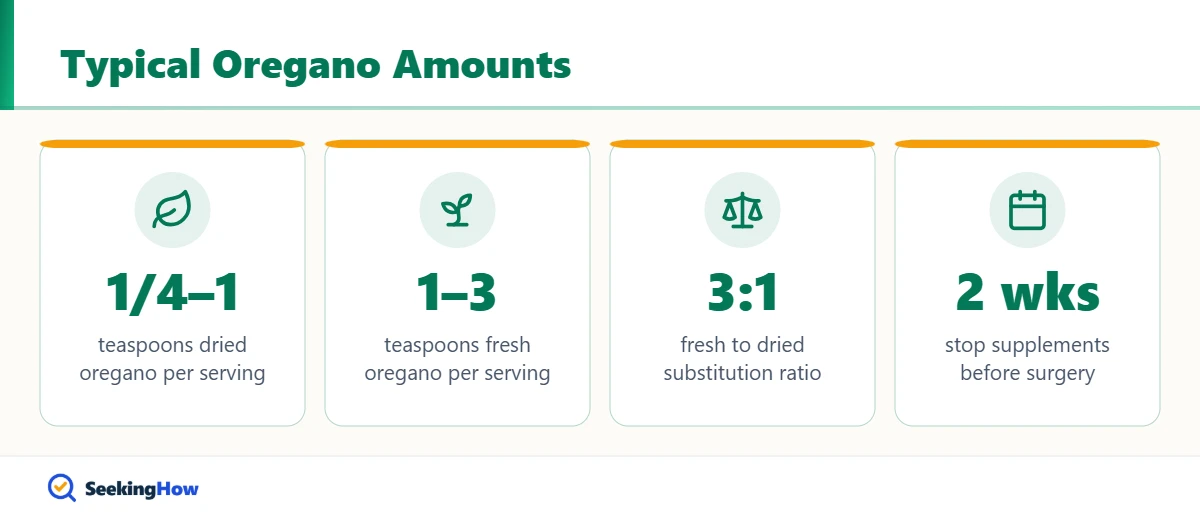
Recipes usually call for 1/2 to 2 teaspoons of dried oregano for a dish that serves four, which works out to well under a teaspoon per person. Fresh oregano is milder by volume, so recipes use about three times as much fresh as dried. Seasoning pizza, sauces, and salads at these levels every day is normal and fits within food-level use.
Step 3: Watch for Signs You’ve Overdone It
Eating a large amount of dried oregano at once, such as several tablespoons, is more likely to cause an upset stomach, heartburn, or a burning mouth than any serious harm. In practice, the strong, slightly numbing flavor stops most people well before they reach a problem amount. If you notice cramping or nausea after a heavily seasoned meal, cut back the next time.
Step 4: Treat Oregano Oil as a Supplement, Not a Spice
Oregano essential oil is highly concentrated and should never be swallowed straight from the bottle. Products sold for oral use are diluted, usually in olive oil, and the label gives a serving size; do not exceed it. Most people find even diluted drops burn the mouth and throat, which is a warning sign rather than a sign it is working.
Step 5: Check Your Personal Risk Factors
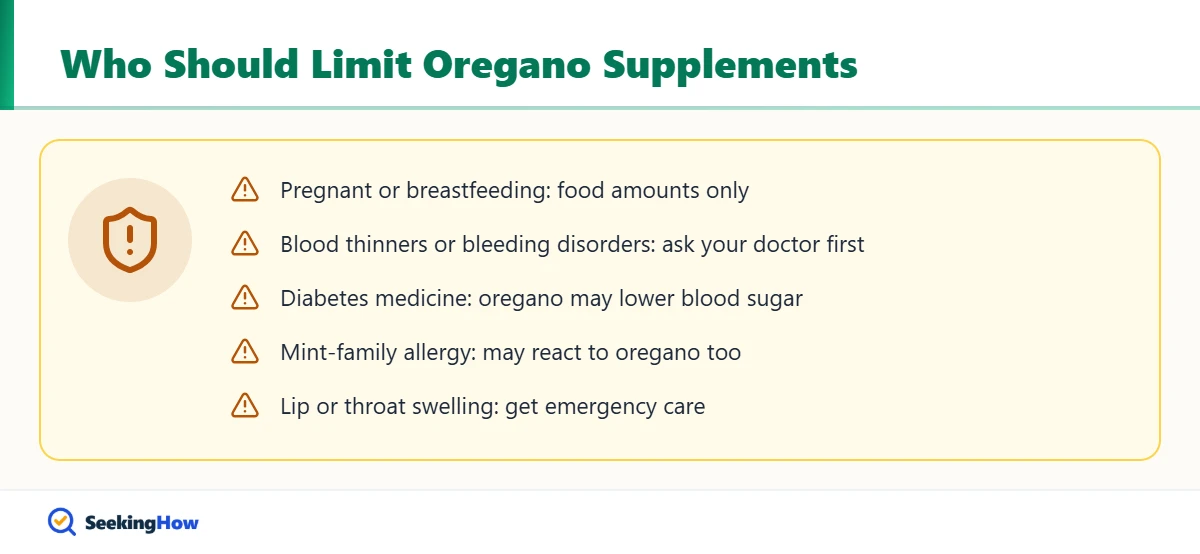
Review whether you are pregnant or breastfeeding, have a bleeding disorder, have surgery scheduled in the next 2 weeks, have diabetes, or take blood thinners or lithium. MedlinePlus notes oregano might increase bleeding risk and lower blood sugar, and may reduce the body’s absorption of copper, iron, and zinc. Any of these factors means food amounts only, and a conversation with your doctor before supplements.
Step 6: Stop and Reassess if You React
Stop eating oregano if you develop itching, hives, lip or tongue swelling, or wheezing after a meal containing it. Mint-family allergies cross-react, so a reaction to oregano may also mean basil, sage, thyme, or lavender are a problem. Keep a note of what you ate so an allergist can test accurately.
Bottom line: season with oregano freely at recipe amounts, and treat oregano oil or capsules as medicine that needs label limits and, for higher-risk groups, a doctor’s approval.
Oregano Forms Compared
| Form | Typical amount | Concentration | Who should limit it |
|---|---|---|---|
| Fresh leaves | 1–3 tsp per serving | Lowest | Only people with mint-family allergies |
| Dried leaves or ground | 1/4–1 tsp per serving | About 3x fresh | Only people with mint-family allergies |
| Oregano tea | 1 cup, short steep | Moderate | Pregnancy, bleeding risk, surgery |
| Oregano oil or capsules | Label serving only | Very high | Pregnancy, children, blood thinners, diabetes meds, surgery |
If That Didn’t Work
Problem: Stomach upset after oregano-heavy meals. Cause: Large single doses of the herb irritate the gut lining. Fix: Spread seasoning across meals and keep to recipe amounts.
Problem: Mouth or throat burning from oregano oil. Cause: Carvacrol and thymol in the oil are strong irritants. Fix: Stop the oil; rinse with water and do not try a higher-strength product.
Problem: Unexplained bruising while taking oregano supplements. Cause: Oregano may slow clotting, especially with blood thinners or other herbs that do the same. Fix: Stop the supplement and tell your doctor.
Problem: Low iron despite good diet while using daily oregano supplements. Cause: Oregano may reduce mineral absorption. Fix: Ask your doctor about stopping the supplement and rechecking levels.
When To See a Doctor
Get emergency care for swelling of the lips, tongue, or throat, trouble breathing, or widespread hives after eating oregano. See a doctor promptly if you have unusual bruising, nosebleeds, blood in urine or stool, or shaky, sweaty low-blood-sugar episodes while taking oregano oil or capsules. Call your doctor before using any oregano supplement if you are pregnant, breastfeeding, taking warfarin or other anticoagulants, taking diabetes medicine or lithium, or have surgery coming up.
Prevention Tips
- Measure dried oregano instead of shaking it straight from the jar.
- Buy oregano oil only if it lists dilution and a serving size, and keep it away from children.
- Stop oregano supplements at least 2 weeks before scheduled surgery.
- Tell your pharmacist about every herbal product you take.
Related Guides
- How much rosemary is safe to eat
- How to reduce oxidative stress with diet and habits
- How to reduce blood pressure naturally
Sources
- MedlinePlus (U.S. National Library of Medicine) – Oregano
- U.S. Food and Drug Administration – spices and natural seasonings generally recognized as safe (21 CFR 182.10)
- National Center for Complementary and Integrative Health (NIH) – herbs and supplements safety
- Mayo Clinic – food allergy symptoms and anaphylaxis
Frequently Asked Questions
Is it safe to eat oregano every day?
Yes, eating oregano every day in normal cooking amounts is safe for most people. Seasoning daily meals with a fraction of a teaspoon to a teaspoon of dried oregano per serving is food-level use. Daily oregano oil or capsules is a different matter and should be cleared with a doctor, especially for long-term use.
Can you eat too much oregano?
Yes, eating a very large amount at once can cause stomach upset, heartburn, or a burning mouth. Food amounts rarely cause this because the strong flavor limits how much you can eat. Problems are much more likely with concentrated oregano oil, which delivers far more of the active compounds in a few drops.
Is oregano safe during pregnancy?
Oregano in normal food amounts is considered likely safe during pregnancy. Larger medicinal amounts, including oregano oil and supplements, are considered possibly unsafe because they may raise the risk of miscarriage. Pregnant people should stick to seasoning-level use and check with their obstetric provider before any herbal supplement.
How much oregano oil is safe to take?
There is no established safe dose of oregano oil, so follow the product label serving and never exceed it. Never swallow undiluted essential oil. People who are pregnant, breastfeeding, taking blood thinners or diabetes medicine, or preparing for surgery should not use it without a doctor approving it first.
Does oregano interact with medications?
Yes, oregano supplements may interact with several medications. It may increase bleeding risk with anticoagulants like warfarin, add to the blood-sugar-lowering effect of diabetes drugs, and has been listed as a possible concern with lithium. Food amounts are unlikely to matter, but tell your pharmacist about any oregano supplement.
Can kids eat oregano?
Yes, children can eat oregano in normal food amounts, such as on pizza or in pasta sauce. Oregano oil and capsules are not recommended for children unless a pediatrician advises them, because the concentrated oil can irritate the mouth and stomach and there is little safety data for kids.
Are oregano and marjoram the same for safety?
Oregano and marjoram are closely related mint-family herbs with similar safety profiles at food amounts. Both are safe for cooking. Someone allergic to one may react to the other, and concentrated extracts of either deserve the same caution about pregnancy and bleeding risk.