Quick Answer
To fix a desk chair that keeps sinking, replace the worn gas cylinder (a 20 to 40 minute job with a pipe wrench and rubber mallet) or, as a quick fix, lock the height with a cut PVC pipe sleeve or hose clamp. A sinking chair means the cylinder’s seal has failed. Never cut or heat a gas cylinder.
Key Takeaways
- A desk chair sinks because the pressurized gas cylinder’s internal seal has worn out; the cylinder cannot be refilled or repaired.
- Replacing the gas cylinder is the permanent fix and restores full height adjustment.
- A PVC pipe sleeve or hose clamp holds the seat at one height but removes adjustability.
- Measure your old cylinder’s exposed length and stroke before ordering a replacement.
- Most office chair cylinders share a standard tapered fit, but check your chair maker’s parts list first.
An office or desk chair that slowly drops while you sit is almost always a pneumatic problem, not a broken seat. This guide on how to fix a desk chair that keeps sinking covers the permanent fix (a new gas cylinder) and two no-cost workarounds, so you can choose based on your chair’s value and how much time you have.
What You’ll Need
- Replacement gas cylinder matched to your chair (for the permanent fix)
- 18-inch pipe wrench
- Rubber mallet
- Penetrating oil such as a rust-loosening spray (optional)
- Tape measure
- For the PVC fix: 1-1/4 inch or 1-1/2 inch PVC pipe, a hacksaw, and a utility knife
- For the clamp fix: a stainless steel worm-drive hose clamp and a strip of rubber or bicycle inner tube (optional)
- Old towel and work gloves
Why a Desk Chair Keeps Sinking
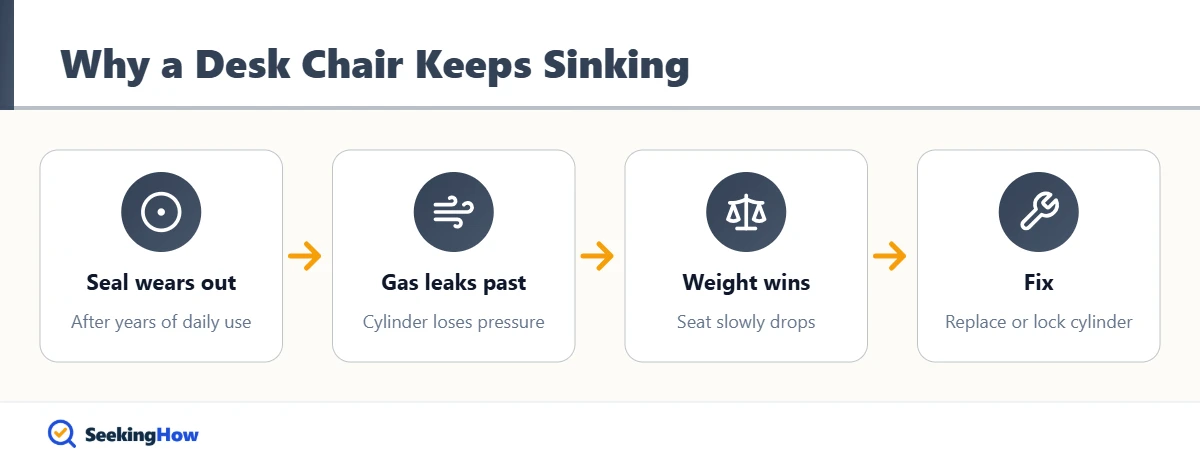
A desk chair keeps sinking because the gas cylinder under the seat can no longer hold pressure. The cylinder is a sealed tube of pressurized nitrogen with a piston; when the internal seal wears, gas leaks past it and your weight pushes the seat down. Most people find this happens after several years of daily use, and it gets steadily worse.
How To Fix a Desk Chair That Keeps Sinking: Replace the Gas Cylinder
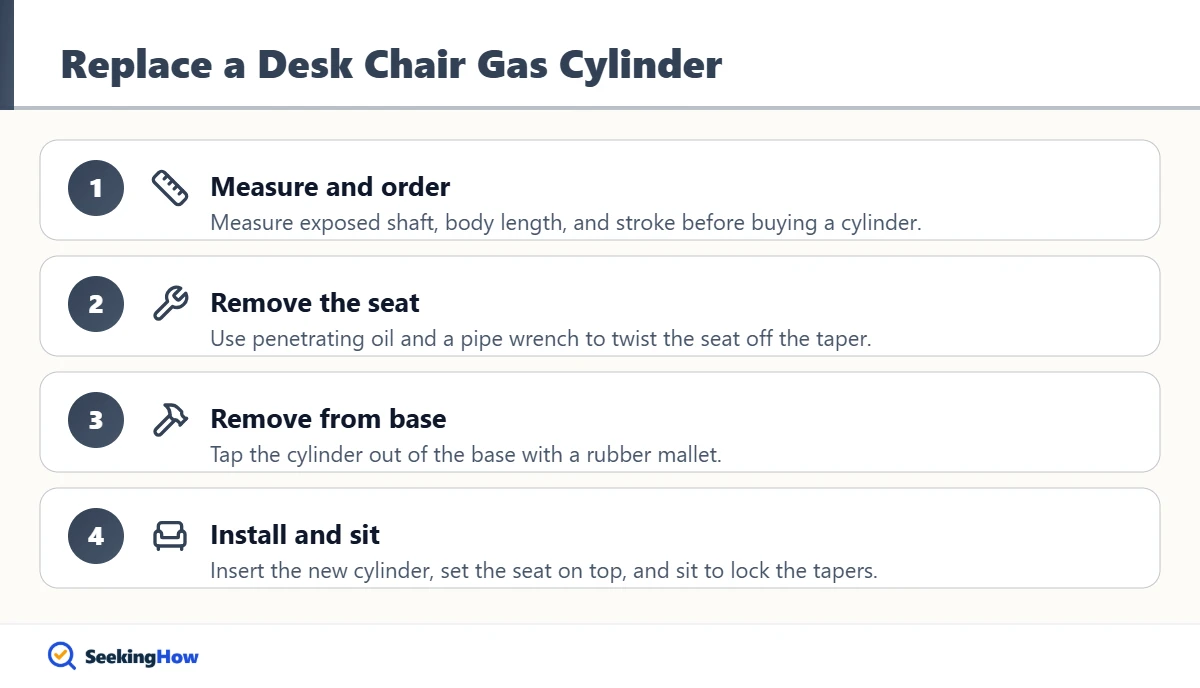
Step 1: Measure and Order the Right Cylinder
Raise the seat to its highest position and measure the exposed chrome or black shaft, then measure the full body from the base to the seat plate. Note the stroke (how far the seat travels) and look for a label or model number on the chair. Ordering the wrong length is the most common mistake; it leaves the seat too high or too low for your desk.
Step 2: Remove the Seat From the Cylinder
Turn the chair upside down on a towel. Spray penetrating oil where the cylinder enters the seat mechanism, wait 10 minutes, then grip the cylinder with the pipe wrench and twist while pulling the seat away. The cylinder is held by a friction taper, not threads, so steady twisting is what breaks it free.
Step 3: Remove the Cylinder From the Base
With the base upside down, tap the cylinder’s bottom tip toward the inside of the base with a rubber mallet, working around the edge of the metal retaining clip if there is one. On some chairs you will need to remove the clip and washers on the bottom first. Keep any small parts in a cup so you can reuse them if the new cylinder does not include them.
Step 4: Install the New Cylinder
Push the narrow end of the new cylinder firmly into the base hole, then set the seat mechanism over the top. Sit on the chair to seat the tapers; your body weight presses them into place. Do not hammer on the top of the cylinder’s piston rod, which can damage the release valve.
Step 5: Test the Height Adjustment
Pull the height lever without sitting, and the seat should rise smoothly. Sit and pull the lever again to lower it, then sit for several minutes to confirm it holds. If the lever does not reach the cylinder’s release button, adjust the lever screw on the mechanism.
Quick Fix Option 1: PVC Pipe Sleeve
A PVC pipe sleeve stops a sinking chair by blocking the cylinder from compressing. Raise the seat to your preferred height, remove the plastic skirt covering the cylinder, and measure the exposed shaft. Cut PVC pipe to that length, slit it lengthwise with a hacksaw or utility knife, and snap it around the shaft. In practice, 1-1/4 inch PVC fits most shafts, but check yours first.
Quick Fix Option 2: Hose Clamp
A hose clamp locks the cylinder at one height by gripping the shaft just below the seat. Wrap a strip of rubber around the shaft for grip, tighten a stainless worm-drive clamp over it at your desired height, and test. This works for lighter users but can slip under heavy loads, so the PVC sleeve or a new cylinder is more reliable.
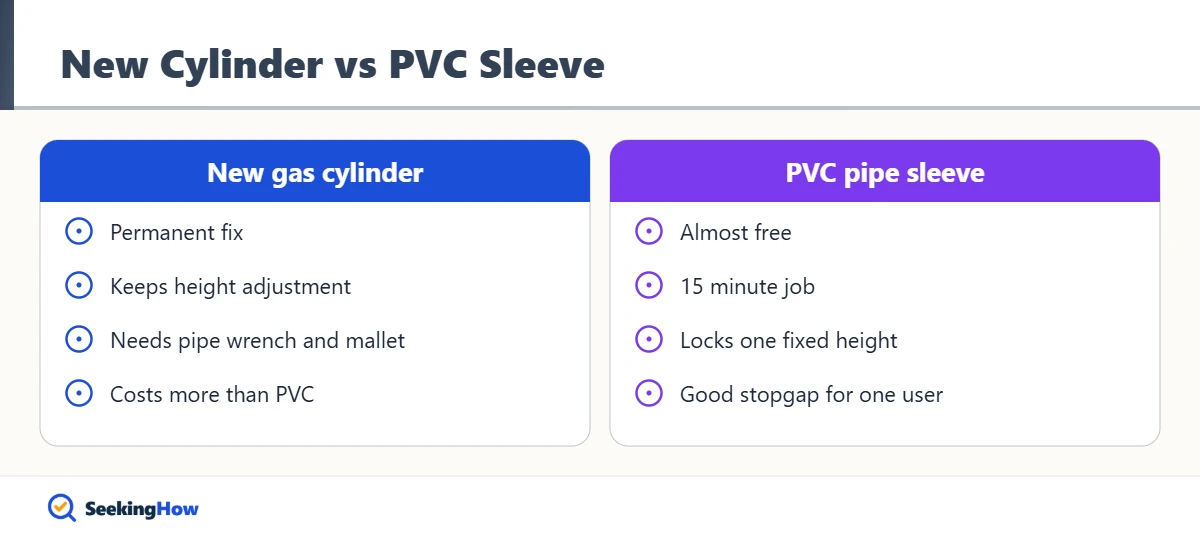
Bottom line: If the chair is worth keeping, replace the gas cylinder; use the PVC sleeve only as a free stopgap.
If That Didn’t Work
Problem: The seat will not separate from the cylinder. Cause: Corrosion or a very tight taper. Fix: Reapply penetrating oil, wait 30 minutes, and use a longer pipe wrench for leverage.
Problem: The new cylinder still sinks. Cause: A defective or wrong-class cylinder. Fix: Contact the seller; check that the weight rating fits your use.
Problem: The chair wobbles after the repair. Cause: A loose base, caster, or mechanism bolt. Fix: Tighten the seat plate bolts and see our guide to fixing a wobbly chair.
Problem: The height lever does nothing. Cause: The lever is not pressing the cylinder’s release button. Fix: Adjust or bend the lever tab so it contacts the button.
| Method | Time | Cost | Adjustable? | Best for |
|---|---|---|---|---|
| Replace gas cylinder | 20–40 min | Moderate | Yes | Good chairs you plan to keep |
| PVC pipe sleeve | 15 min | Very low | No | One user, one desk height |
| Hose clamp | 10 min | Very low | No | Short-term fix, lighter users |
Safety and When To Call a Pro
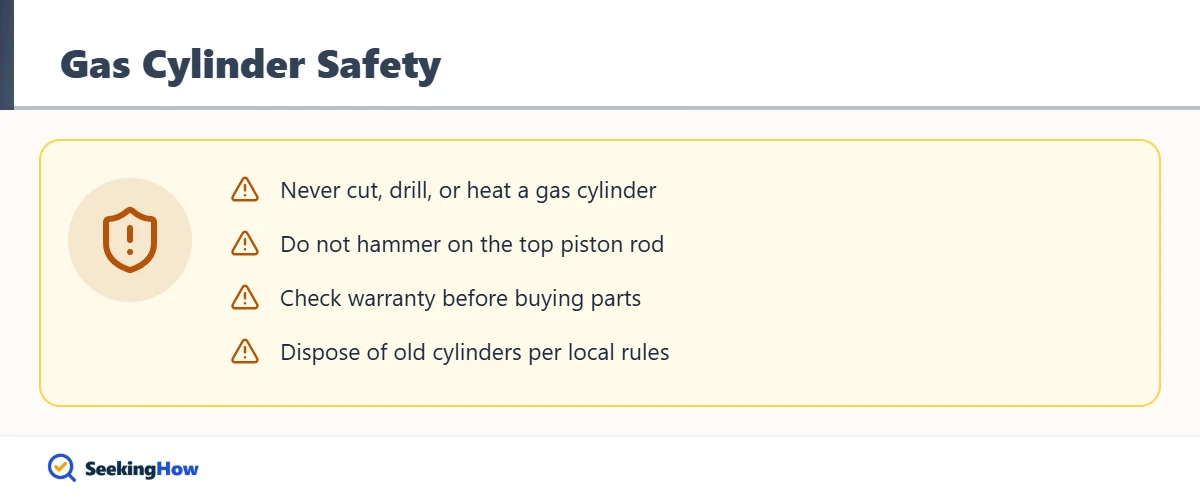
Never cut, drill, heat, or try to disassemble a gas cylinder, because it is under pressure and can release violently. Dispose of the old cylinder according to your local scrap metal or hazardous waste rules. If your chair is under warranty, contact the manufacturer first; many office chair brands replace cylinders for free during the warranty period.
Prevention Tips
- Check that the weight rating on your chair or cylinder fits the user.
- Avoid dropping heavily into the seat, which shocks the cylinder seal.
- Keep the chair out of direct heat sources such as heaters and sunny windows.
Related Guides
- How to fix a wobbly chair
- How to keep bar stools from tipping over
- How to remove a stripped Allen screw
- How to stabilize a wobbly cabinet
Sources
- BIFMA (Business and Institutional Furniture Manufacturers Association) — office chair safety and performance standards (bifma.org)
- U.S. Consumer Product Safety Commission (CPSC) — furniture and product safety information (cpsc.gov)
- OSHA — computer workstation ergonomics guidance on chairs (osha.gov)
Frequently Asked Questions
Can you refill a desk chair gas cylinder?
No, a desk chair gas cylinder cannot be safely refilled or resealed at home. It is a sealed pressure vessel, and once the internal seal fails, the only reliable fix is replacement. Opening or drilling it is dangerous because the stored pressure can release suddenly.
Are office chair gas cylinders universal?
Many office chair gas cylinders share a standard tapered fit, so they swap between brands, but lengths, strokes, and some premium chairs differ. Measure your old cylinder and check the manufacturer parts list before ordering. A wrong length leaves the seat too tall or too short for your desk.
How long does a desk chair gas cylinder last?
A desk chair gas cylinder typically lasts several years, depending on user weight, daily hours, and build quality. Heavier use and dropping into the seat wear the seal faster. A chair that begins sinking slowly is a sign the cylinder is nearing the end of its life.
Why is my chair cylinder stuck and will not come out?
A chair cylinder gets stuck because it is held by a tight friction taper that can corrode over time. Spray penetrating oil at the joint, wait at least 10 to 30 minutes, then twist with a long pipe wrench while pulling. Twisting breaks the taper free more easily than pulling straight.
Does the PVC pipe trick damage the chair?
No, the PVC pipe trick does not damage the chair because the sleeve simply rests around the shaft. The tradeoff is that you lose height adjustment. You can remove the sleeve anytime by spreading the slit open, which makes it a safe temporary fix.
Is it worth fixing a sinking office chair?
Yes, fixing a sinking office chair is usually worth it if the seat, back, and mechanism are in good shape. A new gas cylinder costs far less than most new chairs. If the foam, arms, and tilt also fail, replacing the whole chair often makes more sense.