Quick Answer
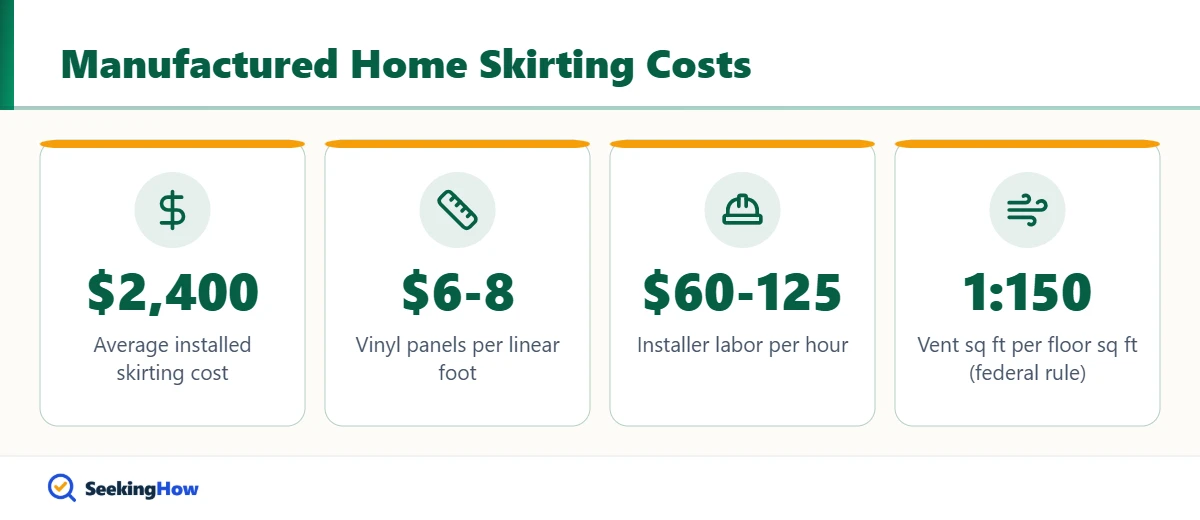
Skirting a manufactured home typically costs about $1,500 to $5,000 installed as of 2026, with an average near $2,400. Basic vinyl skirting is the cheapest at roughly $600 to $1,600 for materials, while insulated vinyl, faux stone, wood or masonry costs more. Labor runs about $60 to $125 per hour, and every skirting job needs code-required vents and an access door.
Key Takeaways
- Most manufactured home skirting projects cost $1,500 to $5,000 installed, varying by region and material.
- Vinyl skirting panels run about $6 to $8 per linear foot before labor.
- Labor often makes up more than half of the total skirting cost.
- Federal installation standards require 1 sq ft of vent area per 150 sq ft of floor, reducible with a full ground vapor retarder.
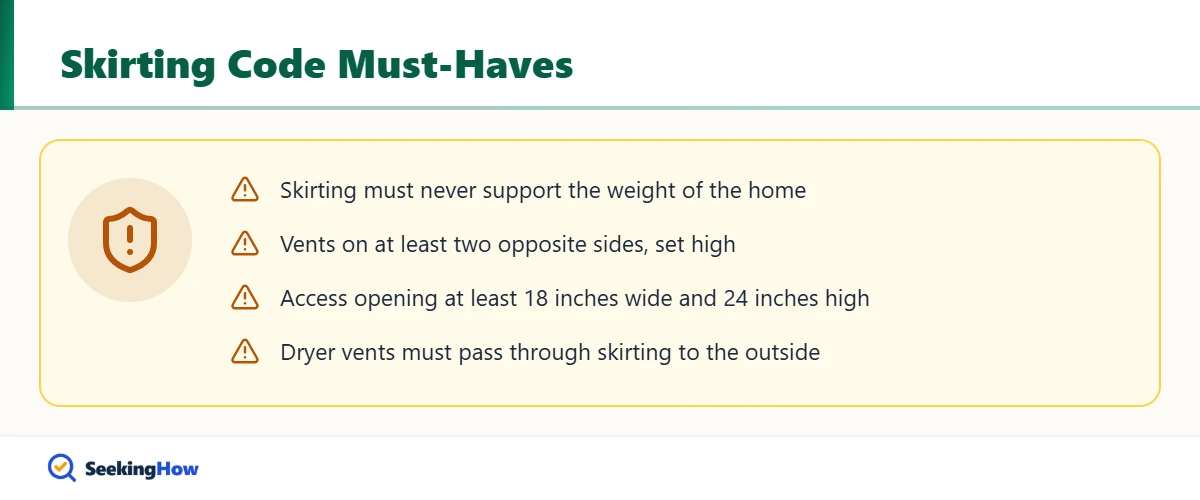
- An access opening at least 18 by 24 inches must be left so utilities under the home can be reached.
Skirting closes the gap between a manufactured home and the ground, keeping out animals, wind and debris while improving curb appeal. This guide breaks down how much it costs to skirt a manufactured home by material and home size, the extra items quotes often leave out, and the federal venting rules your installer must follow. Prices are national estimates and vary by region and year.
What You’ll Need To Estimate the Cost
- A 100 ft tape measure or measuring wheel for the home’s perimeter
- Height measurements from the ground to the bottom of the home at each corner
- Notes on porches, steps or decks that the skirting must go around
- Your park or local code rules on skirting material and color
- At least three written installer quotes
Cost To Skirt a Manufactured Home by Material
| Material | Single-wide (materials) | Double-wide (materials) | Durability | Best for |
|---|---|---|---|---|
| Vinyl | $630 to $1,090 | $1,100 to $1,550 | Moderate | Lowest cost, easy repairs |
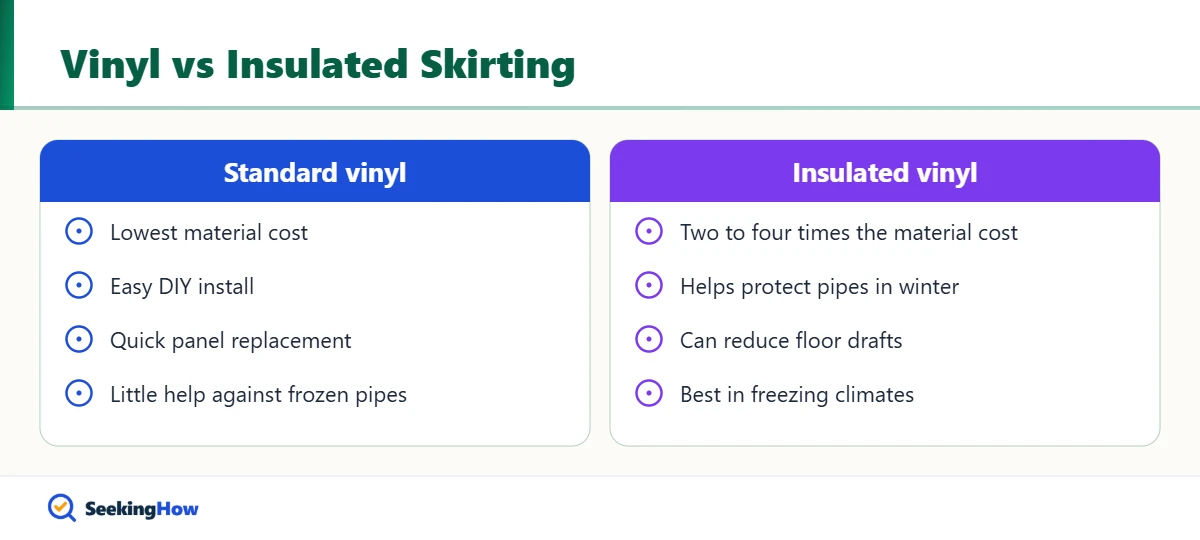
| Insulated vinyl | $1,440 to $4,000 | $1,760 to $4,480 | Moderate | Cold climates, frozen-pipe protection |
| Faux stone panels | $660 to $1,000 | $920 to $1,350 | Good | Upscale look without masonry |
| Faux brick panels | $800 to $1,500 | $1,200 to $1,980 | Good | Site-built appearance |
| Wood / timber | $1,500 to $2,000 | $3,000 to $4,000 | Needs upkeep | Custom, rustic look |
| Brick or concrete block | Varies widely with footing and labor | Varies widely | Excellent | Permanent foundations, financing or resale needs |
Material figures above come from HomeAdvisor’s 2026 cost guide; add labor on top. Masonry costs depend heavily on whether a concrete footing is required and on local mason rates, so get a site-specific bid.
Extra Costs Quotes Often Miss
- Old skirting removal and disposal: about $200 to $500.
- Vents: about $7 to $25 each; most homes need several on opposite sides.
- Access doors: about $50 to $85 each.
- Ground vapor retarder: plastic sheeting under the home, which can reduce the vent area you need.
- Grading: uneven ground may need leveling or a trench for the bottom rail.
How To Estimate the Cost To Skirt a Manufactured Home: Step-by-Step
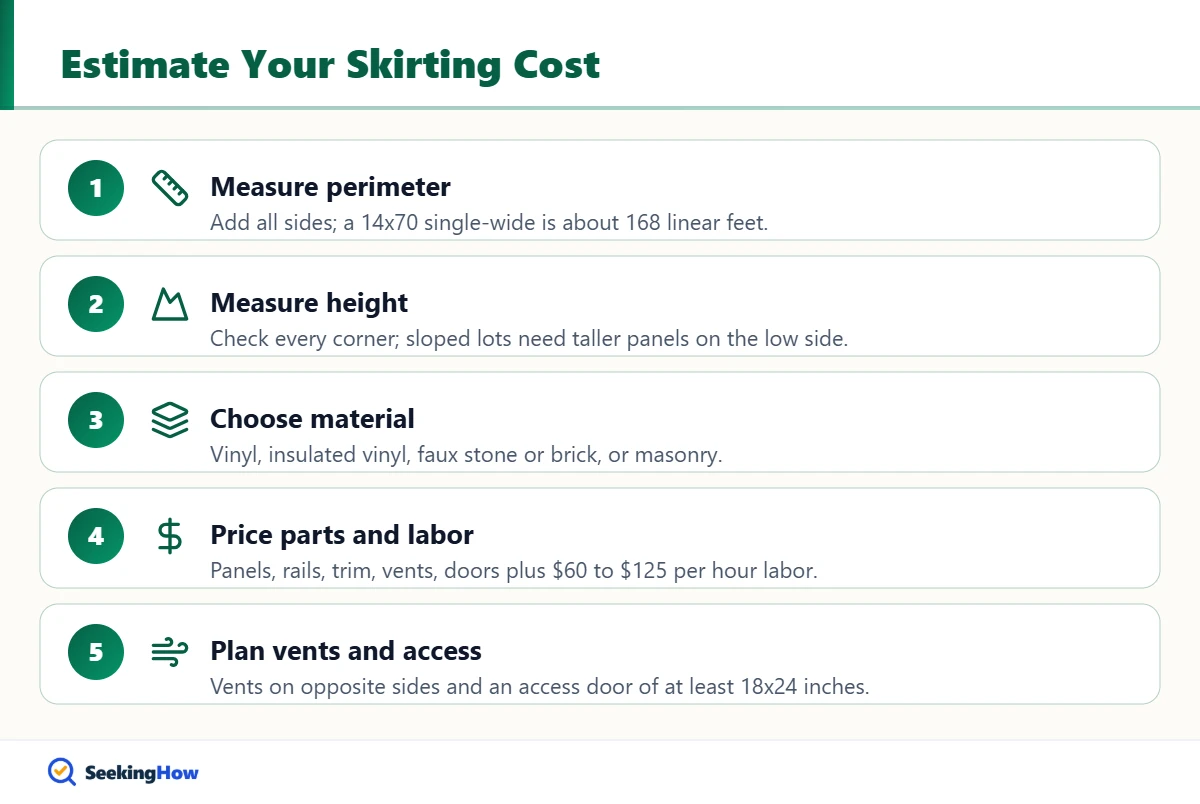
Step 1: Measure the Perimeter
Add the length of all sides; a 14 by 70 ft single-wide has a perimeter of about 168 linear feet, and a 28 by 60 ft double-wide about 176 feet. Subtract sections hidden behind attached porches only if the porch itself is enclosed below.
Step 2: Measure the Height
Measure from the ground to the bottom of the home at each corner and the middle of each side. Sloped lots need taller panels on the low side, which raises material cost and is the most common reason quotes run high.
Step 3: Choose the Material
Pick vinyl for the lowest cost, insulated vinyl if pipes freeze in winter, or faux stone or brick panels for appearance. Check park rules first, since many communities specify skirting type or color.
Step 4: Price Materials and Labor
Multiply linear feet by about $6 to $8 for vinyl panels, then add rails, trim, vents and access doors. Add labor at roughly $60 to $125 per hour; most single-wide vinyl jobs take a crew one to two days.
Step 5: Plan Vents and Access
Confirm the quote includes enough vent area and at least one access opening near the utility connections. Leaving vents out to save money traps moisture under the home and can lead to rot and mold.
Bottom line: Choose plain vinyl for the lowest cost, insulated vinyl in freezing climates, and masonry only when a lender, buyer or permanent foundation requires it.
DIY vs Professional Installation
Vinyl skirting is one of the more DIY-friendly manufactured home projects, and doing it yourself removes most of the labor cost. The method is similar to skirting a house on piers: a top rail on the home, a bottom rail on the ground, and panels that slide between them. In practice, a level, well-anchored bottom rail is what keeps vinyl from bowing and popping out in wind. Hire a pro for masonry, steep slopes or homes with complex additions.
If Your Skirting Has Problems
Problem: Panels buckle or pop out. Cause: No room for expansion or ground heave pushing the bottom rail. Fix: Leave expansion gaps and use a floating bottom rail instead of fastening panels rigidly.
Problem: Musty smell or condensation under the home. Cause: Too little vent area or no vapor retarder. Fix: Add vents on opposite sides and lay a ground vapor retarder.
Problem: Frozen pipes behind skirting. Cause: Uninsulated skirting in a cold climate. Fix: Use insulated skirting or add rigid foam behind panels, and keep vents adjustable so they can close in winter where code allows.
Safety and When To Call a Pro
Skirting must never carry the weight of the home, so call a professional installer if piers, anchors or tie-downs are loose or leaning before you skirt. Make sure dryer vents and combustion air inlets pass through the skirting to the outside, and keep furnace, A/C and water heater drain water directed away from the home. Call a licensed plumber or electrician before working near damaged pipes or wiring under the floor.
Prevention Tips
- Inspect skirting every spring for gaps where animals can enter.
- Keep soil and mulch from piling against the panels.
- Open and close adjustable vents seasonally where allowed.
- Replace damaged panels promptly before wind tears more loose.
Related Guides
Sources
- HomeAdvisor: Mobile home skirting cost guide
- U.S. Code of Federal Regulations, 24 CFR 3285.505: Crawlspace ventilation for manufactured homes
- U.S. Department of Housing and Urban Development: Manufactured Housing Program (hud.gov)
Frequently Asked Questions
What is the cheapest way to skirt a manufactured home?
Standard vinyl skirting is the cheapest option, with materials for a single-wide often under about $1,100 and simple DIY installation. Rolled metal and plywood can also be inexpensive but tend to look less finished and may violate park rules. Always include vents and an access door.
How much does it cost to skirt a double-wide?
A double-wide usually costs more than a single-wide because of longer perimeter and more panels. HomeAdvisor lists vinyl materials for a double-wide at about $1,100 to $1,550, before labor. Total installed costs for most homes fall in the $1,500 to $5,000 range.
Is skirting required on a manufactured home?
Skirting is not required by the federal installation standards, but many parks, local codes and lenders require it. When skirting is installed, federal rules require ventilation and an access opening. Check your park rules and local building department before choosing materials.
How many vents does manufactured home skirting need?
Federal standards require at least 1 square foot of net vent area per 150 square feet of floor area, reducible to 1 per 1,500 with a full ground vapor retarder. A 1,200-square-foot home without a vapor retarder needs about 8 square feet of vent area.
Does skirting lower heating bills?
It can help, especially insulated skirting, by blocking wind under the floor and keeping the crawlspace warmer. Savings vary by climate and home insulation. In freezing areas the bigger benefit is often reduced risk of frozen water lines.
How long does manufactured home skirting last?
Vinyl skirting commonly lasts many years but can crack from impacts, sun and ground movement. Masonry and concrete block last the longest. Wood needs regular sealing and is vulnerable to rot and insects if it touches soil.
Can I install manufactured home skirting myself?
Yes, vinyl skirting kits are designed for DIY installation with basic tools: a drill, tin snips, a level and a saw. The keys are a level bottom rail, expansion gaps and proper vent placement. Hire a pro for masonry or steep slopes.