
Quick Answer
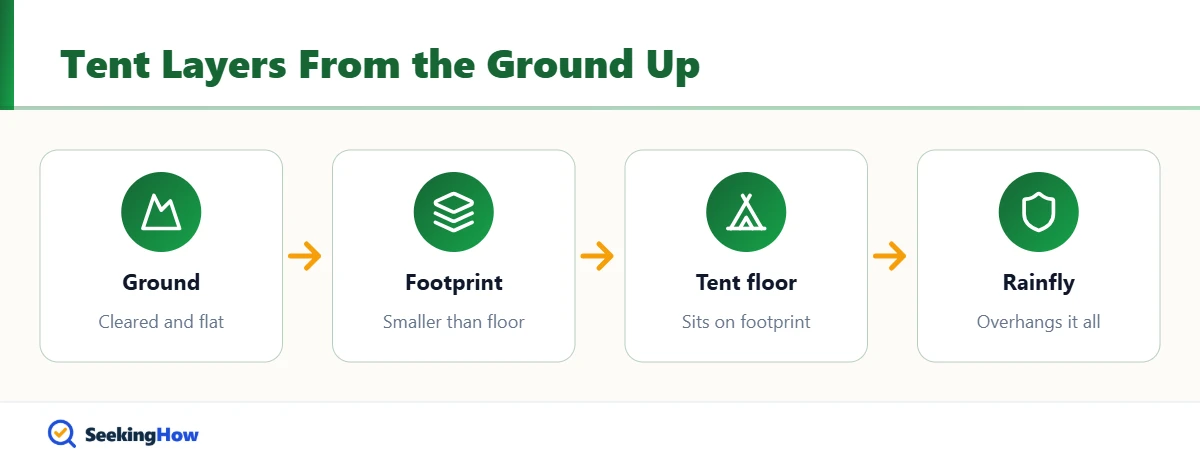
A tent footprint goes outside the tent, under the floor, between the tent and the ground. A tent footprint protects the floor from abrasion and ground moisture, and it should be 1 to 2 inches smaller than the floor on every side so rain cannot collect on it and run under the tent. Setup adds about 2 minutes. Tuck in any edge that sticks out.
Key Takeaways
- A tent footprint belongs under the tent floor, not inside the tent.
- The footprint should be slightly smaller than the tent floor so rain does not pool on it.
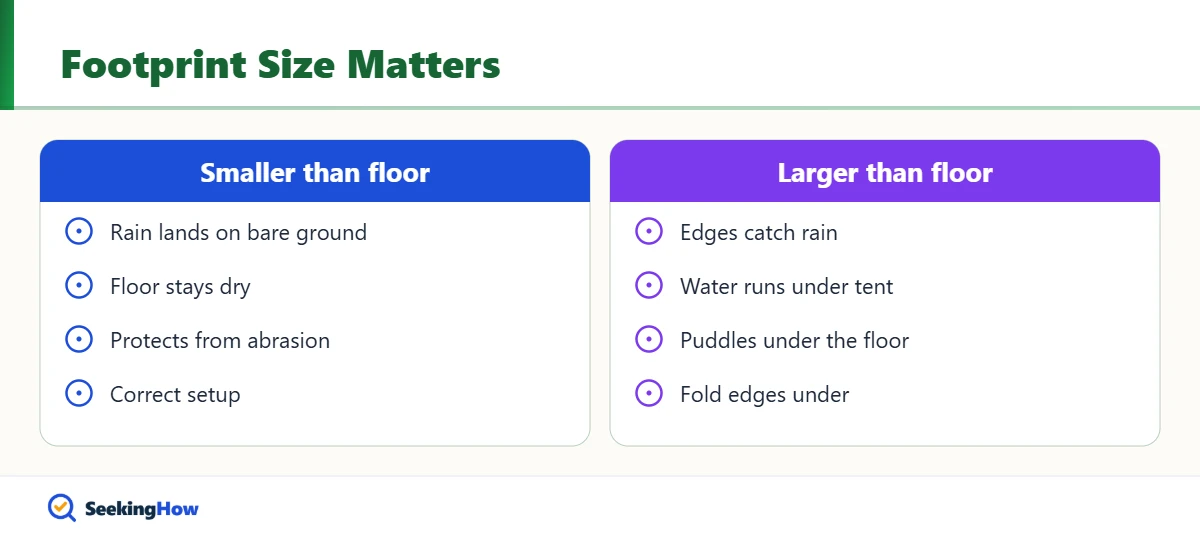
- Any footprint edge sticking out past the tent catches rain and channels it under the floor.
- Brand-matched footprints often clip to the tent poles and allow a fast-fly setup without the inner tent.
- A tarp inside the tent is a separate trick for very wet ground, not a footprint replacement.
Footprints confuse many first-time campers because they look like a ground cloth you could put anywhere. So, does a tent footprint go inside or outside the tent? It goes outside and underneath, and the way you size and position it decides whether it keeps you dry or soaks you.
What You’ll Need
- Tent footprint matched to your tent model, or a ground cloth cut to size
- Tent and poles
- Stakes and a stake mallet or rock
- Scissors or a hot knife for trimming a generic tarp (optional)
- Extra tarp for inside use in soggy conditions (optional)
Does a Tent Footprint Go Inside or Outside? How To Set It Up
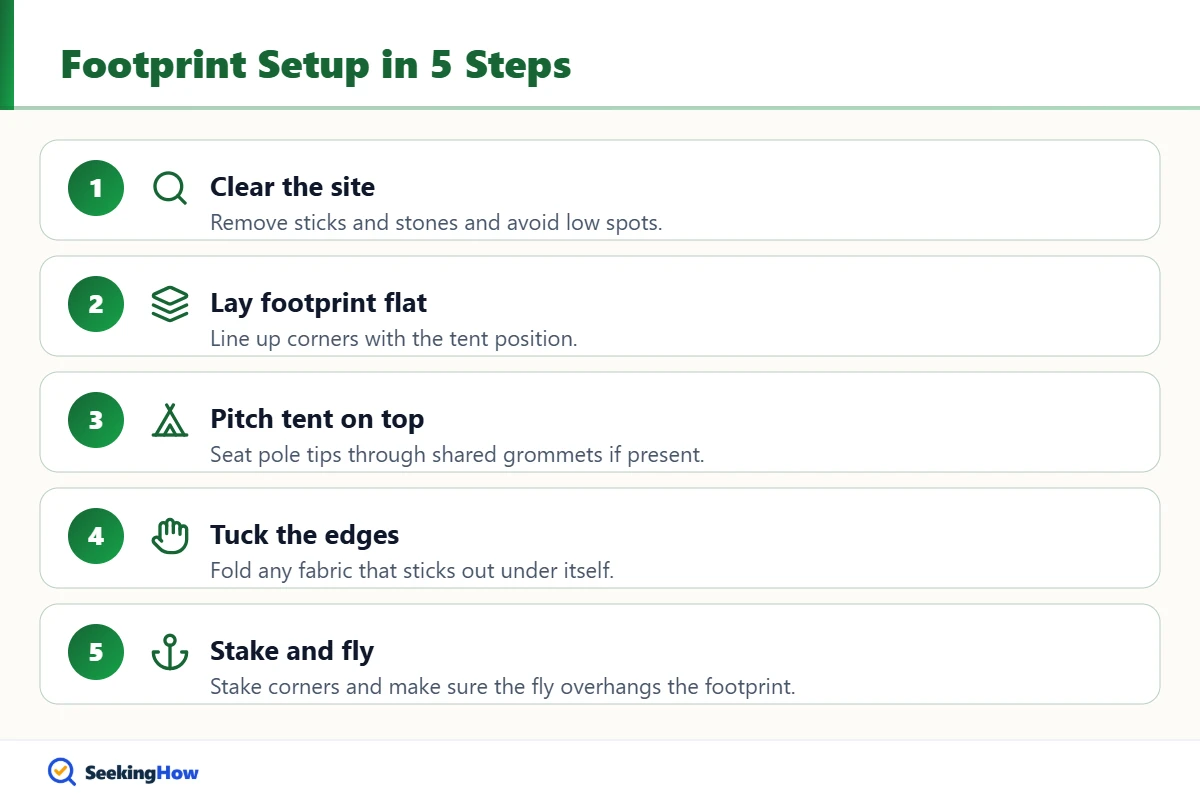
Step 1: Clear the Tent Site
Pick flat, durable ground and clear away sticks, pine cones, and sharp stones. Avoid low spots where water collects in rain. A footprint protects against abrasion, but it will not stop a sharp rock from bruising your back all night.
Step 2: Lay the Footprint Shiny or Coated Side Up
Spread the footprint flat on the ground where the tent will stand, coated side up if your model specifies it. Line up the corners with where the tent corners will go. With brand footprints, the corner grommets or webbing usually match the pole ends.
Step 3: Pitch the Tent on Top
Set the tent body over the footprint and attach the poles. If your footprint has grommets, seat the pole tips through the footprint grommets and the tent grommets together so the two stay aligned.
Step 4: Tuck Any Exposed Edges
Walk around the tent and look for footprint fabric sticking out beyond the floor. Fold any exposed edge under itself so it sits inside the tent’s outline. This is the step most people miss: an exposed edge collects rain and funnels it straight under the floor.
Step 5: Stake Out and Add the Rainfly
Stake the corners through the tent and footprint loops, then attach the rainfly and tension the guylines. Make sure the fly extends past the footprint on all sides so dripping water lands on bare ground.
Bottom line: Put the footprint under the tent, keep it smaller than the floor, and tuck in anything that sticks out. For more on choosing one, see what a footprint for a tent is.
If That Didn’t Work
Problem: Water puddles under the tent floor. Cause: The footprint is larger than the floor. Fix: Fold the edges under or trim the footprint 1 to 2 inches smaller than the floor.
Problem: Water seeps through the floor from below. Cause: Camping in a low spot or worn floor coating. Fix: Move to higher ground or add a tarp inside as a second barrier.
Problem: The footprint shifts as you set up. Cause: Wind or no corner attachment. Fix: Stake the footprint corners first, then pitch the tent.
Problem: Condensation inside the tent. Cause: Poor ventilation, not the footprint. Fix: Open vents and keep wet gear outside the inner tent.
| Placement | Protects floor | Keeps you dry | When to use |
|---|---|---|---|
| Footprint under tent, smaller than floor | Yes | Yes | Standard setup (recommended) |
| Footprint under tent, larger than floor | Yes | No in rain | Never in wet weather |
| Tarp inside tent | No | Extra barrier | Very wet ground, older floors |
| No footprint | No | Usually | Soft ground, ultralight trips |
Safety and Campsite Tips
Never pitch in a dry wash, gully, or at the base of a slope during rain; flash flooding can happen quickly. Look up before pitching and avoid camping under dead limbs. Follow Leave No Trace guidance by camping on durable surfaces at least 200 feet from lakes and streams where regulations call for it.
Prevention Tips
- Dry the footprint fully before packing it to prevent mildew.
- Shake dirt off the footprint, not the tent floor.
- Use the matched footprint for your tent model when possible for an exact fit.
Related Guides
Sources
- Leave No Trace Center for Outdoor Ethics: camping on durable surfaces
- National Park Service: camping safety and backcountry guidance
- REI Expert Advice: tent setup and care
Frequently Asked Questions
Should a tent footprint be bigger than the tent?
No. A footprint should be slightly smaller than the tent floor, about 1 to 2 inches inside the edges. A larger footprint catches rain and funnels it under the tent, where it soaks through the floor. Fold or trim any excess.
Can you put a tarp inside your tent?
Yes, as an extra moisture barrier on very wet ground or with an older tent whose floor coating has worn. It does not protect the floor from rocks and sticks, so it supplements a footprint rather than replacing one. Keep the inside tarp from touching the tent walls.
Do you really need a tent footprint?
Not always. A footprint extends floor life on rough, rocky, or sandy ground and adds a moisture barrier. On soft forest duff or for ultralight trips, many campers skip it. Lightweight tent floors benefit most from the added protection.
Which side of a tent footprint faces up?
Follow the tent maker if the footprint is labeled. Many coated footprints are pitched with the coated side facing up toward the tent floor. If the footprint is not marked, either side works, and a generic tarp can go either way.
Can I use a regular tarp as a tent footprint?
Yes. Fold or cut a tarp so it sits 1 to 2 inches inside the tent floor edges on all sides. Tarps are heavier and bulkier than brand footprints but cost less. Avoid leaving tarp edges or grommets sticking out past the tent.
What is a fast-fly or fast-pitch setup?
Some tents let you pitch only the footprint, poles, and rainfly without the inner tent. It saves weight and creates a quick shelter, but it gives no bug protection. Check your tent maker for compatibility, since it requires a footprint designed for that model.