Quick Answer
To sleep with a neck hump, lie on your back with a single thin or contoured cervical pillow that supports the curve of your neck without pushing your head forward, or on your side with a pillow just thick enough to keep your nose in line with your breastbone. Avoid stacked pillows and stomach sleeping. If your upper back is rounded and lying flat hurts, use a wedge rather than forcing it.
Key Takeaways
- A neck hump is either extra fat tissue at the base of the neck or a rounded upper spine (kyphosis), and both affect pillow choice.
- Stacked or very thick pillows push the head forward, the same posture that feeds a neck hump.
- Back sleeping with a thin or cervical pillow is usually the best position for a neck hump.
- Side sleepers need a pillow that fills the gap between ear and mattress and keeps the neck level.
- People with a fixed rounded spine should use a wedge or extra support rather than forcing the head flat.
- A hump that grows quickly, hurts, or comes with other body changes should be checked by a doctor.
A bump at the base of the neck often makes it hard to get comfortable in bed, and the wrong pillow can leave you stiff by morning. This guide shows how to sleep with a neck hump by setting up your pillow, mattress, and position to keep your neck neutral, with options for both a fatty hump and a rounded upper back.
What You’ll Need
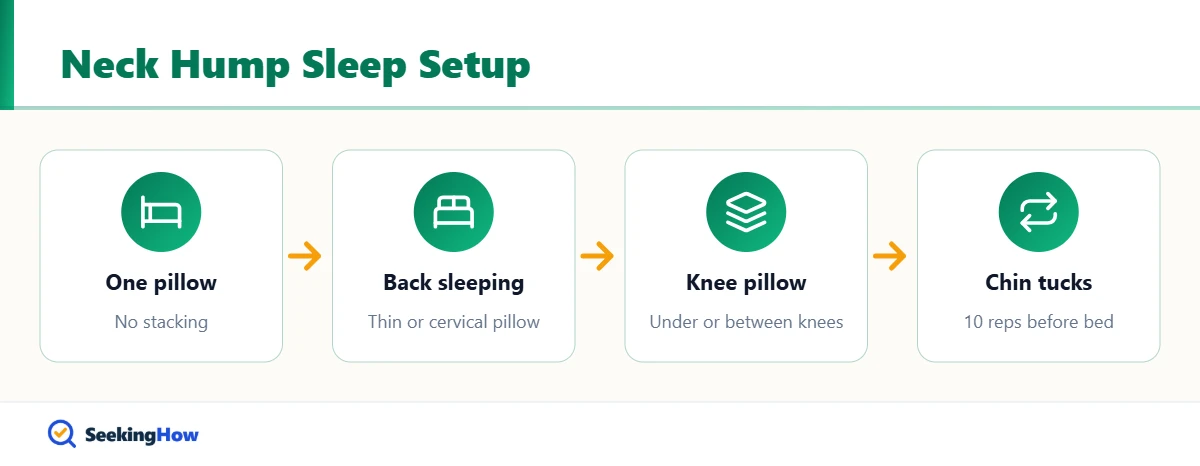
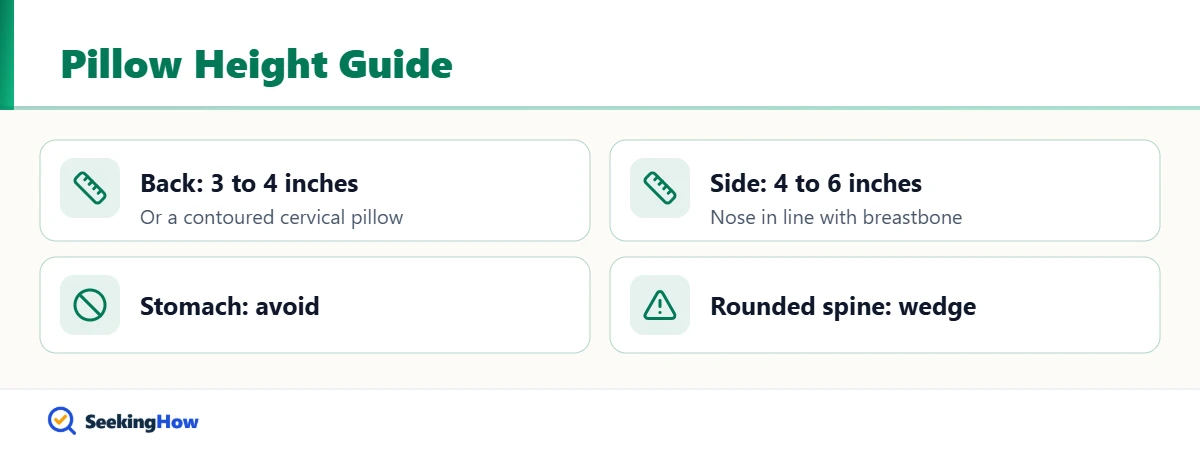
- Contoured cervical pillow or a thin, supportive pillow (about 3 to 4 inches for back sleepers)
- Medium-height pillow (about 4 to 6 inches) for side sleepers, depending on shoulder width
- Small rolled towel, 2 to 3 inches thick (optional, for neck support)
- Foam wedge pillow (for a rounded upper back or reflux)
- Pillow for under or between the knees
- Medium-firm mattress or topper
How To Sleep With a Neck Hump: Step-by-Step
Step 1: Know Which Kind of Neck Hump You Have
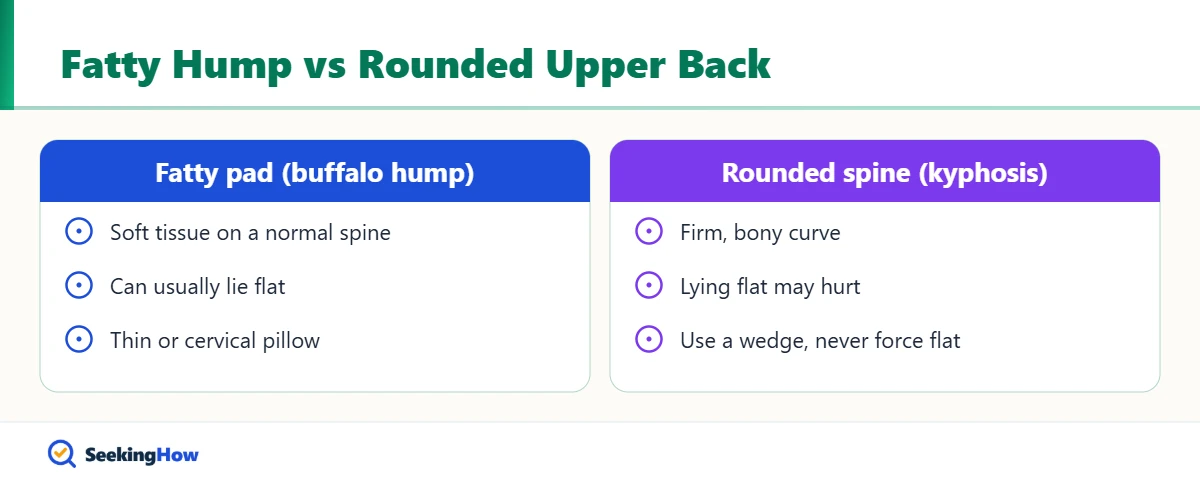
A soft, fatty pad at the base of the neck (sometimes called a buffalo hump) usually sits on top of a normal spine. A firm, rounded upper back (often called a dowager’s hump or kyphosis) comes from the spine itself. The difference matters: with a rounded spine, you may not be able to lie flat comfortably and should not force it.
Step 2: Ditch Stacked or Thick Pillows
Remove extra pillows that prop your head up and forward. Sleeping with the chin pushed toward the chest repeats the forward-head posture linked to neck humps. Most people find a single supportive pillow is enough once the height is right.
Step 3: Set Up Back Sleeping With Neck Support
Lie on your back with a thin or contoured cervical pillow that fills the curve behind your neck while letting the back of your head rest gently. A 2 to 3 inch rolled towel inside a thin pillowcase works as a budget option. Add a pillow under your knees to ease your low back.
Step 4: Adjust for Side Sleeping
If you sleep on your side, choose a pillow thick enough to keep your nose in line with your breastbone, usually 4 to 6 inches depending on shoulder width. Hug a pillow in front of your chest so your top shoulder does not roll forward. Place another pillow between your knees.
Step 5: Use a Wedge if Your Upper Back Is Rounded
If lying flat strains your neck because your upper spine curves forward, sleep on a gently inclined foam wedge so your head is supported in its natural position. Forcing your head down to the mattress can cause pain. A physical therapist can suggest the right incline.
Step 6: Avoid Stomach Sleeping
Stomach sleeping twists your neck 90 degrees for hours and arches your upper back. If you naturally roll onto your stomach, place a pillow along your side to make rolling harder, and start the night on your back.
Step 7: Do Chin Tucks Before Bed and on Waking
Lying on your back, gently draw your chin straight back as if making a double chin, hold 5 seconds, and repeat 10 times. Chin tucks strengthen the deep neck muscles that counter forward-head posture. Our guide on how to get rid of a neck hump covers a full daytime exercise plan.
Bottom line: sleep on your back with one thin or cervical pillow, or on your side with a level-height pillow, and use a wedge instead of forcing a rounded upper back flat.
If That Didn’t Work
Problem: Neck feels stiff every morning. Cause: Pillow too high or too low. Fix: Adjust height by 1 inch at a time with a folded towel until your neck feels level.
Problem: The hump presses painfully into the pillow. Cause: A firm pillow edge sits right at the hump. Fix: Use a contoured pillow with a cutout or slide the pillow up so the hump rests on the mattress.
Problem: Upper back aches when lying flat. Cause: A rounded spine that cannot straighten. Fix: Use a wedge or an adjustable bed base to support your natural curve.
Problem: Low back pain develops alongside neck pain. Cause: A sagging mattress. Fix: Firm up support with a topper or board, and see how to reduce back pain.
Sleep Positions Compared
| Position | Pillow setup | Rating for neck hump | Best for |
|---|---|---|---|
| Back | Thin or cervical pillow, pillow under knees | Best | Most people with a neck hump |
| Side | 4 to 6 inch pillow, pillow between knees | Good | Snorers, reflux, pregnancy |
| Inclined on wedge | Foam wedge, head supported | Good | Rounded upper spine (kyphosis) |
| Stomach | Very thin or no pillow | Worst | Not recommended |
Safety and When To See a Doctor
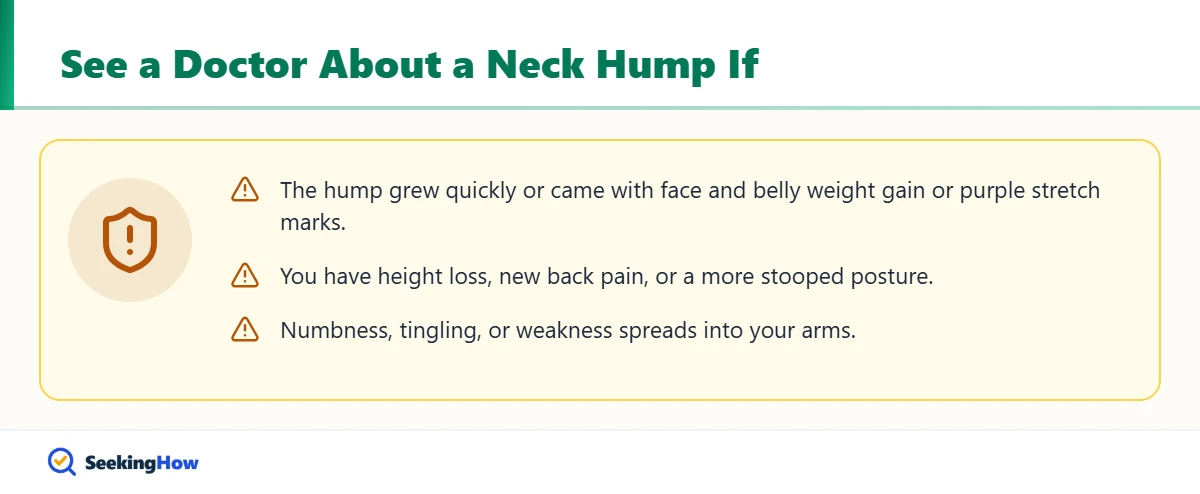
Better sleep posture eases discomfort, but it cannot treat every cause of a neck hump. See a doctor if:
- The hump appeared or grew quickly over weeks or months.
- You also notice weight gain in the face and belly, purple stretch marks, easy bruising, or muscle weakness, which can point to a hormone condition such as Cushing’s syndrome.
- You have new back pain, height loss, or a stooped posture, which can signal osteoporosis or a spinal fracture.
- Numbness, tingling, or weakness spreads into the arms or hands.
- Neck pain wakes you at night or comes with fever or unexplained weight loss.
- You take long-term steroid medicine and notice a new fatty hump.
Prevention Tips
- Raise screens to eye level so you are not looking down for hours.
- Do chin tucks and shoulder blade squeezes several times a day.
- Replace pillows when they flatten or lose their shape.
- Stay active with strength training to support bone and muscle health.
Related Guides
- How to get rid of a neck hump: exercises, causes and timeline
- How to reduce back pain: 8 proven ways
- How to reduce overthinking to sleep better
Sources
- Mayo Clinic: Kyphosis symptoms and causes (mayoclinic.org)
- NHS: Neck pain self-care, including pillows and sleeping position (nhs.uk)
- American Academy of Orthopaedic Surgeons OrthoInfo: Kyphosis (roundback) of the spine (orthoinfo.aaos.org)
Frequently Asked Questions
What is the best sleeping position for a neck hump?
The best sleeping position for a neck hump is on your back with one thin or contoured cervical pillow. It keeps the head from being pushed forward and lets the neck rest in a neutral curve. Side sleeping with a level-height pillow is a good second choice.
Can sleeping on too many pillows cause a neck hump?
Sleeping on stacked pillows does not directly create a neck hump, but it repeats the forward-head posture linked to one. Hours of chin-toward-chest positioning can add to neck strain and stiffness. Using a single supportive pillow is a simple change that helps posture overall.
What kind of pillow is best for a dowager hump?
A thin or contoured cervical pillow is usually best for a dowager hump if you can lie flat comfortably. If your upper spine is rounded and lying flat hurts, a foam wedge that supports your head in its natural position is better. Avoid tall, stiff pillows that tilt the head forward.
Can sleeping posture fix a neck hump?
Sleeping posture alone usually cannot fix a neck hump, but it can stop nightly strain and ease stiffness. Posture-related humps improve best with daytime exercises such as chin tucks and upper back strengthening. Humps caused by fat deposits, osteoporosis, or medical conditions need a doctor to address the cause.
Is it bad to sleep on your stomach with a neck hump?
Yes, stomach sleeping is generally bad for a neck hump. It twists your neck to one side for hours and can strain the upper back. If you cannot avoid it, use a very thin pillow or none, and try placing a body pillow along your side to discourage rolling over.
Should I sleep without a pillow to fix a neck hump?
Most people should not sleep without a pillow, because the neck then lacks support. A thin pillow or rolled towel that fills the neck curve is better. People with a rounded upper back should never force their head flat to the mattress, as that can cause pain.
When is a neck hump a sign of something serious?
A neck hump can signal something serious when it grows quickly or comes with weight gain in the face and belly, purple stretch marks, easy bruising, or weakness, which may suggest Cushing syndrome. Height loss, new back pain, or a worsening stoop can point to osteoporosis and spinal fractures.