Quick Answer
To get spray foam off clothes, act before the foam cures: scrape off the excess with a plastic knife, then blot the remaining film with acetone or an acetone-based foam cleaner until it lifts, and wash. Wet foam comes out in about 10 minutes. Cured foam does not dissolve, so it must be trimmed and scraped away. Test acetone first on synthetics.
Key Takeaways
- Uncured spray foam dissolves in acetone; fully cured polyurethane foam does not dissolve in any household solvent.
- Never rub wet foam with water, because moisture speeds curing and spreads the stain deeper into the weave.
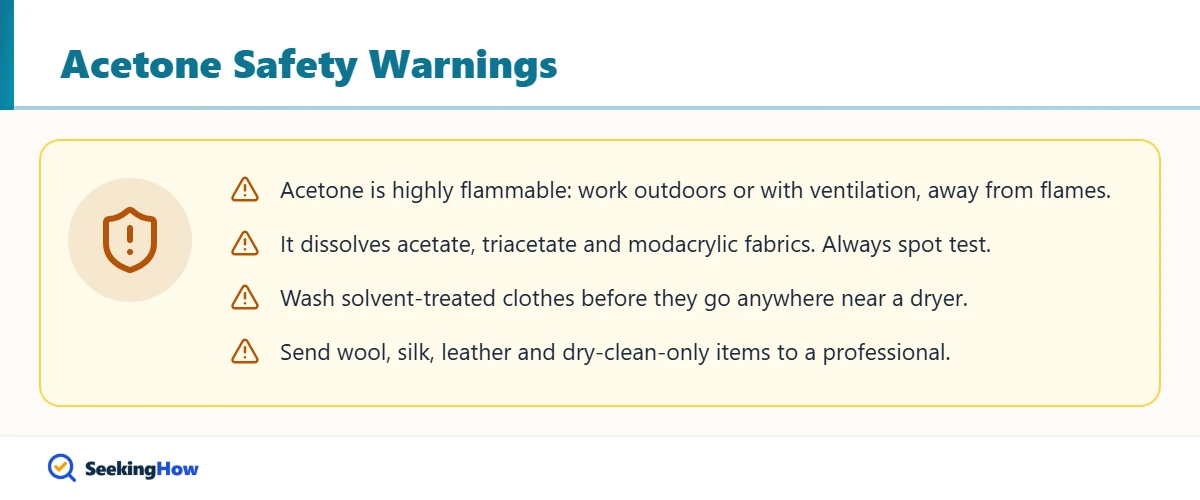
- Acetone melts acetate, triacetate and modacrylic fabrics, so test it on a hidden seam first.
- Cured foam is removed mechanically: let it harden fully, trim the bulk, then scrape or abrade the residue.
- Wash the garment alone after treatment and air-dry it until you confirm the stain is gone.
Expanding spray foam sealant is made to grab onto almost anything, and fabric is no exception. Knowing how to get spray foam off clothes comes down to one question: is the foam still wet or already cured? The method, the tools and your odds of a clean result all depend on that answer.
What You’ll Need
- Plastic putty knife, old butter knife or a stiff piece of cardboard
- Disposable gloves (nitrile holds up to acetone better than latex)
- 100% acetone or nail polish remover that lists acetone first
- Spray foam gun cleaner, such as an acetone-based foam cleaner (optional, best for wet foam)
- White cotton rags or paper towels
- Sharp scissors or a single-edge razor blade (for cured foam)
- Pumice stone or stiff nylon brush (optional, sturdy fabrics only)
- Heavy-duty laundry detergent and an enzyme or solvent pre-treater (optional)
How To Get Spray Foam Off Clothes While It Is Still Wet: Step-by-Step
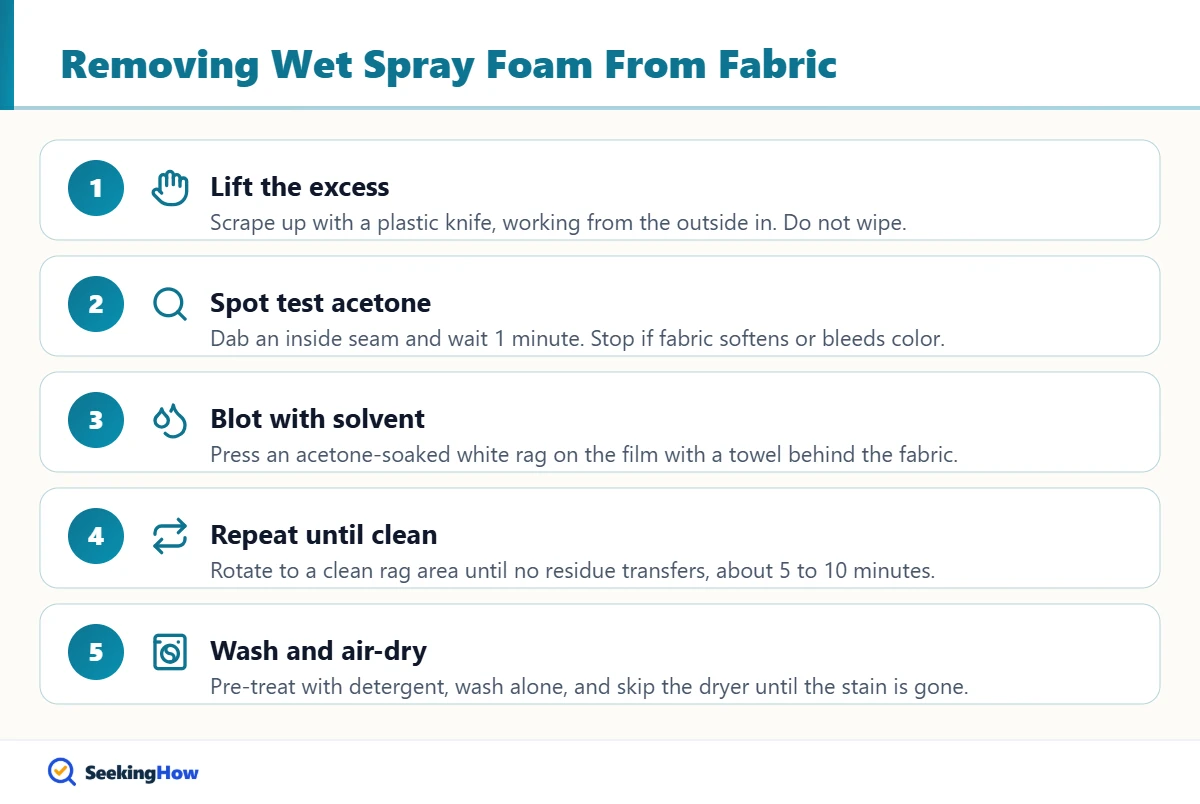
Step 1: Lift Off the Excess Foam
Slide a plastic knife or cardboard edge under the blob and lift it straight up and away from the fabric. Work from the outside of the spot toward the center so you do not widen the stain. The most common mistake is wiping with a rag, which pushes sticky foam into the weave and triples the area you have to clean.
Step 2: Test Acetone on a Hidden Seam
Dab a little acetone on an inside seam or hem and wait 1 minute. If the fabric softens, puckers or loses color, stop and skip to the cured-foam method. Acetone is safe on most cotton, denim, polyester and nylon, but it dissolves acetate, triacetate and modacrylic.
Step 3: Blot the Film With Acetone or Foam Cleaner
Wet a white rag with acetone or foam cleaner and press it onto the remaining film, then lift. Rotate to a clean section of the rag each time so you are not re-depositing foam. Place a folded towel behind the fabric so the dissolved foam transfers out instead of soaking through to the other side.
Step 4: Repeat Until No Residue Transfers
Keep blotting until the rag comes away clean, which usually takes 5 to 10 minutes for a palm-sized spot. In practice, foam cleaner in a spray can with a nozzle works faster than nail polish remover because it carries more solvent into the fibers.
Step 5: Pre-Treat and Wash
Rinse the area with warm water, rub in heavy-duty liquid detergent and let it sit 10 minutes. Wash the item by itself on the warmest temperature the care label allows. Air-dry it, because dryer heat can set any faint residue you missed.
How To Remove Cured Spray Foam From Fabric
Once spray foam has cured, usually within 8 to 24 hours depending on humidity and thickness, acetone will no longer dissolve it. Removal becomes a physical job of cutting and scraping.
Step 6: Let the Foam Cure Completely
If the foam is half-set and gummy, leave it alone until it is hard all the way through. Partially cured foam smears when you touch it, while fully cured foam snaps off cleanly. Check by pressing gently with a fingernail; it should feel firm, not tacky.
Step 7: Trim the Bulk Close to the Fabric
Use sharp scissors or a razor blade held nearly flat to slice away the raised foam, leaving a thin layer on the cloth. Pull the fabric taut over a hard surface so the blade does not cut threads. Go slowly; most damage at this stage comes from rushing the last few millimeters.
Step 8: Scrape or Abrade the Remaining Layer
Flex the fabric back and forth to crack the thin residue, then pick it off with a fingernail or dull knife. On denim, canvas and work clothes, a pumice stone or stiff nylon brush can wear down the last flecks. Then pre-treat and wash as in Step 5.
Bottom line: treat wet foam with acetone immediately, and if it has already cured, trim and scrape instead of soaking it in solvents that will not work.
If That Didn’t Work
Problem: A yellow or tan shadow remains after washing. Cause: A thin layer of foam stayed bonded inside the fibers, and polyurethane yellows as it ages. Fix: Repeat the abrasion on sturdy fabrics, or treat it as a permanent stain on delicate ones.
Problem: The fabric turned stiff or shiny where you used acetone. Cause: The fiber blend contained acetate or a coating that the solvent softened. Fix: Stop using solvent; the damage is usually permanent, so consider patching or repurposing the garment.
Problem: The stain spread into a larger ring. Cause: Rubbing instead of blotting, or no towel underneath. Fix: Blot the ring edges inward with a fresh, lightly dampened rag. The same blotting approach is how you get caulk out of clothes.
Problem: Foam is stuck in hair-like fleece or knit loops. Cause: Loose fibers wrap around the foam. Fix: Snip the affected fibers individually with small scissors once the foam has cured.
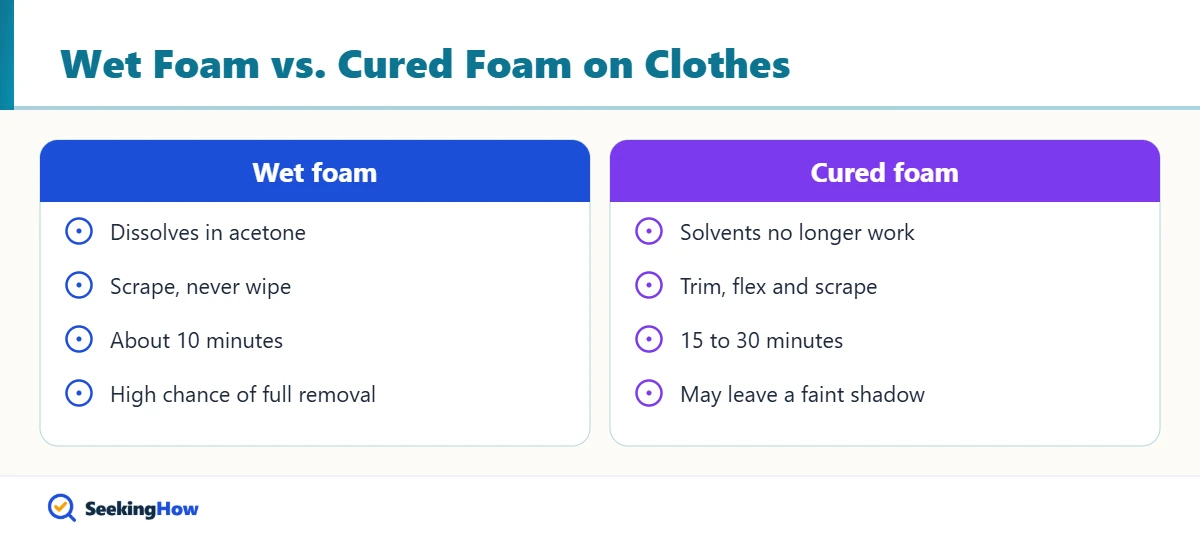
| Foam stage | Best method | Time | Success odds |
|---|---|---|---|
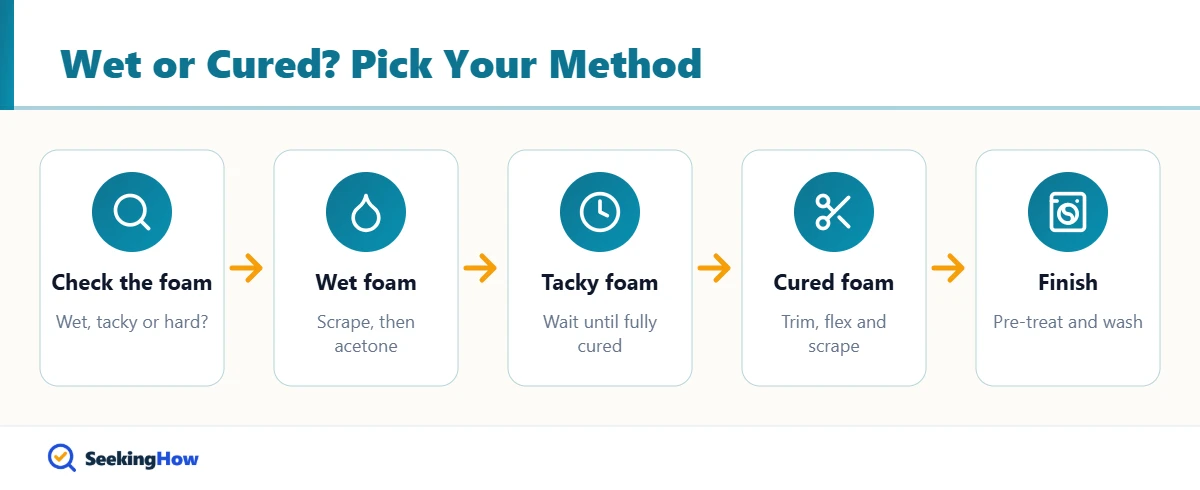
| Wet (first 5 to 15 minutes) | Scrape, then acetone or foam cleaner | 10 minutes | High |
| Tacky (partly cured) | Wait until fully cured | 8 to 24 hours wait | Medium |
| Fully cured | Trim, flex, scrape, abrade | 15 to 30 minutes | Medium on sturdy fabric, low on delicates |
Safety and When To Call a Pro
Acetone is highly flammable, so work outdoors or with a window open and keep it away from pilot lights, cigarettes and space heaters. Never put an acetone-soaked garment straight into the dryer; wash it first so solvent fumes do not build up in the drum.
Take the item to a professional dry cleaner if it is wool, silk, leather, suede, a technical waterproof shell or a dry-clean-only garment. Tell the cleaner the stain is polyurethane spray foam so they can choose a compatible solvent. If foam is also on your skin, wipe it off with a dry cloth while wet and let any cured bits wear off naturally rather than scrubbing with harsh solvents.
Prevention Tips
- Wear old long sleeves and gloves whenever you use expanding foam; it will find your cuffs.
- Keep a rag and a can of foam cleaner within reach before you start spraying.
- Hold the can nozzle away from your body and shake it pointed at the work area, not toward yourself.
- Lay a drop cloth or cardboard below the gap you are filling to catch drips. If foam lands on plastic trim, see how to remove adhesive from plastic.
Related Guides
- How to get caulk out of clothes
- How to remove adhesive from plastic
- How to remove sticky residue from any surface
- How to get tree sap out of clothes
Sources
- DuPont Great Stuff: product use and cleanup guidance for polyurethane foam sealants (greatstuff.dupont.com)
- U.S. EPA: Spray polyurethane foam (SPF) health and safety information (epa.gov)
- American Cleaning Institute: stain removal and laundry care guidance (cleaninginstitute.org)
Frequently Asked Questions
Does acetone remove dried spray foam from clothes?
No, acetone does not dissolve fully cured spray foam. It only works while the polyurethane is still wet or very fresh. Once the foam hardens, you have to remove it mechanically by trimming the bulk, flexing the fabric to crack the thin layer and scraping or brushing off the remaining flecks before washing.
Can you use nail polish remover to get spray foam off clothes?
Yes, nail polish remover works on wet spray foam if acetone is the main ingredient. Non-acetone removers are much weaker and rarely lift foam. Choose a clear, unscented remover without dyes or oils, which can leave their own marks, and spot test it on a hidden seam first.
Will spray foam come out in the washing machine?
No, washing alone will not remove spray foam. Water does not dissolve polyurethane, and wet foam exposed to water actually cures faster. Washing is the final step after you scrape and solvent-treat wet foam or trim and abrade cured foam. Check the spot before drying.
How long does spray foam take to cure on fabric?
Spray foam usually becomes tack-free within minutes to an hour and fully cures in about 8 to 24 hours. Thin smears on fabric cure faster than thick beads, and humid air speeds things up. Once it no longer dissolves in acetone, switch to the cutting and scraping method.
Can you get spray foam out of jeans?
Yes, denim is one of the easiest fabrics to rescue. It tolerates acetone well and is sturdy enough to scrape, flex and rub with a pumice stone once the foam cures. Work along the grain of the twill, then wash the jeans inside out to blend any slight fading.
Does WD-40 remove spray foam from clothes?
WD-40 is not a good choice for spray foam on clothes. It does not reliably dissolve polyurethane and leaves an oily stain that needs its own treatment. Acetone or a dedicated foam cleaner works better on wet foam, and mechanical removal is the only option once the foam has cured.
What should I do if spray foam gets on my skin and clothes at the same time?
Deal with your skin first. Wipe wet foam off skin with a dry cloth, then wash with soap and water. Avoid scrubbing skin with acetone repeatedly. Cured foam on skin wears off in a few days. Then return to the garment and follow the wet or cured method.