Quick Answer
To get pine sap off your hands, rub a spoonful of cooking oil, butter or coconut oil into the sap for 1 to 2 minutes, wipe it away with a paper towel, then wash with dish soap and warm water. Alcohol-based hand sanitizer is the best backup. Never clean skin with gasoline, turpentine or paint thinner.
Key Takeaways
- Pine sap is a resin that dissolves in oils and alcohol but not in plain soap and water.
- Any kitchen oil, butter, mayonnaise or coconut oil loosens sap within about 1 to 2 minutes.
- Hand sanitizer with at least 60% alcohol cuts through sap quickly when no oil is available.
- Dish soap is the final step because it removes both the loosened sap and the greasy oil.
- Gasoline, turpentine and paint thinner irritate skin and should never be used to remove sap.
Hauling a Christmas tree, splitting firewood or hiking through a pine stand can leave your palms tacky for days if you only use soap. This guide shows how to get pine sap off your hands in a few minutes with things already in your kitchen or backpack, plus what to do when the sap is stuck under your nails or in your hair.
What You’ll Need
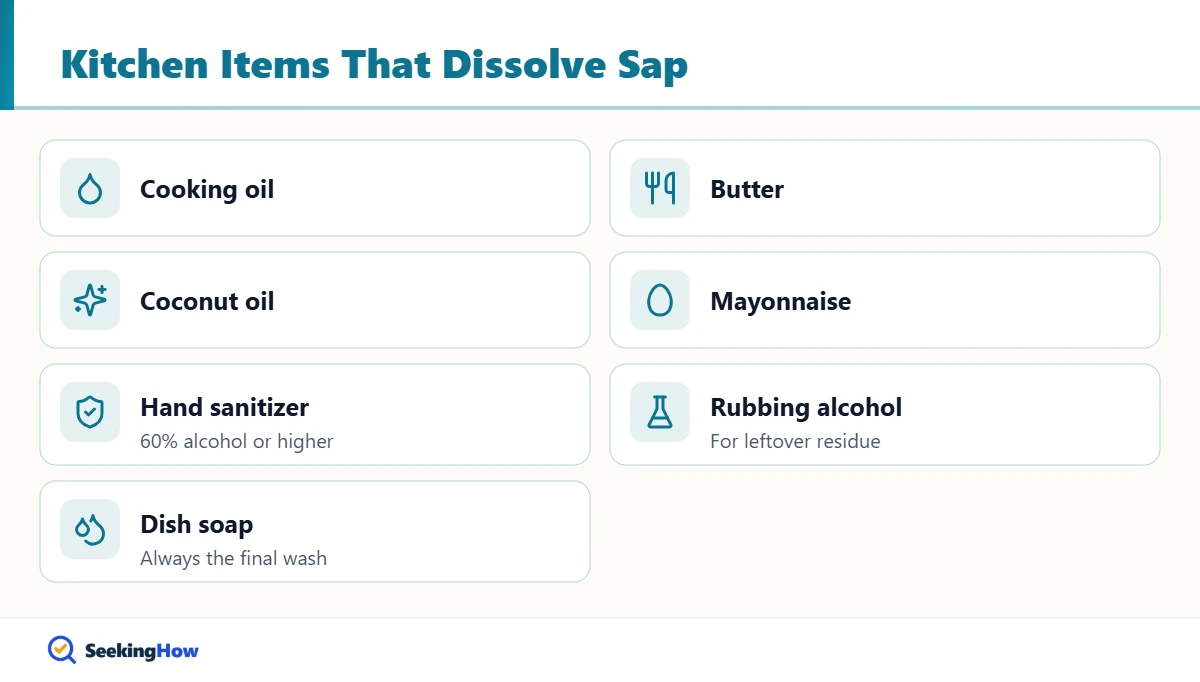
- Cooking oil (olive, canola or vegetable), butter, coconut oil or mayonnaise
- Paper towels or an old rag
- Grease-cutting dish soap
- Alcohol-based hand sanitizer (60% alcohol or higher) or 70% isopropyl rubbing alcohol
- Granulated sugar or salt for a scrub (optional)
- Soft nail brush (optional)
- Hand lotion
How To Get Pine Sap Off Your Hands: Step-by-Step
Step 1: Wipe Off What You Can While Dry
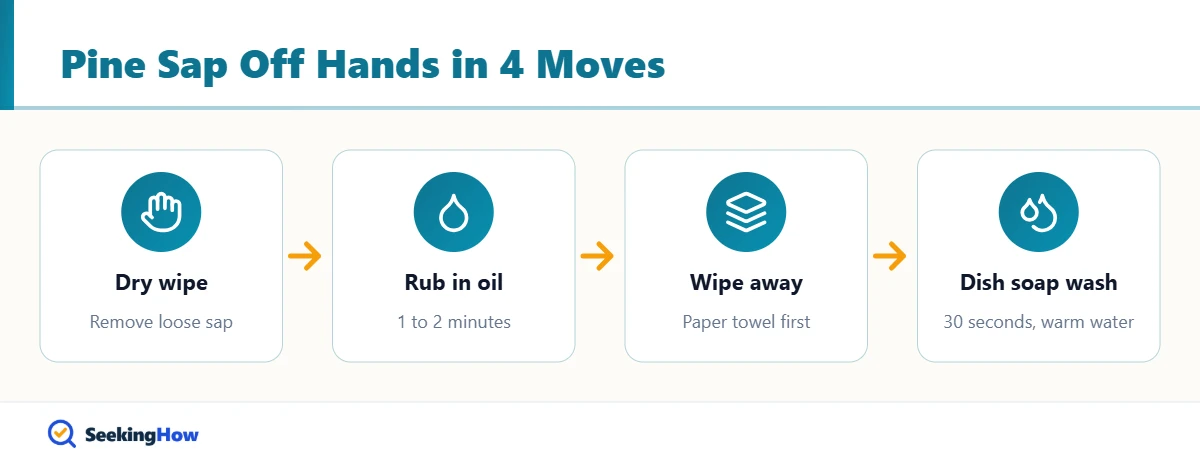
Use a dry paper towel to wipe away any loose sap, bark bits and needles. Do not wet your hands first; water makes sap more stringy and harder to grab. Skip this step if the sap is already hardened.
Step 2: Massage Oil Into the Sap
Pour about a teaspoon of cooking oil or scoop some butter or coconut oil into your palms and rub it over every sticky spot, including between fingers. Work it in for 1 to 2 minutes. You will feel the sap go from tacky to slick as the oil dissolves the resin.
Step 3: Wipe Away the Oily Sap
Use paper towels to wipe off the oil and dissolved sap before washing. In practice, this wipe matters more than people expect; going straight to the sink smears the resin around instead of removing it.
Step 4: Wash With Dish Soap
Lather your hands with grease-cutting dish soap and warm water for 30 seconds, scrubbing palms, backs, fingertips and nails. Dish soap removes the oil that regular hand soap often leaves behind. Rinse and dry.
Step 5: Spot-Treat Any Remaining Tackiness
Rub a small amount of hand sanitizer or rubbing alcohol on any spots that still feel sticky, then wash again. For thick, dried sap, add a pinch of sugar to the oil for gentle scrubbing. Finish with lotion, since both alcohol and dish soap dry the skin. The same gentle, oil-first approach helps when you need to remove super glue from skin.
Bottom line: oil first, dish soap second, and alcohol only for what is left.
Oil vs. Alcohol: Which Works Better?
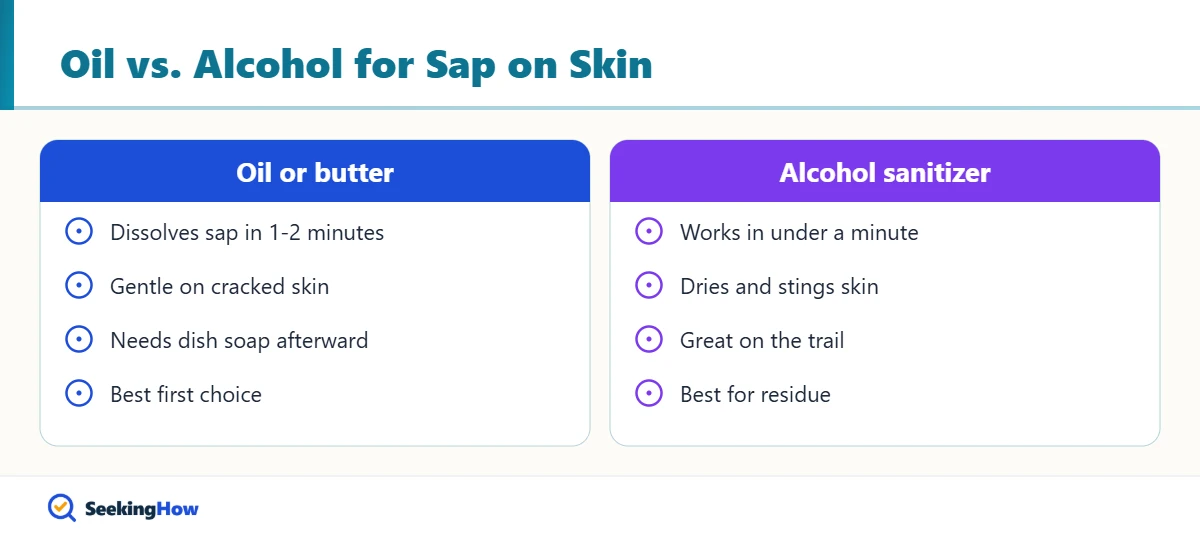
Oil is the better first choice because it dissolves sap gently, is safe on cracked skin and is always in the kitchen. Alcohol works slightly faster and is the go-to on a hike or job site, but it stings small cuts and dries the skin when used repeatedly.
| Remover | Speed | Gentleness | Best for |
|---|---|---|---|
| Cooking oil, butter, coconut oil | 1 to 2 minutes | Very gentle | Most sap, kids, sensitive skin |
| Mayonnaise or peanut butter | 2 to 3 minutes | Gentle | When oil is not handy |
| Hand sanitizer (60%+ alcohol) | Under 1 minute | Drying | Camping, small spots, residue |
| Sugar and oil scrub | 2 to 3 minutes | Mildly abrasive | Hardened sap, calluses |
Getting Sap Out From Under Fingernails and Out of Hair
For nails, soak fingertips in a small bowl of warm oil for 2 minutes, then scrub under each nail with a soft nail brush and wash with dish soap. For sap in hair, work oil or conditioner through the strand, comb it out with a fine-tooth comb, and shampoo twice. Avoid cutting hair unless a large clump is fully hardened. If sap also landed on your jacket, follow our steps to get tree sap out of clothes.
If That Didn’t Work
Problem: Hands still feel tacky after washing. Cause: A thin resin film remains. Fix: Rub in hand sanitizer, wait 30 seconds and wash again with dish soap.
Problem: Dark stains remain on skin. Cause: Sap mixed with dirt and bark tannins stains the outer skin layer. Fix: Use a sugar and oil scrub; any remaining tint fades in a day or two.
Problem: Hardened sap balls will not budge. Cause: Old sap has cured into a hard resin. Fix: Soak hands in warm water for 5 minutes to soften it, then apply oil for a full 3 minutes.
Problem: Skin is red and itchy after handling pine. Cause: Possible contact dermatitis from pine resin (rosin). Fix: Wash with mild soap, stop using alcohol and see the safety section below.
Safety and When To See a Doctor
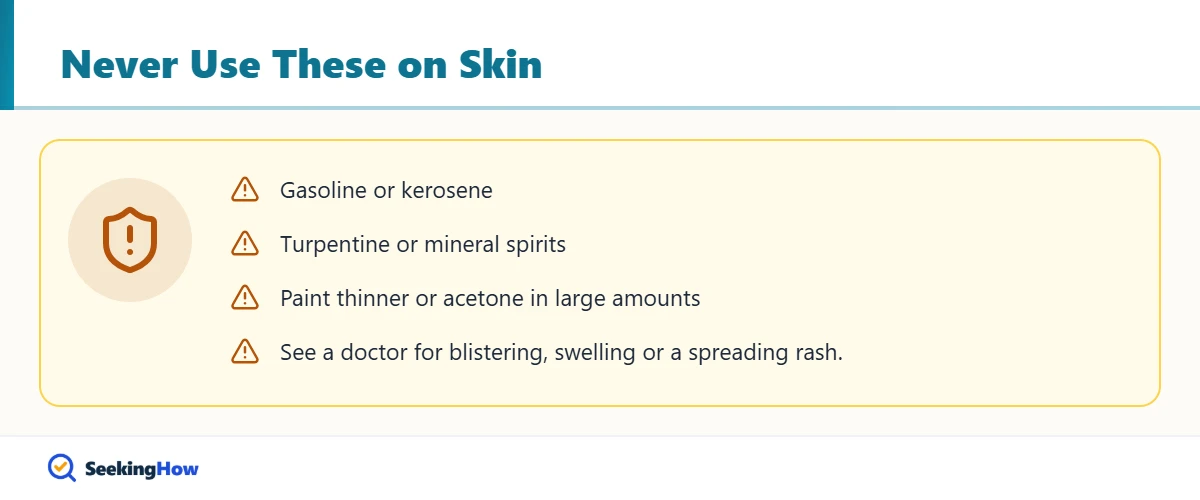
Do not use gasoline, kerosene, turpentine, mineral spirits or paint thinner on skin. These solvents dissolve sap but can irritate or burn skin and are absorbed through it. Keep rubbing alcohol away from open cuts and from young children’s hands.
Pine resin, also called rosin or colophony, is a known cause of allergic contact dermatitis. See a doctor or dermatologist if you develop blistering, swelling, oozing, a rash that spreads beyond the contact area or itching that lasts more than a few days. Seek urgent care if sap gets in your eyes and irritation continues after rinsing with clean water for 15 minutes.
Prevention Tips
- Wear nitrile-coated work gloves when carrying a Christmas tree or splitting pine logs.
- Rub a thin layer of lotion or oil on your hands before handling sappy wood so sap wipes off easily.
- Pack a small bottle of hand sanitizer in your camping or hiking kit.
- Wrap tree trunks in an old sheet or tarp before moving them.
Related Guides
- How to get tree sap out of clothes
- How to remove super glue from skin
- How to remove sticky residue
- How to remove adhesive from plastic
Sources
- American Academy of Dermatology: contact dermatitis causes and treatment (aad.org)
- Mayo Clinic: contact dermatitis symptoms and when to see a doctor (mayoclinic.org)
- CDC: hand hygiene and alcohol-based hand sanitizer guidance (cdc.gov)
Frequently Asked Questions
What is the fastest way to get pine sap off your hands?
Alcohol-based hand sanitizer is the fastest option, usually dissolving sap in under a minute. Rub it in until the sap loosens, wipe with a towel, then wash with dish soap. Oil is nearly as quick and gentler on skin, so it is the better choice for kids or chapped hands.
Does soap and water remove pine sap?
No, plain soap and water rarely remove pine sap because resin does not dissolve in water. Soap only works well after you have loosened the sap with oil or alcohol. Grease-cutting dish soap is the best soap for the final wash because it removes both the sap and the oil.
Can you use WD-40 to get sap off your skin?
It is better not to. WD-40 will dissolve sap, but it is a petroleum product not intended for skin and can cause irritation. Cooking oil, butter or hand sanitizer work just as well and are much safer. If you used WD-40, wash thoroughly with dish soap and water right away.
Does vinegar remove tree sap from hands?
Vinegar is not effective on pine sap. Its mild acid does not dissolve resin, so the sap stays sticky. Choose an oil, butter or alcohol-based sanitizer instead, then follow with dish soap. Vinegar can sting cuts and leaves a smell without solving the problem.
How do you get dried pine sap off your skin?
Soften dried sap first by soaking your hands in warm water for about 5 minutes. Then massage oil into the hardened spots for 3 minutes, add a pinch of sugar for gentle scrubbing and wipe away. Finish with dish soap and moisturizer.
Is pine sap harmful to skin?
Pine sap is harmless for most people, but pine resin, known as rosin or colophony, is a recognized cause of allergic contact dermatitis. If you develop itching, redness or blisters after handling pine, wash the area gently and see a doctor if the rash spreads or lasts more than a few days.
How do you get sap off your hands while camping?
Use alcohol-based hand sanitizer from your kit or a little cooking oil from your food supply. Rub it in, wipe with a camp towel or paper towel, and wash with biodegradable soap at least 200 feet from lakes and streams. Pack out used towels.