Quick Answer
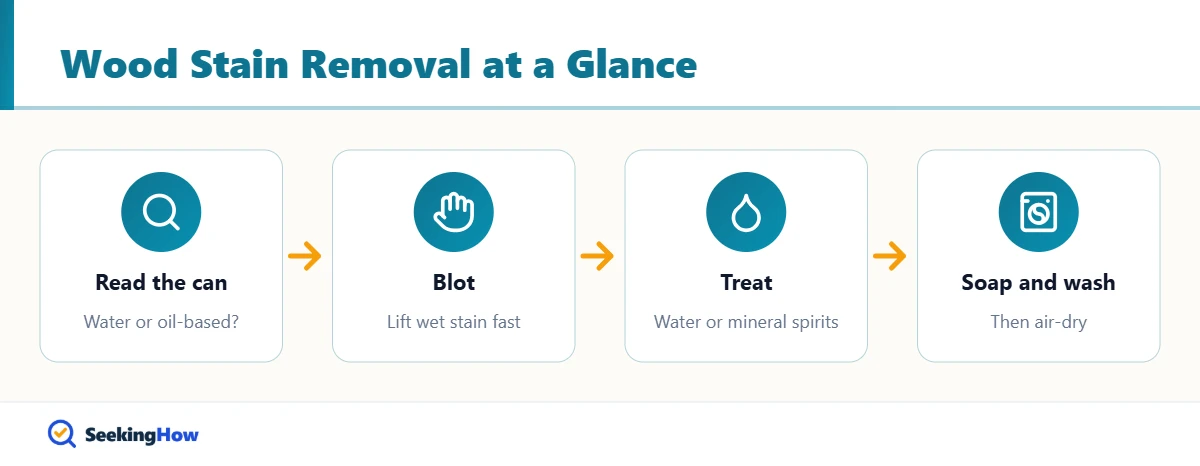
To get wood stain out of clothes, first check the can. For water-based stain, flush the spot from the back with cold water and scrub in dish soap. For oil-based or gel stain, blot, dab mineral spirits from the back, then work in dish soap and heavy-duty detergent. Wash warm and air-dry. Act within minutes; dried stain may be permanent.
Key Takeaways
- The removal method depends on whether the wood stain is water-based or oil-based, so check the can label.
- Water-based stain comes out best while wet, with cold water and dish soap.
- Oil-based and gel stains need a solvent such as mineral spirits before washing.
- Always work from the back of the fabric so the stain is pushed out, not through.
- Air-dry treated clothes; dryer heat sets stain and solvent residue is a fire hazard.
- Dried wood stain on cotton often lightens but may not fully disappear.
Wood stain is designed to soak into fibers and stay there, which is exactly why a drip on your shirt is so stubborn. Knowing how to get wood stain out of clothes comes down to matching the right solvent to the stain type and acting fast. This guide covers water-based, oil-based, and gel stains, plus what to try on dried spots.
What You’ll Need
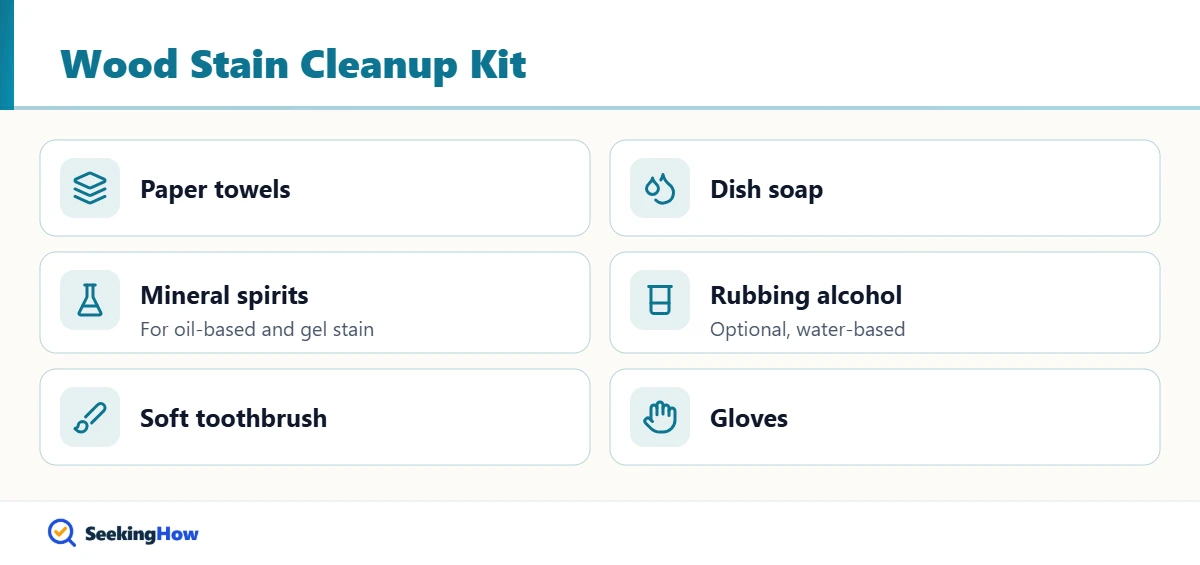
- Paper towels or a white cloth for blotting
- Grease-cutting liquid dish soap
- Heavy-duty liquid laundry detergent
- Mineral spirits or the thinner listed on the stain can (for oil-based and gel stains)
- Rubbing alcohol (optional, for water-based stain that has started to dry)
- Soft toothbrush and a piece of cardboard
- Gloves and good ventilation
- Enzyme or solvent-based prewash stain remover (optional)
How To Get Wood Stain Out of Clothes: Step-by-Step
Step 1: Identify the Stain Type
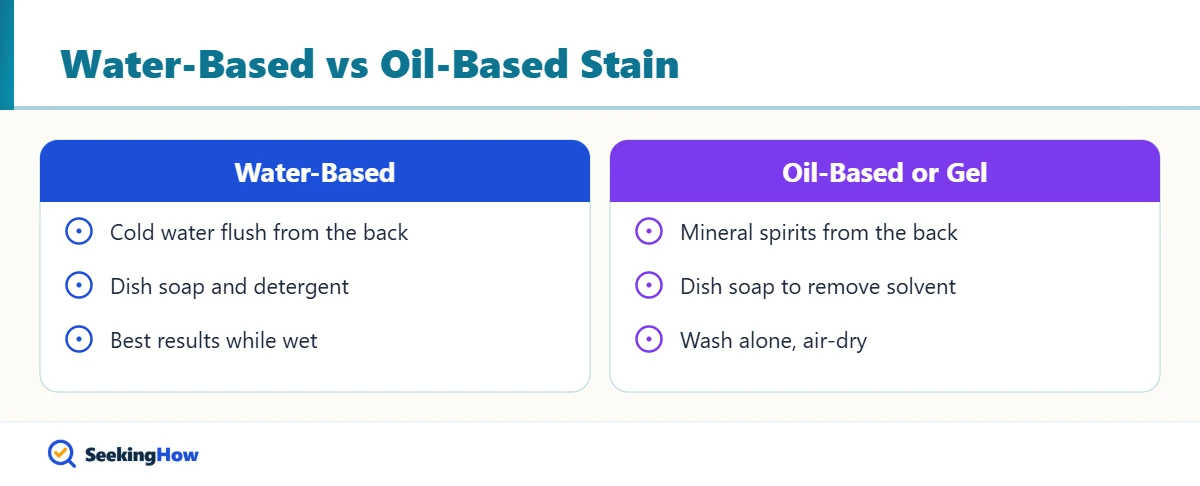
Read the stain can. If it says water cleanup, it is water-based; if it says to clean up with mineral spirits or paint thinner, it is oil-based. Gel stains are usually oil-based. Using water alone on oil-based stain spreads it.
Step 2: Blot Off Excess Immediately
Blot, do not rub, with paper towels to lift as much wet stain as possible. Slide cardboard behind the fabric so it does not bleed through to another layer. In practice, the first two minutes decide whether the stain comes out completely.
Step 3: Treat Water-Based Stain With Cold Water and Soap
Flush the spot from the back with cold running water until the runoff is nearly clear. Work dish soap into it with your fingers or a soft toothbrush and rinse again. If it has started to dry, dab with rubbing alcohol on a cloth first, testing an inside seam for color loss.
Step 4: Treat Oil-Based Stain With Mineral Spirits
Wearing gloves in a ventilated area, place a folded paper towel under the stain and dab mineral spirits onto the back with a cloth. Move to a clean part of the towel as the stain transfers. Test on a hidden seam first, because solvents can affect some dyes and synthetic fabrics.
Step 5: Remove the Solvent With Dish Soap
Work dish soap into the area to break down the solvent and remaining oil, then let it sit 10 to 15 minutes. Rinse with warm water. Most people find this step also removes the mineral spirits odor.
Step 6: Pretreat and Wash
Rub heavy-duty liquid detergent into the spot, then wash the item alone or with old rags in the warmest water the care label allows. Washing it alone keeps any stain or solvent residue off your other laundry.
Step 7: Air-Dry and Inspect
Hang the item to dry instead of using the dryer. Heat can set remaining stain, and solvent residue in a hot dryer is a fire risk. If a mark remains, repeat the treatment once before deciding it is permanent.
Bottom line: match the cleaner to the can label, water and soap for water-based, mineral spirits then soap for oil-based, and never machine-dry until the stain is gone.
Treatment by Stain Type
| Stain type | First treatment | Follow-up | Odds once dry |
|---|---|---|---|
| Water-based | Cold water flush | Dish soap, detergent | Fair |
| Oil-based | Mineral spirits from the back | Dish soap, detergent | Low to fair |
| Gel stain | Scrape, then mineral spirits | Dish soap, detergent | Low |
| Stain and polyurethane combo | Solvent on the can label | Dish soap, detergent | Low |
If That Didn’t Work
Problem: The stain spread into a bigger ring. Cause: Water used on oil-based stain, or rubbing. Fix: Let it dry, then treat with mineral spirits from the outside edge inward.
Problem: A faint brown tint remains after washing. Cause: Pigment absorbed into fibers. Fix: Repeat treatment; on white cotton, an oxygen-based bleach soak per the label may help.
Problem: The fabric is dry-clean only. Cause: Solvents and water can damage it. Fix: Blot only and take it to a dry cleaner, telling them it is wood stain.
Problem: Other finishes got on the clothes too. Cause: Caulk or adhesive on the job. Fix: See how to get caulk out of clothes or how to remove sticky residue.
Safety Tips
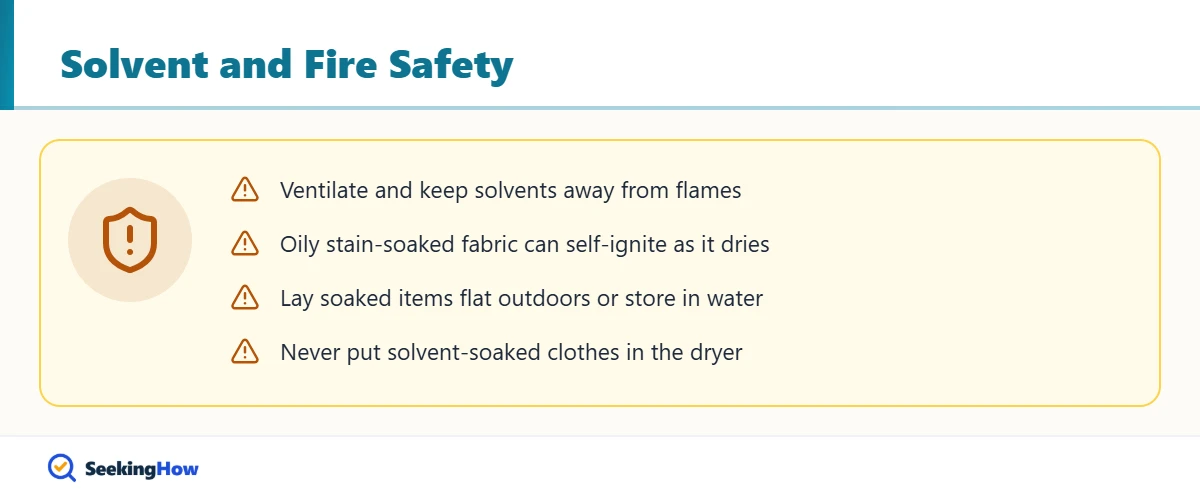
Use mineral spirits outdoors or in a well-ventilated room, away from flames and pilot lights, and wear chemical-resistant gloves. Rags and clothing soaked with oil-based stain can heat up and catch fire on their own as they dry; lay them flat outdoors to dry or store them in a sealed metal container filled with water before disposal. Never put solvent-soaked items in the dryer.
Prevention Tips
- Wear old clothes or a shop apron and nitrile gloves when staining.
- Keep a damp rag and dish soap nearby for water-based stain spills.
- Stir, do not shake, stain cans to avoid splatter.
Related Guides
Sources
- American Cleaning Institute, stain removal guide (cleaninginstitute.org)
- Minwax, wood stain cleanup and safety information (minwax.com)
- National Fire Protection Association, oily rag fire safety (nfpa.org)
Frequently Asked Questions
Can wood stain be removed from clothes?
Yes, wood stain can often be removed from clothes if you treat it while it is still wet. Water-based stain responds to cold water and dish soap, while oil-based stain needs mineral spirits first. Dried stain, especially oil-based, may only lighten rather than disappear.
Does vinegar remove wood stain from clothes?
Vinegar is not an effective remover for wood stain on clothes. Water-based stain needs soap and water, and oil-based stain needs a solvent like mineral spirits. Vinegar may help rinse soap residue but will not break down the stain pigments or oils.
How do you get dried oil-based stain out of fabric?
For dried oil-based stain, dab mineral spirits onto the back of the fabric over a paper towel, let it soften the stain for a few minutes, and blot repeatedly. Follow with dish soap and heavy-duty detergent, wash warm, and air-dry. Expect partial results.
Will rubbing alcohol remove wood stain?
Rubbing alcohol can help loosen water-based wood stain that has started to dry. Dab it on with a cloth, blot, then wash with dish soap. It is less effective on oil-based stain, which needs mineral spirits or the thinner listed on the can.
Can I put clothes with wood stain in the washing machine?
Yes, after pretreating, you can wash clothes with wood stain in the washing machine, ideally alone. Remove as much stain and solvent as possible first. Do not put them in the dryer until the stain is gone and any solvent smell has washed out.
Is it safe to dry rags with oil-based stain?
Rags or clothes soaked with oil-based stain can spontaneously combust as they dry. Lay them flat outdoors away from buildings, or place them in a metal container filled with water and sealed, then dispose of them according to local rules.